On June 4, 2025, the Bank of Canada (BoC) announced it would maintain its benchmark interest rate at 2.75%. This cautious move reflects concerns over inflation, trade uncertainty, and a moderating labour market. This is a significant moment, marking a continued pause in rate adjustments after previous cuts.
🚦 BoC Hits the “Hold” Button: What Does It Mean For YOU? 🚦
The Bank of Canada’s job is like being the country’s economic pilot: they try to steer us toward stable prices (keeping inflation in check!) and healthy growth. Today’s decision to keep interest rates unchanged at 2.75% tells us a lot about what they’re seeing on their economic dashboard.
🔍 The Big Picture: Why the Hold?
The Bank’s Governing Council decided to keep rates steady because they’re navigating a complex economic landscape. Here’s what they’re seeing:
Global Uncertainty is STILL High: 🌍 Especially concerning is the ongoing back-and-forth with U.S. tariffs and trade negotiations. This creates a big question mark for Canada’s export-driven economy. The Bank needs more clarity on how these trade policies will shake out.
Canadian Economy: Softer, But Not Collapsing! 💪 Canada’s economy grew a bit stronger than expected in the first quarter (2.2% GDP growth!), driven partly by exports to the U.S. and inventory building. However, they expect the second quarter to be weaker as these factors reverse. Consumer spending has slowed, and housing activity is down, particularly resales.
Inflation’s Tricky Dance: 📈 While inflation has generally eased from its peak, the Bank noted “unexpected firmness” in recent inflation data, and their preferred core inflation measures have moved up. Businesses are still expecting tariffs to raise prices, and many plan to pass those costs on. This “stickiness” in inflation is a key reason for the hold.
Labor Market Cooling: 🌬️ The job market has shown signs of weakening, especially in sectors tied to trade. The unemployment rate has risen to 6.9%. This typically puts downward pressure on inflation, but the Bank is watching carefully.
In simple terms: The Bank is seeing conflicting signals! The economy isn’t collapsing, but there’s a lot of uncertainty from tariffs and inflation isn’t quite behaving as smoothly as they’d like. So, they’re taking a cautious “wait and see” approach.
📌 Key Highlights
Inflation: Headline inflation fell to 1.7% in April, while core inflation remains sticky.
GDP Growth: The economy expanded by 2.2% in Q1 2025.
Labour Market: Signs of softening with slower wage growth and rising unemployment.
External Pressure: Tariff increases from the U.S. add uncertainty to exports.
Buyers: A continued hold on rates might support affordability — but be mindful of inflation.
Businesses: Exporters should prepare for volatility, especially due to U.S. trade policies.
🏡 What Does This “Hold” Mean for Your Money?
This decision has direct impacts on everyday Canadians. Let’s break it down:
For Borrowers (Especially Variable-Rate Mortgages & HELOCs): 🥳 GOOD NEWS! Your payments linked to the prime rate will stay STABLE for now. No immediate jumps in your monthly costs! This offers a much-needed breathing room. If you’re looking for a new variable mortgage, rates won’t have shifted due to this announcement.
For Savers (HISAs & GICs): 💸 STILL DECENT RETURNS! While not increasing, the rates on high-interest savings accounts and GICs will remain relatively attractive. This is a positive for those looking to grow their cash safely.
For the Housing Market: 🏠 The unchanged rate could bring a degree of stability, preventing further upward pressure on mortgage costs. However, affordability remains a significant hurdle for many, and the Bank noted a “sharp contraction in resales.”
For Businesses: 💼 Borrowing costs remain unchanged, which offers predictability for investment and operational decisions. However, uncertainty from U.S. tariffs and slower domestic demand are still headwinds.
🔮 Looking Ahead: The Bank’s Crystal Ball (Sort Of!)
The Bank of Canada made it clear they are “proceeding carefully” and will be “data-dependent.” This means they’re not committing to any future moves right now. They want to see:
How U.S. trade policy evolves and its real impact on Canadian exports.
How much any economic slowdown spills over into business investment, employment, and household spending.
How quickly cost increases (like from tariffs) are passed on to consumer prices.
How inflation expectations evolve among consumers and businesses.
Key takeaway from Governor Tiff Macklem: While there might be room for future rate cuts if the economy weakens further and price pressures stay contained, the Bank is not providing forward guidance. They are focusing on the actual data as it comes in.
✨ Your Turn!
What are your thoughts on this latest decision from the Bank of Canada? Are you breathing a sigh of relief, or hoping for more changes soon? Share your perspective in the comments below! 👇
The BoC will review its stance again on July 30, 2025. With inflation easing yet core pressures lingering, a potential rate cut remains on the table — but not guaranteed.
Canadian Housing Market Pauses in April 2025 Amid Shifting Conditions
The Canadian housing market showed signs of a pause in its recent slump during April 2025, with national home sales remaining virtually unchanged from March. However, activity remains subdued compared to the previous year, and prices continue to see modest declines. This analysis, based on data released by the Canadian Real Estate Association (CREA), delves into the key trends observed in April. Key Highlights for April 2025:
National Home Sales:
Month-over-month: -0.1% (seasonally adjusted)
Year-over-year: -9.8% (actual, not seasonally adjusted), with 44,300 units sold compared to 49,135 in April 2024.
Prices:
MLS® Home Price Index (HPI):
Month-over-month: -1.2%
Year-over-year: -3.6%
National Average Sale Price: $679,866
Year-over-year: -3.9% (actual, not seasonally adjusted)
Listings and Inventory:
New Listings (month-over-month): -1.0%
Total Active Listings: 183,000 (up +14.3% year-over-year, but still below the long-term average of approximately 201,000 for this time of year).
Market Balance:
Sales-to-New Listings Ratio (SNLR): 46.8% (up slightly from 46.4% in March). This indicates a market approaching balanced conditions, though still at the lower end of the 45%-65% range typically associated with balance. The long-term average for the SNLR is 54.9%.
Months of Inventory: 5.1 months, which is in line with the long-term average of five months. A seller’s market is typically below 3.6 months, and a buyer’s market above 6.4 months.
Detailed Analysis:
The April 2025 data suggests a stabilization in sales activity after several months of decline. Shaun Cathcart, CREA’s Senior Economist, noted that the market is returning to the “quiet markets we’ve experienced since 2022,” with factors like “tariff uncertainty taking the place of high interest rates in keeping buyers on the sidelines.”
While sales activity paused its descent on a month-over-month basis, the year-over-year comparison still shows a significant drop, indicating that the market is considerably cooler than in April 2024. Price pressures continue, with both the MLS® HPI and the national average sale price registering year-over-year declines.
The month-over-month decrease in the HPI suggests that price adjustments are ongoing. The number of newly listed propertiesdipped slightly in April compared to March. However, the total number of homes available for sale has increased notably from a year ago, offering more choice to potential buyers.
Despite this increase, total inventory remains below long-term averages. The sales-to-new listings ratio moving slightly up to 46.8% and 5.1 months of inventory suggest the national market is largely balanced, albeit with regional variations. Regional Variations: The national figures mask significant regional differences. CREA reports indicate:
Ontario and British Columbia: These more expensive markets are generally experiencing larger price pullbacks and higher inventory levels, with sales potentially decreasing more significantly.
Maritimes, Quebec, Manitoba, and Saskatchewan (Prairies, East Coast): These traditionally more affordable regions are seeing some price resilience or even increases, along with tighter inventory conditions.
Valérie Paquin, CREA Chair, emphasized this divergence: “The number of homes for sale across Canada has almost returned to normal, but that is the result of higher inventories in B.C. and Ontario, and tight inventories everywhere else.” Visual Summary: The following charts illustrate some of the key trends: Total Active Listings vs. Long-Term Average (April 2025) This chart compares the total number of homes available for sale at the end of April 2025 against the typical long-term average for that time of year. It also notes the year-over-year change in active listings. This chart compares the total number of homes available for sale at the end of April 2025 (183,000, up 14.3% year-over-year) against the typical long-term average for that time of year (approximately 201,000). It shows that while listings have increased from last year, they still haven’t reached the historical average for April. Sales-to-New Listings Ratio (SNLR) – April 2025 This chart shows the SNLR for April 2025, comparing it to the long-term average and the thresholds for different market conditions (buyer’s, balanced, seller’s).
This chart shows the Sales-to-New Listings Ratio (SNLR) for April 2025 at 46.8%. It compares this to the long-term average SNLR of 54.9% and highlights the range typically considered a “balanced market” (45% to 65%). The current SNLR sits at the lower end of this balanced range, indicating that while the market isn’t strongly favouring buyers or sellers, it’s leaning slightly towards conditions that could offer buyers more leverage than if the ratio were higher.
Analysis:
April 2025 data points to a stabilization in sales activity following several months of declining figures. According to CREA’s Senior Economist, Shaun Cathcart, “the 2025 Canadian housing story would best be described as a return to the quiet markets we’ve experienced since 2022, with tariff uncertainty taking the place of high interest rates in keeping buyers on the sidelines.”
This suggests that while the sharp decline in sales may have paused, underlying caution persists among market participants. The year-over-year decrease in home sales by nearly 10% underscores that the market remains significantly cooler than in the spring of 2024. This slowdown in activity is accompanied by ongoing price adjustments.
Both the MLS® HPI and the national average sale price saw year-over-year decreases, with the HPI also declining month-over-month, indicating continued downward pressure on home values. On the supply side, new listings saw a slight dip from March to April. However, the total number of homes available for sale has risen substantially compared to the previous year, giving prospective buyers more options.
Despite this increase, overall inventory levels have not yet reached their long-term averages for this time of year. The national market, as indicated by the SNLR and months of inventory, appears to be in a state of balance. However, this national picture is an aggregation of varied local conditions. Regional Variations: The Canadian housing market is not monolithic, and significant regional differences persist:
Ontario and British Columbia: These provinces, particularly their more expensive urban centers, are generally experiencing more pronounced price pullbacks. Inventory levels are higher, and sales activity has seen more significant declines compared to other parts of the country.
Prairie Provinces (Alberta, Saskatchewan, Manitoba) and Atlantic Canada (Maritimes, Newfoundland and Labrador), and Quebec: In contrast, many markets in these regions are demonstrating more resilience. Some are even witnessing modest price growth and continue to experience tighter inventory conditions relative to demand.
CREA Chair Valérie Paquin highlighted this disparity, stating, “The number of homes for sale across Canada has almost returned to normal, but that is the result of higher inventories in B.C. and Ontario, and tight inventories everywhere else.” This underscores the importance of understanding local market dynamics when considering buying or selling property. Visual Summary of Key Market Indicators: The following charts provide a visual representation of some of the key changes in the Canadian housing market for April 2025: Canadian Housing Market – Year-over-Year Changes (April 2025 vs April 2024) This chart illustrates the percentage change in actual home sales, the MLS® Home Price Index, and the national average sale price compared to April of the previous year. All key metrics show a decline, highlighting the cooling trend. Canadian Housing Market – Month-over-Month Changes (April 2025 vs March 2025)
This chart displays the percentage change in seasonally adjusted national home sales, new listings, and the MLS® Home Price Index compared to the preceding month. It shows a near flatline in sales, a slight decrease in new listings, and a continued modest decline in the HPI. In conclusion, the Canadian housing market in April 2025 was characterized by a pause in the recent sales slump, ongoing price moderation, and a nationally balanced market that masks significant regional variations. Factors such as economic uncertainty, including trade tariff concerns, continue to influence buyer and seller behavior.
The decision to sell your home is significant, and the current market presents a nuanced landscape. While national prices have seen some moderation and sales activity, though stabilizing month-over-month, remains below last year’s levels, there are compelling reasons to consider listing, especially if your circumstances align. Why This Might Be a Good Time for You to Sell:
Stabilizing Market Activity: After a period of decline, national sales activity showed signs of pausing its slump in April. This could indicate that buyers who were on the sidelines are beginning to re-engage, potentially creating a window of opportunity before any further significant market shifts.
Inventory Levels Offer a Mixed Picture: While total active listings are up year-over-year (meaning more competition than last year), they still remain below the long-term average for this time of year in many areas. A well-priced and well-presented home can still capture significant attention.
Regional Strengths Persist: If your property is located in markets like the Prairies, Quebec, or parts of Atlantic Canada, you might find conditions are still relatively strong with resilient pricing and tighter inventories. Even in markets like Ontario and BC that have seen more significant price adjustments, unique properties in desirable locations can still attract motivated buyers.
Capture Current Price Levels: While prices have dipped from their peak, they are still substantial in many regions compared to historical levels. If you’re concerned about further price erosion, selling now could allow you to lock in your property’s current value. Waiting doesn’t guarantee a better outcome, especially if national price trends continue their modest decline.
Motivated Buyers Are Still Active: Serious buyers are always in the market. Those active now are likely navigating current conditions with clear intentions, potentially leading to smoother transactions if you connect with the right one.
To maximize your success, it’s crucial to:
Price Strategically: Overpricing in this market can lead to your home sitting longer. Work closely with a local real estate professional to set a competitive and realistic price based on the very latest comparable sales.
Ensure Your Home Shines: With more choice for buyers than last year, presentation matters more than ever. Invest in staging, decluttering, and addressing any necessary repairs.
Be Flexible: Understand that negotiation might be more common. Being open to reasonable offers and conditions can facilitate a successful sale.
If your personal and financial goals align with a move, listing now allows you to capitalize on the current buyer interest and potentially transition to your next property with more clarity than in a more volatile market.
For prospective homebuyers, the April 2025 market data reveals an environment that offers several advantages compared to the frenetic conditions of the recent past. If you’re financially prepared, this could be an opportune time to make your move. Why This Might Be a Good Time for You to Buy:
Increased Choice and Less Frenzy: The 14.3% year-over-year increase in total active listings means you have more properties to choose from. With national sales down 9.8% compared to last April, there’s generally less competition for each home, reducing the likelihood of intense bidding wars.
Price Moderation Offers Better Value: Both the MLS® Home Price Index and the national average sale price have declined year-over-year (by -3.6% and -3.9% respectively). This softening of prices can make homeownership more accessible and potentially offer better long-term value.
More Balanced Market Conditions: Key indicators like the Sales-to-New Listings Ratio (46.8%) and Months of Inventory (5.1 months) point towards a more balanced national market. This environment typically affords buyers more time for due diligence, less pressure to make rushed decisions, and potentially more room for negotiation on price and conditions.
Favourable Conditions in Certain Regions: If you are looking in markets like Ontario or British Columbia, you may find more significant price pullbacks and a greater willingness from sellers to negotiate, creating specific buying opportunities.
Opportunity for Long-Term Investment: Housing is a long-term investment. Entering the market during a period of price stabilization or modest decline can be advantageous for buyers with a long-term horizon, as you’re potentially buying at a more sustainable price point.
Stable Interest Rate Environment (Relatively Speaking): While interest rates remain a key consideration, the acute uncertainty around rapid rate hikes has somewhat subsided. This allows for more predictable mortgage planning. Shaun Cathcart of CREA noted “tariff uncertainty taking the place of high interest rates in keeping buyers on the sidelines,” suggesting some buyers might be adapting to the current rate environment.
To make the most of the current market, consider the following:
Get Pre-Approved for a Mortgage: Know your budget definitively. This will strengthen your negotiating position.
Work with an Experienced Buyer’s Agent: They can help you identify suitable properties, understand local micro-market conditions, and guide you through the negotiation process.
Don’t Try to Perfectly Time the Bottom: It’s nearly impossible to buy at the absolute lowest point. Focus on finding a home that meets your needs and budget in a market that is offering more favorable conditions than seen in quite some time.
If you have a stable financial situation and a long-term perspective, the current market conditions provide a window of opportunity to purchase a home with more choice, less pressure, and potentially better value.
The Greater Toronto Area (GTA) real estate market continued to evolve in April 2025, reflecting broader economic pressures, buyer psychology, and seasonal trends. Whether you’re a homeowner, investor, or first-time buyer, understanding current housing data is critical.
In this article, we break down the latest TRREB Market Watch statistics, offer insight into price fluctuations, sales activity, and what this all means for your next move in the real estate market.
Here’s a detailed look at real estate sales and prices by home type across the 416 (Toronto) and 905 (suburban) areas.
📊 Sales & Average Price by Property Type
Type
Sales
(416)
Sales
(905)
Total
Sales
Avg Price
(416)
Avg Price
(905)
Detached
1,430..
2,556..
3,986..
$1,431,495..
$1,324,280..
Semi-Detached.
505
778
1,283
$1,088,848
$944,934
Townhouse
312
925
1,237
$912,629
$884,746
Condo Apt
983
728
1,711
$678,048
$618,196
💬 Year-over-Year Price Change by Property Type
Detached: -6.9%
Semi-Detached: -5.0%
Townhouse: -5.2%
Condo Apartment: -6.1%
📉 Across all segments, buyers gained greater leverage due to elevated real estate inventory levels and improved affordability through moderated mortgage rates.
📉 What’s Behind the Dip in Sales?
Despite following a typical seasonal uptick from March, April 2025 real estate sales fell 23.3% year-over-year. This hesitation is largely attributed to:
Economic uncertainty: Following the federal election, many are monitoring the Canada-U.S. trade relationship, which may impact consumer confidence.
Improved inventory: Buyers now have more choices, leading to longer decision-making timelines.
📊 Economic Indicators Snapshot
Indicator
Value
Trend
Inflation (CPI YoY)
2.8%(Apr 2025)
↑ from 2.3% Mar
Toronto Unemployment Rate
5.0%(Apr 2025)
↑ from 4.8% Mar
Bank of Canada Overnight Rate
2.750%
↔ steady
Prime Lending Rate
6.45%
↔ steady
5-Year Fixed Mortgage Rate
5.09% avg.
↓ slightly
🌍 Regional Trends: Urban vs. Suburban
The 905 regions (e.g., Durham, York, Peel) showed resilience in price stability while urban centers like Toronto (416) saw sharper price drops, especially in condo segments.
🏙 Toronto (416):
Condos down 6.1%
Detached prices remain highest at $1.43M
🏘 Suburbs (905):
Balanced activity
Greater affordability attracted more buyers despite market cooling
There’s growing demand for properties with some backyard space and/or additional buildings, especially among buyers moving from subdivision homes in City Centers. If you’re thinking of selling and your property fits this profile, now may be the perfect time to connect with qualified buyers.
📈 Chart: TRREB Sales Activity YoY
Real Estate Sales are down, but opportunities are up for savvy buyers and well-prepared sellers.
🤝 Let’s Talk: Free Market Evaluation
If you’re wondering about your home’s value in today’s changing market, I offer a FREE, no-obligation market evaluation that can help you decide if now is the right time to sell.
Whether you’re staying local or heading outside of the city to York Region or Durham Region and the Kawarthas, I can guide your move with real insights and connections to active, qualified buyers.
Summary
In April 2025, the Greater Toronto Area (GTA) real estatemarket saw a continued seasonal rise in activity from March, but overall real estate sales remained significantly lower than the same period in 2024. TRREB reported a 23.3% year-over-year drop in home sales, with only 5,601 transactions completed.
At the same time, new real estate listings rose by 8.1%, providing buyers with greater inventory and more negotiating power. The average home price fell by 4.1% to $1,107,463, while the MLS® Home Price Index Composite dropped 5.4% year-over-year, reflecting buyers’ cautious stance amid high borrowing costs and economic uncertainty following the recent federal election.
Elevated inventory and moderating mortgage rates contributed to more affordable housing options across the GTA. Detached, semi-detached, and condo apartment segments all experienced price declines, with detached homes in the 416 region averaging over $1.43 million.
Meanwhile, broader economic indicators showed continued inflation and employment growth, although real GDP growth remained uneven across timeframes. As households monitor developments in Canada’s trade relations and monetary policy, the GTA market is positioned for possible shifts in buyer sentiment should confidence improve and borrowing conditions ease.
Sales are lower largely due to buyer hesitation around high interest rates and economic uncertainty following the recent federal election and the ongoing trade war.
2. Is this a good time to buy real estate in the GTA?
Yes, if you’re financially ready. There’s less competition and more choice, giving buyers leverage in negotiations.
3. How can I make my home more attractive to buyers?
Highlight key features such as land, workshops, finished basements, or upgrades. Price competitively and stage professionally.
4. What’s the best area within an hour or two of Toronto to find land with buildings?
Areas north and east of York Region and Durham Region —such as Uxbridge, Clarington, Georgina, Brock, and parts of Kawartha Lakes—are growing in popularity among buyers looking for space and utility.
It gives you an accurate sense of your home’s current market value, helping you plan with confidence. No strings attached.
📝 Final Thoughts
The GTA housing market is shifting, but with the right guidance, you can take full advantage of today’s conditions—whether you’re buying your dream rural property or selling your urban home.
📩 Let’s connect to discuss your goals and how I can help you navigate the market confidently.
Thinking about selling your rental or secondary property? Before you do, it’s critical to understand how capital gains tax can affect your bottom line. This guide explains what you need to know, what’s changed, and how to plan ahead.
Capital Gains in Canada: What Real Estate Investors Need to Know
Thinking about selling your rental or secondary property? Before you do, it’s critical to understand how capital gains tax can affect your bottom line. This guide explains what you need to know, what’s changed, and how to plan ahead.
Capital gains taxation is an important consideration for property owners and investors across Canada, particularly those holding secondary residences and rental properties.
Understanding how capital gains work, the implications for your tax obligations, and how strategic planning can mitigate liabilities is essential for making informed financial decisions.
What Are Capital Gains?
Capital gains occur when an asset, such as real estate, is sold for more than its adjusted cost base (ACB), which includes the purchase price plus certain costs like legal fees, renovations, and selling expenses.
In Canada, 50% of a capital gain is taxable and added to the seller’s income for the year. This is known as the capital gains inclusion rate.
For instance, if a property is sold for $1 million and the ACB is $600,000, the gain is $400,000, of which $200,000 would be taxable.
The Impact on Real Estate, Including Rental Properties
The principal residence exemption allows homeowners to shelter the full capital gain from tax if certain criteria are met.
However, secondary residences and rental properties do not qualify for this exemption.
When selling a rental property, the taxable portion of the gain is added to your total income, potentially pushing you into a higher tax bracket.
Additionally, if Capital Cost Allowance (CCA) was claimed on the property to offset rental income, a portion of that may be recaptured and taxed as income, not a capital gain.
This creates a tradeoff between the benefit of reducing taxes annually versus facing higher taxes upon sale.
Balancing Timing and Tax Efficiency
One of the key challenges for property owners is timing the sale of a secondary property. Selling in a year when your other income is lower can reduce the overall tax impact.
Conversely, selling during a high-income year could significantly increase your marginal tax rate, resulting in a larger tax bill.
Tax planning strategies can help balance this tradeoff:
Deferring the sale to a year with lower income
Using capital losses to offset gains
Transferring ownership to a spouse in a lower tax bracket (with caution, due to attribution rules)
These strategies highlight the importance of personalized tax planning, particularly when dealing with sizable capital assets like real estate.
Looking Ahead: Potential Tax Changes
In the 2024 federal budget, the government announced its intention to increase the capital gains inclusion rate from 50% to 66.67% for gains over $250,000, effective January 1, 2026.
This would have had significant implications for investors holding high-value assets, especially real estate.
The proposed change introduced further complexity, requiring even more careful consideration of timing and asset disposition.
This decision has been welcomed by many in the investment and real estate sectors, as it preserves the current planning frameworks and alleviates concerns of increased tax burdens on large asset sales.
Real-World Example
Consider a scenario where an Ontario investor sells a secondary rental property for $1 million in 2025.
The original purchase price was $500,000, with $50,000 in eligible improvements and $40,000 in selling expenses, bringing the adjusted cost base to $590,000.
The capital gain is $410,000, and 50%—or $205,000—is taxable. Assuming the seller falls into the 33% marginal tax bracket, the tax owing on the gain could be approximately $67,650.
Had the proposed inclusion rate increase to 66.67% been implemented in 2026, the taxable portion would have been $273,347, with an estimated tax burden closer to $90,000—illustrating the significant impact such a policy change could have had.
Making Informed Decisions
The decision to sell a secondary residence or rental property in Canada carries notable tax consequences. Capital gains tax, while only applied to 50% of the gain (for now), can substantially affect your net proceeds. Properly accounting for selling expenses, potential CCA recapture, and the timing of the sale are all vital to reducing your tax liability.
For real estate investors, the key lies in understanding how the rules apply, what tradeoffs exist, and how to plan effectively. Working with a financial advisor or tax professional can help navigate these complexities, ensuring that your investment decisions align with both your financial goals and the tax landscape.
Need personalized guidance?Contact Gerald Lawrenceto book a private consultation and learn how to maximize your returns when selling investment properties.
Detached Properties For Sale UNDER $500,000 Canadian Dollars in the GTA
Detached homes priced under $500,000 in the Greater Toronto Area (GTA) are becoming increasingly scarce, yet they offer an exceptional opportunity for savvy buyers. In a market where the average detached property often costs well over $1 million, finding homes at this price point seems like a dream come true. However, these homes typically come with unique characteristics—many are fixer-uppers, stigmatized properties, estate sales, power of sale listings, or are deliberately priced low to ignite competitive bidding wars.
Despite these complexities, more than 30 such properties are currently listed across the GTA. The majority of these homes are found in Oshawa, Georgina, and Clarington—particularly in Newcastle and Bowmanville. Other regions like Brock, Scugog, Toronto, and Halton host only a handful of listings. Most are 2-bedroom bungalows, with some including 2 bathrooms, while the smaller group of 3-bedroom homes is split between those with 1 or 2 bathrooms.
Below, we break down the types of properties typically found in this price range, including their advantages, disadvantages, and potential caveats you should be aware of before making a purchase.
1. Fixer-Uppers
Fixer-uppers are homes in need of renovation or repair, often priced lower to reflect the investment required to bring them up to modern standards.
Financing can be trickier as lenders may demand repairs upfront
Caveats: Many of these homes will require detailed property condition disclosures. Always opt for a home inspection, even if it’s waived contractually, and budget for surprises.
2. Stigmatized Properties
These are homes where a death, crime, or other psychologically impactful event occurred, which may deter some buyers.
Advantages:
Significantly reduced price
Less competition from other buyers
Disadvantages:
Potential difficulty reselling in the future
Emotional discomfort depending on the situation
Caveats: In Ontario, sellers aren’t always legally required to disclose stigmas unless directly asked. It’s wise to conduct your own research or work with a local realtor who knows the history of the area.
3. Estate Sales
An estate sale occurs when the owner has passed away and their estate is selling off the home, often as-is.
Advantages:
More room for negotiation with motivated sellers
Can be priced below market to ensure a quick sale
Disadvantages:
Typically sold “as-is,” with no updates or repairs
Probate processes can delay closing
Caveats: There may be limited documentation on the property’s history, and disclosure can be minimal. You may also need to work through legal intermediaries rather than traditional sellers.
4. Power of Sale Properties
These occur when lenders seize and sell homes after mortgage defaults.
Advantages:
Priced below market value for a fast sale
Quicker closing processes in many cases
Disadvantages:
Sold without warranty or guarantee of condition
Minimal negotiation leverage
Caveats: Lenders are legally obligated to disclose any known defects, but they may not know much about the property’s condition. Buyers must conduct thorough due diligence and often accept “as-is” terms.
5. Deliberately Underpriced Listings for Bidding Wars
Some properties are intentionally priced below market value to spark a bidding war.
Advantages:
May appear to be a great deal at first glance
Occasionally, buyers snag a win if competition is low
Disadvantages:
Final sale price often exceeds listing price
Pressure to waive conditions (like inspections or financing) to stay competitive
Caveats: Fast-paced offers leave little time for proper evaluation. This high-pressure environment can lead to overpaying or skipping essential steps like due diligence.
Where These Properties Are Found
Let’s take a look at where the bulk of these listings are appearing (as at the time of this blog article):
The overwhelming majority are 2-bedroom homes, some with two bathrooms. Three-bedroom options are limited, and only half of those offer a second bathroom.
Who’s Buying These Properties?
Given their affordability and potential for future value, these listings are drawing attention from a range of buyers:
Contractors looking to flip or rebuild
Investors eyeing rental returns
First-time homebuyers seeking an entry point into the market
Landlords expanding their rental portfolios
Because of the heightened interest and reduced inventory, these homes don’t tend to last long on the market. In some cases, properties receive multiple offers within just a few days.
Important Disclosures and Legal Considerations
It’s essential to understand that many of these properties come with specific disclosure requirements. You may encounter:
Property-related disclosures: Structural issues, previous damages, or material latent defects.
Legal disclosures: Probate timelines, rights of way, and power of sale regulations.
Lender disclosures: For power of sale homes, lenders often provide limited information.
Buyers should always consult a qualified real estate agent and legal professional before proceeding. A property inspection, title search, and review of the seller’s disclosures are critical steps you shouldn’t skip.
👉 Click here or leave your email to receive a curated list of available properties, complete with photos, descriptions, and neighbourhood insights—delivered directly to your inbox.
These listings move fast—don’t miss your chance to grab a home in this rare price bracket!
Canada is one of the most immigrant-friendly countries in the world, and Ontario, being its most populous province, is often the first stop for newcomers. But buying a home or condo in Ontario-especially if you’re new to Canada or returning after time abroad-can feel like navigating a maze. Fortunately, it’s not only doable, but with the right guidance, it can also be smooth, strategic, and exciting. In this comprehensive guide, we’ll walk you through the entire home-buying journey-from understanding your eligibility as a non-citizen, to landing the keys to your first Canadian property. Along the way, you’ll gain insider tips, explore available resources, and learn how to avoid the common pitfalls many immigrants and expats face. Whether you’re a permanent resident, skilled worker, international student, or a Canadian returning from abroad, this article is for you.
Understanding the Canadian Real Estate Market
Before diving into the home-buying process, it’s essential to understand Ontario’s real estate environment. Key Market Trends (2024):
Ontario’s market has experienced high demand driven by immigration, limited supply, and low-interest periods. Whether you’re buying for your family or investing long-term, knowing local prices helps you plan smarter.
Key Housing Types in Ontario
Detached Homes: Ideal for families needing more space. Comes with land and higher taxes.
Condos: Popular among newcomers due to lower maintenance. Great in city centers.
Townhouses: A middle ground-affordable, moderately spacious, and often part of planned communities.
Tip:Condos in Toronto or Ottawa are often the starting point for immigrants due to convenience, cost, and lifestyle perks.
Do Immigrants Need Citizenship to Buy Property?
Short answer: No. Anyone can buy property in Canada, regardless of immigration status. But, if you’re a non-resident, you may face:
Ontario charges 25% tax on property purchases in designated areas by foreign nationals. However, you may be exempt if:
You’re a permanent resident
You’re a Canadian citizen returning home
You apply for a rebate after obtaining PR
Always consult a real estate lawyer about your tax position.
Working with Real Estate Professionals in Ontario
1. Realtor: Helps you find, negotiate, and close the deal 2. Mortgage Broker: Finds you the best rate-even with limited Canadian credit 3. Lawyer: Handles title transfer, tax forms, and legal review Ask if they have experience working with newcomers or expats. It can save you thousands and plenty of stress.
Step-by-Step Buying Process in Ontario
Step
Description
Pre-Approval
Secures your buying power
Home Search
Online listings, open houses
Offer & Negotiation….
Make a conditional offer
Home Inspection
Professional assessment of condition
Final Financing
Mortgage locked in
Legal Closing
Lawyer finalizes paperwork
Key Transfer
Move-in day!
Conditional Offers: Why They Matter
Newcomers often skip inspections or financing conditions due to urgency. That’s risky. Protect yourself by including:
Financing condition (5 days)
Inspection clause
Lawyer review
Even in a hot market, a bad deal is worse than no deal.
What if You’re Still Abroad?
Buying remotely is possible with:
Digital signings (DocuSign)
Video showings
Power of attorney
Remote lawyer services
This is especially useful for returning expats planning months in advance.
❌ Overextending your budget ❌ Trusting one agent without checking credentials ❌ Skipping due diligence ❌ Not understanding local bylaws, condo rules, or neighborhood dynamics
Post-Purchase To-Do List
Set up utilities: Hydro, Gas, Internet, Waste pickup
Apply for municipal taxes: Your lawyer usually registers this
Insurance: Home, contents, and liability insurance
Join the community: Local libraries, schools, healthcare, and social clubs
Real Stories from Newcomers
“We bought our first condo in Mississauga after just 8 months in Canada. Our realtor explained everything, and the mortgage broker worked miracles with my international income.” – Arjun & Priya from India“I moved back after 12 years in the UAE. It felt overwhelming at first, but I got a great townhouse in Ottawa. Don’t underestimate the paperwork!” – Linda, Returning Canadian Expat
FAQs
Can immigrants buy homes in Canada without PR? Yes! Even temporary visa holders can purchase, though financing and taxes may differ.
What is the Non-Resident Speculation Tax? An extra 25% tax for foreign buyers in parts of Ontario-rebate possible after PR.
Are expats returning to Canada considered non-residents? Sometimes. You may be treated as a non-resident until you re-establish ties like income or address.
Do I need a job in Canada to qualify for a mortgage? Typically yes, or proof of sufficient income abroad with proper documentation.
Can I buy a home while living abroad? Absolutely, using remote tools and professionals like lawyers and realtors.
How long does the process take? Generally, 2-3 months from mortgage pre-approval to closing.
Conclusion: Your Next Chapter Starts Here
Buying a home or condo in Ontario as an immigrant or expat isn’t just a financial decision-it’s an emotional milestone. It means stability. It means roots. It’s the first brick in your Canadian dream. With planning, the right team, and this roadmap, you’re more than ready to take that step. Download Our Free Checklist:Home Buying Guide for Immigrants & Expats in Ontario
Relocating to a new country comes with its own share of exciting opportunities and practical challenges. One of the most crucial tasks for any newcomer to Canada is learning how to build Canadian credit as a newcomer. Your credit score can open doors—or close them. From getting your first apartment to financing your future home, your credit history is a powerful tool in your new life.
So, how can you, as a newcomer with no Canadian credit history, build a strong credit score from scratch? It’s easier than you think—but only if you take the right steps from the beginning.
Understanding the Canadian Credit System
Before you can build credit, you need to understand what it is. In Canada, your credit report is a detailed record of how you’ve used credit over time, while your credit score is a number that summarizes your creditworthiness. The higher the score (which ranges from 300 to 900), the better.
There are two major credit bureaus in Canada: Equifax and TransUnion. They collect and maintain your credit information, and you have the right to request your credit report from both for free.
Why Credit History Matters in Canada
In Canada, your credit history influences more than just your ability to borrow money. It can affect:
Rental approvals
Employment offers
Insurance rates
Interest rates on loans
Having no credit is almost as limiting as having poor credit, so building it should be a priority.
Get Started: Apply for a SIN and Bank Account
Your Social Insurance Number (SIN) is your gateway to almost all financial activity in Canada. Get it as soon as possible, then open a Canadian bank account. Many banks offer newcomer packages that include low-fee accounts and advice tailored to immigrants.
Get a Secured Credit Card
This is the single most recommended tool for newcomers. A secured credit card requires you to put down a refundable deposit that acts as your credit limit. As you use the card and make payments on time, your credit score begins to build. Some of the best providers for secured cards include:
Capital One Guaranteed Mastercard
Home Trust Secured Visa
Neo Financial Secured Card
Become an Authorized User
If you have a trusted family member or friend with good credit, ask them to add you as an authorized user on their credit card. Their positive history will help build your own, though not all lenders report authorized user activity—check first.
Try a Credit Builder Loan
A credit builder loan is like a savings plan that builds your credit. You “repay” the loan monthly, but the funds are held in a locked savings account until the term ends. Once done, you receive the full amount, and your positive payment history is reported to the credit bureaus.
Always Pay On Time and Keep Balances Low
Credit scoring models heavily favor on-time payments and low credit utilization (ideally under 30%). Even one late payment can lower your score significantly.
Use autopay features or calendar reminders to stay on top of your bills.
Check Your Score Regularly
Knowing your score is half the battle. You can check your Canadian credit score and report for free using tools like:
Credit Karma Canada
Borrowell
Equifax/TransUnion (annually)
Avoid These Common Mistakes
Newcomers often fall into traps such as:
Applying for too many credit products at once
Maxing out credit cards
Closing old accounts too soon
Avoid these, and your score will rise steadily.
Use Utility and Cell Phone Bills to Your Advantage
Some services now allow you to report on-time utility or cell phone payments to credit bureaus. Look into programs like Rent Advantage or KOHO Credit Building for this purpose.
Keep Building Over Time
Building credit is a marathon, not a sprint. Keep your accounts open, diversify your credit types, and stay consistent. In time, you’ll be eligible for lower-interest loans, better credit cards, and larger financial opportunities.
Frequently Asked Questions
How long does it take to build credit in Canada as a newcomer? With consistent habits, you can begin seeing a credit score in as little as 3 to 6 months. A good score typically takes 12+ months to develop.
Can I transfer my credit history from my home country to Canada? Usually no. Canadian credit bureaus do not recognize international credit history. You must start fresh.
Do all landlords and employers check credit scores in Canada? Not all, but many do—especially in major cities. A good credit score boosts your credibility.
Is a credit score of 650 good in Canada? Yes, 650 is considered fair. A score above 700 is good, and 750+ is excellent.
Will checking my credit score lower it? Not if you use soft checks like Borrowell or Credit Karma. Hard inquiries from loan or card applications can lower it slightly.
What’s the best first credit card for newcomers in Canada? The Home Trust Secured Visa and Neo Secured Card are great starters. Look for cards with low fees and no income requirements.
Conclusion
Building credit in Canada as a newcomer isn’t just possible—it’s highly achievable with the right knowledge and tools. By starting with secured cards, making timely payments, and using tools designed for immigrants, you can build a strong financial foundation that supports your new life in Canada.
Remember, your credit score is a reflection of your financial habits. Keep them clean, consistent, and controlled, and the opportunities in your new homeland will follow.
Welcome to 19 Forestgreen Drive, an exquisite estate nestled within the prestigious gated community of The Estates of Wyndance in Uxbridge, Ontario.
This luxurious Sheffield model home, perched atop the community's highest point, offers unparalleled privacy and breathtaking panoramic views.
Situated on the largest lot in the neighborhood, spanning 1.17 acres, this residence epitomizes elegance and sophistication.
Exceptional Design and Craftsmanship
Step inside to discover a harmonious blend of classic design and modern amenities.The main level boasts hardwood floors, wainscoting, and intricate tray and waffle ceilings, creating an ambiance of refined luxury.
The gourmet kitchen is a chef's dream, featuring top-of-the-line stainless steel appliances, granite countertops, and a spacious center island.
Adjacent to the kitchen, the breakfast area opens to an expansive covered deck, perfect for enjoying picturesque skyline views.
The living room, adorned with a captivating double-sided gas fireplace, offers a cozy retreat for relaxation.
Spacious and Versatile Living
This 2-storey home encompasses 4 bedrooms and 4 bathrooms, providing ample space for family and guests.
The primary bedroom features a 5-piece ensuite and his-and-hers closets, while additional bedrooms offer generous proportions and access to well-appointed bathrooms.
The walk-out basement presents an opportunity to create an in-law suite, complete with space for up to two additional bedrooms, a full kitchen, living area, and a pre-existing rough-in for a 4-piece bathroom.
The three-car tandem garage ensures ample space for vehicles and storage needs.
Exclusive Community Amenities
Residents of The Estates of Wyndance enjoy a host of premium amenities, including:
Monthly fees of $553.91 cover water, sewer, snow clearing of roads, road maintenance, landscaping, community fencing, street and park lights, insurance, and access to the aforementioned facilities.
Prime Location
Located in Rural Uxbridge, this home offers the tranquility of country living with convenient access to nearby amenities.
The area boasts over 220 kilometers of seasonally managed trails, attracting cyclists, hikers, and nature enthusiasts.
Nearby schools include Uxbridge Secondary School and Stouffville District Secondary School, providing excellent educational opportunities for families.
Property Video
Community Video
Investment Potential
This property represents a significant investment in a rapidly appreciating area.
Uxbridge has seen a consistent population increase in recent years, as more potential buyers discover the tranquil way of life found in such a scenic place.
Don't miss the opportunity to own this exceptional property.Contact me today to schedule a private tour and experience the unparalleled luxury of 19 Forestgreen Drive.Your dream home awaits.
Bank of Canada Holds Steady Amid US Trade Turmoil: Decoding the Latest Monetary Policy Report
The Bank of Canada, in its announcement on April 16, 2025, elected to maintain its target for the overnight rate at 2.75%, alongside the Bank Rate at 3% and the deposit rate at 2.70%.
This decision arrives at a pivotal moment for the Canadian economy, as it grapples with the significant and unpredictable shifts in United States trade policy, which continue to cast a shadow of uncertainty over economic prospects.
The April Monetary Policy Report (MPR), released concurrently, underscores the substantial challenges in forecasting GDP growth and inflation for both Canada and the global economy amidst this evolving trade landscape.
The report outlines two distinct scenarios that explore potential future paths, contingent on the direction of US trade policy.
🛍️ Recommendation for Buyers:
With the Bank of Canada holding its key interest rate, mortgage rates may remain relatively stable in the short term, offering buyers a chance to breathe and plan strategically. This is an opportune moment to:
Get pre-approved while fixed-rate options remain appealing.
Take advantage of less volatility in borrowing costs, especially if you’ve been sitting on the sidelines waiting for clarity.
Act early if you’re eyeing a property—if inflation cools further, rates may begin to decline, sparking increased competition.
📌 Tip: Locking in a rate hold with your lendernow can shield you from potential upticks while giving you time to shop with confidence.
🏡 Recommendation for Sellers:
For sellers, a rate hold brings welcome stability to the market. Buyers are less hesitant, and there’s reduced fear of sudden rate hikes derailing deals. This creates an environment where:
Buyer confidence is likely to improve, especially in the entry-to-mid level segments.
You may benefit from a more predictable negotiation landscape with fewer financing surprises.
Listing sooner rather than later could help you get ahead of any surge in inventory should rates eventually drop.
📌 Tip: Work with a REALTOR® (yes, like me 😄) to position your home competitively and highlight value—especially with buyers now able to stretch their budgets a little further.
On April 16, 2025, the Bank of Canada decided to keep its benchmark interest rate unchanged at 2.75%. This move follows a series of seven consecutive reductions in the key rate, implemented to support economic activity as trade tensions began to escalate.
The Bank Rate was held at 3%, and the deposit rate remained at 2.70%. This decision to pause rate cuts was anticipated by a slight majority of economists, reflecting the delicate balance the central bank must strike between supporting growth and managing potential inflationary pressures stemming from trade disruptions.
The next scheduled announcement regarding the overnight rate target is set for June 4, 2025. The Bank's decision to refrain from further easing monetary policy at this time suggests a cautious stance, allowing policymakers to observe how the unfolding trade situation impacts the Canadian economy.
This approach acknowledges the limitations of monetary policy as a tool to directly address the uncertainties inherent in international trade disputes.
"The Bank of Canada today maintained its target for the overnight rate at 2.75%, with the Bank Rate at 3% and the deposit rate at 2.70%."
The significant reorientation of US trade policy and the unpredictable nature of tariffs have injected a high degree of uncertainty into the economic outlook, both domestically and internationally.
This unpredictability has diminished the prospects for robust economic growth and has simultaneously elevated expectations for inflation. The financial markets have reacted sharply to the stream of tariff-related announcements, including implementations, postponements, and ongoing threats of further escalation, contributing significantly to the prevailing atmosphere of uncertainty.
This environment of pervasive uncertainty poses considerable challenges for accurately forecasting the trajectory of GDP growth and inflation, not only for Canada but for the global economy as a whole.
The interconnectedness of the Canadian and US economies amplifies the impact of these policy shifts, creating a climate where businesses and consumers alike are hesitant to make long-term commitments, potentially leading to a deceleration in economic activity.
In light of the significant uncertainty surrounding US trade policy, the April MPR presents two illustrative scenarios to explore potential economic pathways.
Scenario 1: High Uncertainty, Limited Tariffs This scenario posits a situation where uncertainty remains elevated concerning US trade policy, but the actual implementation of tariffs is limited in scope. Under these conditions, the Canadian economy is projected to experience a temporary weakening in its growth trajectory.
However, despite this temporary slowdown, inflation is expected to remain anchored around the Bank of Canada's target of 2%. Even with a limited imposition of tariffs, the sustained high level of uncertainty can still act as a deterrent to economic activity, as businesses and households may adopt a more cautious approach to spending and investment.
The fact that inflation is projected to remain near the target suggests that any upward price pressures from the limited tariffs are likely to be counterbalanced by other factors, such as the anticipated weakening in economic growth or the removal of the consumer carbon tax.
Scenario 2: The Protracted Trade War The second scenario outlines a much more severe outcome, where a protracted trade war ensues, leading to a significant and sustained disruption to international trade.
In this case, the Bank of Canada anticipates that the Canadian economy would fall into recession within the current year. Furthermore, inflation is projected to rise temporarily above 3% in the following year. A prolonged trade war, characterized by widespread tariffs and potential retaliatory measures, would severely impact Canadian businesses and consumers.
The resulting economic contraction would likely lead to job losses and reduced household spending. The temporary surge in inflation would be driven by higher import costs due to tariffs and disruptions to global supply chains.
It is important to note that these two scenarios represent only a fraction of the possible outcomes, and the actual evolution of US trade policy could take many other forms.
The unprecedented nature and rapid pace of the shifts in US trade policy contribute to a significant degree of uncertainty surrounding the economic consequences, making it unusually challenging to predict the precise impacts.
Examining the global economic landscape, the Bank of Canada's report highlights varying conditions across major economies. In the United States, there are indications of a slowdown in economic activity, accompanied by increasing policy uncertainty and a decline in overall sentiment. Simultaneously, inflation expectations have been on the rise.
The Euro Area experienced modest economic growth in early 2025, with the manufacturing sector continuing to exhibit weakness. China's economy demonstrated strength at the close of 2024, but recent data suggests a moderate deceleration in its growth momentum.
Financial markets have experienced considerable turbulence due to the ongoing uncertainty surrounding trade policies. This extreme market volatility is contributing to the overall sense of economic unease.
Notably, global oil prices have fallen significantly since January, primarily reflecting diminished prospects for global economic growth in the face of these trade tensions. In contrast, the Canadian dollar has recently appreciated in value, largely driven by a broad weakening of the US dollar.
Within Canada, the economy is showing signs of a slowdown as the uncertainty surrounding tariff announcements weighs on both consumer and business confidence. Data from the first quarter of 2025 indicate a weakening in consumption, residential investment, and business spending.
The ongoing trade tensions are also disrupting the recovery of the labor market, with employment declining in March and businesses reporting intentions to curtail hiring. Furthermore, wage growth continues to exhibit signs of moderation.
Canada's inflation rate stood at 2.3% in March, a decrease from February's 2.6% but still above the 1.8% recorded at the time of the January MPR. The recent uptick in inflation is partly attributed to a rebound in goods price inflation and the cessation of the temporary GST/HST suspension.
Looking ahead, the removal of the consumer carbon tax starting in April is expected to exert downward pressure on CPI inflation for a year. Additionally, lower global oil prices are anticipated to dampen inflation in the near term.
However, the potential for tariffs and supply chain disruptions to drive up certain prices remains a concern. Consequently, short-term inflation expectations have edged upward as businesses and consumers foresee higher costs arising from trade conflicts and supply chain issues, while longer-term inflation expectations remain relatively stable.
The Bank of Canada's Governing Council will continue its careful evaluation of the interplay between the downward pressures on inflation stemming from a potentially weaker economy and the upward pressures resulting from increased costs.
Their primary objective is to ensure that Canadians maintain confidence in price stability throughout this period of global economic turbulence. This necessitates a strategy that supports economic growth while diligently controlling inflation.
"Governing Council will proceed carefully, with particular attention to the risks and uncertainties facing the Canadian...source
In conclusion, the Bank of Canada has opted to maintain its key interest rate amid significant uncertainty stemming from US trade policy. The April MPR outlines two potential scenarios, one involving limited tariffs and the other a protracted trade war, each with distinct implications for Canadian economic growth and inflation.
While the global economic outlook presents a mixed picture, the Canadian economy is already showing signs of slowing in response to trade tensions. The factors influencing inflation are multifaceted, with the removal of the carbon tax and lower oil prices potentially offsetting some of the upward pressure from tariffs. The Bank of Canada remains committed to navigating this period of uncertainty with a focus on maintaining price stability for Canadians.
Scenario
Key Assumptions
Impact on Canadian GDP Growth (2025)
Impact on Canadian GDP Growth (2026)
Impact on Canadian Inflation (2025)
Impact on Canadian Inflation (2026)
Other Key Impacts
Scenario 1: High Uncertainty, Limited Tariffs
High uncertainty, most tariffs negotiated away by end of 2026
Weakens temporarily
Moderate expansion
Around 2%
Below 2%
Scenario 2: The Protracted Trade War
Long-lasting global trade war with additional US and global tariffs added
The Ontario real estate market, particularly in the Greater Toronto Area (GTA), has always been influenced by various economic factors such as interest rates, foreign investments, and government policies. However, one less commonly discussed factor is the role of tariffs. These import taxes, especially on construction materials, significantly impact housing costs, affordability, and investment strategies.
2. Understanding Tariffs
Tariffs are government-imposed taxes on imported goods. They are often used to protect domestic industries, retaliate against foreign trade policies, or generate government revenue. While tariffs can have broad economic implications, their effects on real estate are particularly profound when applied to materials such as steel, aluminum, and lumber—key components in construction.
3. History of Tariffs in Canada
Canada has a history of imposing and responding to tariffs, often in reaction to U.S. trade policies. Over the years, tariffs on construction materials have fluctuated based on trade agreements such as NAFTA and its successor, the USMCA. Understanding the historical context of these tariffs provides insight into their recurring impact on real estate markets.
4. Major Tariffs Affecting Real Estate
Steel and Aluminum Tariffs
Steel and aluminum are crucial in high-rise construction and infrastructure development. Tariffs on these materials increase costs for developers, affecting the pricing of new housing projects in the GTA.
Lumber Tariffs
Lumber tariffs have a direct effect on homebuilding costs. Since many GTA homes are built with wood framing, increased costs lead to higher home prices.
Other Construction Materials
Tariffs on items such as glass, appliances, and plumbing fixtures also contribute to rising construction expenses.
5. How Tariffs Increase Construction Costs
Higher tariffs mean increased costs for builders, who pass these expenses onto buyers. This phenomenon leads to:
Increased Home Prices: Higher costs of raw materials make homes more expensive.
Reduced Housing Supply: Developers may delay or cancel projects due to inflated costs.
Longer Construction Timelines: Increased expenses can lead to financial constraints, slowing down construction projects.
6. The Role of U.S.-Canada Trade Relations
Since much of Ontario’s building materials are imported from the U.S., changes in American trade policies significantly affect Canada’s real estate market. Political shifts and renegotiated agreements like the USMCA dictate tariff rates and their subsequent impact.
7. Foreign Investment and Tariffs
Foreign investors often look for cost-effective opportunities. Rising tariffs may deter international buyers from investing in the GTA market, affecting demand and price trends.
8. Tariffs’ Effect on New Developments
Real estate developers in Ontario, especially in the GTA, are directly impacted by tariffs. Increased costs often lead to:
Smaller Developments: Builders may opt for fewer units to mitigate expenses.
Higher Pre-construction Pricing: Buyers must pay more for homes even before they’re built.
Shifts in Material Sourcing: Developers may seek alternative suppliers to cut costs, potentially compromising quality.
9. Impact on Home Prices and Affordability
With rising construction costs due to tariffs, housing affordability in the GTA becomes a major issue. First-time buyers struggle to enter the market, and existing homeowners see fluctuating property values.
10. How Tariffs Influence Mortgage Rates
While tariffs don’t directly affect mortgage rates, they contribute to inflation. In response, the Bank of Canada may adjust interest rates, indirectly influencing mortgage affordability.
11. Impact on Homebuyers
Increased Costs
Higher home prices mean buyers need larger down payments and higher mortgage approvals.
Limited Choices
A reduced supply of new builds leaves fewer options for prospective homeowners.
Market Timing Concerns
Uncertainty surrounding tariffs makes it difficult for buyers to predict when to enter the market.
12. Impact on Sellers
Changing Buyer Demand
Higher prices may limit the pool of eligible buyers, leading to longer listing times.
Price Adjustments
Sellers may need to adjust their expectations based on market fluctuations caused by tariffs.
13. Government Policies and Responses
To counteract tariff effects, the Canadian government may introduce:
Subsidies for Builders
Tax Breaks for First-time Buyers
Negotiated Trade Agreements to Reduce Tariffs
14. Economic Forecasts and Market Predictions
Experts suggest that unless tariffs decrease, the GTA real estate market will continue experiencing high prices and limited affordability. However, government intervention and alternative supply strategies could mitigate these effects.
15. Strategies for Buyers and Sellers
For Buyers
Monitor Market Trends: Stay informed about tariff changes.
Consider Alternative Housing Options: Condos may be more affordable than single-family homes.
Secure Mortgage Pre-approval Early: Lock in lower rates before they rise.
For Sellers
Price Competitively: Adjust listing prices to attract buyers.
Highlight Home Features: Showcase value beyond pricing.
Be Open to Negotiation: Buyers may seek flexibility due to rising costs.
16. Case Studies and Real-Life Examples
Case Study 1: Condo Development in Downtown Toronto
A developer faced higher costs due to steel tariffs, resulting in a 15% price increase for pre-construction units.
Case Study 2: First-Time Buyer in Mississauga
A couple struggled with affordability as new home prices surged, leading them to opt for a resale property instead.
17. Conclusion and Final Thoughts
Tariffs have a profound impact on the Ontario real estate market, particularly in the GTA. Buyers and sellers must stay informed and adopt strategic approaches to navigate these economic challenges. While tariffs create obstacles, government policies and market adaptability can help mitigate long-term effects.
The Greater Toronto Area (GTA) real estate market in March 2025 has presented a landscape marked by improved affordability and a broader selection of properties for prospective homebuyers. This shift is attributed to declining borrowing costs, moderated home prices, and a surge in new listings.
However, underlying economic uncertainties, particularly related to international trade tensions and the impending federal election, have influenced buyer sentiment and market dynamics.
Key Market Indicators
In March 2025, GTA REALTORS® reported 5,011 home sales through the Toronto Regional Real Estate Board’s (TRREB) MLS® System, representing a 23.1% decrease compared to March 2024. Conversely, new listings rose by 28.6% year-over-year, totaling 17,263 properties.
The MLS® Home Price Index Composite benchmark declined by 3.8% annually, while the average selling price decreased by 2.5% to $1,093,254.
The following table summarizes these key metrics:
Metric
March 2024
March 2025
Year-over-Year Change
Home Sales
6,519
5,011
-23.1%
New Listings
13,423
17,263
+28.6%
MLS® HPI Composite Benchmark Price .
N/A
N/A
-3.8%
Average Selling Price
$1,120,000
$1,093,254
-2.5%
Affordability and Borrowing Costs
The decline in both home prices and borrowing costs over the past year has enhanced affordability for potential homeowners. TRREB President Elechia Barry-Sproule noted, “Homeownership has become more affordable over the past 12 months, and we expect further rate cuts this spring.”
The Bank of Canada’s recent interest rate reductions have played a pivotal role in lowering borrowing costs, thereby making monthly mortgage payments more manageable for households. This trend is expected to continue, providing further relief to buyers.
Impact of Economic Uncertainty
Despite improved affordability, economic uncertainties have led many potential buyers to adopt a cautious approach. TRREB’s Chief Information Officer Jason Mercer stated, “Given the current trade uncertainty and the upcoming federal election, many households are likely taking a wait-and-see approach to home buying.”
The introduction of a 10% baseline tariff on all U.S. imports by President Donald Trump has heightened trade tensions, potentially impacting Canada’s economy and, consequently, consumer confidence in the housing market.
Market Dynamics: Supply and Demand
The substantial increase in new listings has expanded the inventory available to buyers, granting them greater negotiating power. This influx of supply, coupled with tempered demand due to economic uncertainties, has contributed to the observed decline in home prices. The following chart illustrates the trend in new listings and home sales over the past year:
Chart: Total New Listings and Sale-to-New Listings Ratio for March 2024 / March 2025
Housing Policy and Future Outlook
Housing remains a focal point in the political arena, with federal parties emphasizing its importance in their platforms. TRREB CEO John DiMichele highlighted, “Building this housing will be a key economic driver moving forward.”
The upcoming federal election and potential policy changes are expected to influence market conditions. Buyers and sellers alike are advised to stay informed about policy developments that may impact housing affordability and availability.
Conclusion
The GTA real estate market in March 2025 reflects a complex interplay of improved affordability, increased housing choices, and economic uncertainties. Prospective buyers benefit from lower prices and borrowing costs, alongside a wider selection of properties.
However, factors such as trade tensions and political developments continue to shape market dynamics. Stakeholders are encouraged to monitor these trends closely and consult with real estate professionals to navigate this evolving landscape effectively.
– Overview of Canada’s housing crisis
– Government’s response to the crisis
Understanding the GST Elimination
– Definition of GST
– Details of the GST elimination policy
Advantages for First-Time Homebuyers
– Financial savings
– Increased affordability
– Encouragement of homeownership
Impact on Builders
– Reduction in construction costs
– Incentives for new projects
– Potential challenges
Effects on the Real Estate Market
– Increase in housing supply
– Stabilization of housing prices
– Market dynamics
Potential Challenges and Considerations
– Regional disparities
– Long-term sustainability
– Monitoring and evaluation
Frequently Asked Questions (FAQs)
– Six common questions and answers
Conclusion
– Summary of key points
– Future outlook
Published: March 20, 2025
Introduction
Canada is currently facing a significant housing crisis characterized by soaring demand, limited supply, and escalating prices. In response, the federal government has introduced a pivotal measure aimed at alleviating these challenges: the elimination of the Goods and Services Tax (GST) for first-time homebuyers on homes priced at or below $1 million. This article delves into the intricacies of this policy, exploring its advantages for first-time homebuyers, implications for builders, and its broader impact on the real estate market.
Understanding the GST Elimination
Definition of GST
The Goods and Services Tax (GST) is a federal tax applied to most goods and services sold in Canada. Typically set at 5%, this tax contributes to the overall cost of purchasing a home, thereby affecting affordability.
Details of the GST Elimination Policy
On March 20, 2025, Prime Minister Mark Carney announced the removal of the GST for first-time homebuyers purchasing homes valued at or under $1 million. This initiative is designed to reduce upfront costs, potentially saving buyers up to $50,000, thus making homeownership more attainable for many Canadians.
The most immediate benefit of this policy is the substantial financial savings. By eliminating the 5% GST on eligible homes, first-time buyers can save a significant amount, which can be redirected towards other expenses such as home improvements, furnishings, or reducing mortgage principal.
Removing the GST lowers the overall purchase price of homes, thereby enhancing affordability. This reduction in cost can enable more young people and families to enter the housing market, fulfilling their aspirations of homeownership.
Encouragement of Homeownership
This tax relief serves as an incentive for individuals who were previously hesitant due to high costs, encouraging a new wave of homeowners and promoting economic stability through increased property ownership.
Impact on Builders
√ Reduction in Construction Costs
For builders, the elimination of GST on homes under $1 million can lead to reduced construction costs. This reduction can improve profit margins or allow for more competitive pricing, thereby stimulating the construction industry.
√ Incentives for New Projects
Lower costs and increased demand from first-time buyers can motivate builders to initiate new projects, contributing to an increase in housing supply across the country.
√ Potential Challenges
While the policy presents opportunities, builders may face challenges such as ensuring quality amidst rapid construction and navigating regional market variations that could affect project viability.
Effects on the Real Estate Market
Increase in Housing Supply
The anticipated surge in construction projects is expected to boost the housing supply, addressing the current shortage and aligning supply more closely with demand.
Stabilization of Housing Prices
An increased supply of homes can lead to a stabilization of housing prices, making the market more accessible and reducing the pressure on buyers.
Market Dynamics
The policy may lead to shifts in market dynamics, including changes in investment patterns and a potential reevaluation of property values in various regions.
Potential Challenges and Considerations
Regional Disparities
The impact of the GST elimination may vary across regions, with urban areas potentially experiencing different effects compared to rural communities.
Long-Term Sustainability
While the policy addresses immediate affordability issues, considerations regarding its long-term sustainability and effectiveness in solving the housing crisis are crucial.
Monitoring and Evaluation
Continuous monitoring and evaluation are essential to assess the policy’s impact and make necessary adjustments to ensure it meets its objectives.
Frequently Asked Questions (FAQs)
Who qualifies as a first-time homebuyer under this policy?
A first-time homebuyer is typically defined as an individual who has not owned a home in the past four years. Specific eligibility criteria may vary, so it’s advisable to consult official guidelines.
Does the GST elimination apply to both new and resale homes?
The policy primarily targets new home purchases; however, details regarding its application to resale homes should be confirmed with official sources.
Are there any regional restrictions on the GST elimination?
The GST elimination is a federal policy applicable nationwide, but regional housing markets may experience varying impacts.
How does this policy affect mortgage qualification?
While the GST elimination reduces the purchase price, mortgage qualification still depends on factors such as income, credit score, and debt levels.
Will this policy lead to a decrease in housing prices?
The policy aims to stabilize housing prices by increasing supply, but actual price movements will depend on various market factors.
Is the GST elimination a temporary measure?
As of the announcement, the policy is intended as a permanent measure, but future governments may reassess its continuation.
Conclusion
The elimination of GST for first-time homebuyers represents a significant step towards addressing Canada’s housing affordability crisis. By reducing financial barriers, encouraging new construction, and potentially stabilizing the real estate market, this policy holds promise. However, careful implementation and ongoing assessment are essential to ensure it effectively meets the diverse needs of Canadians and contributes to a sustainable housing environment.
For a visual summary of Prime Minister Carney’s announcement, you can watch the following video:
Introduction: Welcome to Luxury, Space & Pure Awesomeness!
If you’ve ever dreamed of a home that has it all—space, elegance, modern amenities, and enough parking for every single one of your friends—then buckle up, because this Stone & Siding Raised Bungaloft is about to blow your mind.
Nestled on 3.87 acres of pristine land, this stunning 6-bedroom, 5-bathroom estate isn’t just a house—it’s a lifestyle. Whether you love hosting epic gatherings, need space for a growing family, or simply want to stretch out and enjoy the finer things in life, this property has you covered.
And let’s be real—how often do you find a home with 14 driveway parking spaces and a 3-bay built-in garage with high ceilings? That’s right, not often.
But that’s just the beginning…
The Numbers: Breaking Down This 5,037 Sq. Ft. Beauty
Before we dive into the juicy details, let’s talk size—because this home is BIG in all the best ways.
Level of Home
Square Footage
Main Floor
2,325 sq. ft.
Loft
447 sq. ft.
Basement
2,265 sq. ft.
Total
5,037 sq. ft.
That’s over 5,000 sq. ft. of meticulously designed living space. Add in the 3.87-acre lot, and you’ve got the perfect blend of indoor comfort and outdoor freedom.
Main Floor: Where Elegance Meets Everyday Living
Open-Concept Living & Dining – Spacious & Stunning
The main floor is where luxury meets functionality. With an open-concept design, soaring ceilings, and expansive windows that let in a flood of natural light, every inch of this home screams sophistication.
Whether you’re curling up by the fireplace with a book, entertaining guests in the elegant dining area, or whipping up a feast in the gourmet kitchen, you’ll feel at home in an instant.
Gourmet Kitchen – A Chef’s Paradise
Foodies, rejoice! This kitchen is what dreams are made of. Equipped with top-of-the-line appliances, sleek countertops, and an open-concept layout, it’s designed to make cooking a joy. And if one kitchen isn’t enough, don’t worry—there’s another one in the basement!
Bedrooms & Bathrooms – A Slice of Comfort
3 spacious bedrooms on the main floor, including a luxurious primary suite with an ensuite bathroom.
5 total bathrooms with heated floors (yes, HEATED FLOORS—because nobody likes cold feet).
A mix of 5-piece, 4-piece, and 2-piece baths, so there’s always a bathroom nearby when you need it.
The Loft: A Cozy & Versatile Bonus Space
Perched above the main floor, the loft is an incredibly versatile space. Whether you turn it into a home office, a reading nook, a playroom, or an extra bedroom, the options are endless.
With 447 sq. ft. of additional space, you have plenty of room to make it your own.
The Fully Finished Basement: An Entire Home of Its Own!
Now, let’s talk about the basement—because it’s not just a basement. It’s practically another home.
What’s Inside?
3 additional bedrooms
Full & semi-ensuite baths
A full kitchen & dining area
A spacious living room AND a great room
A walk-out patio for direct outdoor access
Whether you use it as an in-law suite, a rental unit, or a guest space, this basement offers ultimate flexibility.
The Garage & Parking: Because More is Always Better
Have a car collection? A boat? A need for excessive amounts of parking? Say no more.
3-bay built-in garage with high ceilings (plenty of space for a lift if you need one).
Access to both the basement and the side yard.
A whopping 14 parking spaces in the driveway. Yes, you read that right. FOURTEEN.
Your guests will never have to hunt for street parking again.
Outdoor Features: A Nature Lover’s Dream
Massive Lot = Endless Possibilities
Lot dimensions: 384.13 ft (front) x 550.53 ft (depth) – that’s a whole lot of land!
Two garden sheds for extra storage.
A stone pad with power & water hookups—ready for a mobile home, guesthouse, or your wildest backyard dreams.
Luxury Meets Efficiency
83ft deep drilled well—because fresh, clean water is non-negotiable.
Dual septic tanks for reliability and efficiency.
400 AMP service and a Generac whole-home propane generator—because power outages should never be a problem.
Additional Features That Make This Home Unbeatable
✔ High-speed internet available via Bell 5G—work-from-home and stream Netflix without interruption. ✔ Two sump pumps & an ejector (sewage) pump—because water management is key. ✔ HRV system for optimal indoor air quality & moisture control.
Final Thoughts: Why You Need This Home
This Stone & Siding Raised Bungaloft isn’t just a house—it’s an experience.
Sprawling 3.87-acre lot with unmatched privacy.
6 bedrooms & 5 bathrooms with heated floors for the ultimate comfort.
5,037 sq. ft. of thoughtfully designed living space.
Fully finished basement with a separate kitchen & walk-out patio.
Garage & driveway space that will make any car enthusiast jealous.
Luxury, convenience, and efficiency—all in one stunning package.
If you’re ready to level up your lifestyle, don’t miss out on this rare gem.
📞 Schedule a private viewing today and come see what luxury country living is all about!
FAQs About This Stunning Bungaloft
1. Is the basement a separate living space?
Yes! It’s fully equipped with 3 bedrooms, a kitchen, bathrooms, and a walk-out patio, making it perfect for extended family or guests.
2. How many parking spaces are available?
Between the 3-bay garage and the 14-space driveway, you’ve got plenty of room for all your vehicles and then some.
3. What type of internet service is available?
The property has access to Bell 5G high-speed internet, ensuring fast and reliable connectivity.
4. Is there backup power in case of an outage?
Absolutely! The home is equipped with a Generac whole-home propane generator and 400 AMP service for uninterrupted power.
5. Can I build a guesthouse or add a mobile home?
Yes as long as the relevant authorities grant permit for same! There’s already a stone pad with power & water hookups, ready for your vision.
6. What outdoor storage options are available?
The property includes two-(2) garden sheds, perfect for storing tools, equipment, or seasonal items.
If this home sounds like your dream come true, don’t wait—schedule a tour today! 🌟
The Bank of Canada (BoC) has announced a 25 basis point reduction in its overnight target rate, bringing it down to 2.75%. Consequently, the Bank Rate is now set at 3.00%, while the deposit rate stands at 2.70%. This decision comes as the Canadian economy, despite entering 2025 on solid footing, faces growing uncertainty due to heightened trade tensions and tariffs imposed by the United States.
Current Economic Landscape: Strengths and Challenges
A Strong Start to 2025 Amid Rising Uncertainty
At the beginning of 2025, Canada’s economy exhibited robust performance, with inflation hovering near the 2% target and GDP growth showing resilience. However, escalating trade tensions with the United States are expected to slow economic activity and contribute to inflationary pressures. The BoC acknowledges that the economic outlook remains uncertain, largely due to rapid shifts in global trade policies.
Global Economic Conditions: Slower US Growth and Market Volatility
The US economy, after a period of strong growth, has shown signs of deceleration in recent months. Inflation in the US remains slightly above the Federal Reserve’s target, adding pressure on policymakers. Meanwhile:
The euro zone reported modest economic growth in late 2024.
China’s economy demonstrated strong gains, bolstered by government-driven stimulus measures.
Financial markets have responded to economic uncertainty with declining equity prices and eased bond yields amid concerns about weaker North American growth.
Oil prices have remained volatile, trading below earlier projections made in the Bank’s January Monetary Policy Report (MPR).
The Canadian dollar has remained relatively stable against the US dollar but has weakened against other major global currencies.
Canada’s Economic Performance: A Mixed Picture
Stronger-Than-Expected Growth in Late 2024
Canada’s GDP expanded by 2.6% in Q4 2024, exceeding earlier forecasts and building on the revised 2.2% growth rate from Q3. This better-than-expected economic momentum was partly driven by past interest rate cuts, which fueled higher consumer spending and housing market activity.
Potential Slowdown in Early 2025
Despite the strong finish in 2024, growth in Q1 2025 is projected to slow. The primary reasons include:
Deteriorating consumer and business confidence, as firms hesitate to invest due to ongoing trade uncertainties.
Rising costs due to US-imposed tariffs, leading to potential inflationary pressures.
A decline in domestic demand, partially offset by a temporary export surge before tariff deadlines.
Labour Market Developments
Canada’s employment growth strengthened between November 2024 and January 2025, driving the unemployment rate down to 6.6%. However, in February, job creation stagnated, suggesting growing fragility in the labour market. While previous rate cuts boosted hiring, concerns are rising that escalating trade conflicts could disrupt job growth moving forward.
Inflation Trends and Expectations
The Consumer Price Index (CPI) remained near the 2% target, but inflationary pressures are expected to rise in March, potentially reaching 2.5%, as a temporary GST/HST suspension ends.
Short-term inflation expectations have risen, with businesses and consumers bracing for tariff-induced price increases.
Monetary Policy Response: Why the Bank Cut Rates
Given the uncertain economic climate and rising inflation risks, the Bank of Canada decided to lower the policy rate by 25 basis points to ensure monetary stability.
While monetary policy cannot fully counteract the negative effects of a trade war, it plays a crucial role in preventing inflation from spiraling out of control. The BoC will continue monitoring inflation expectations, assessing whether economic weakness exerts downward pressure on inflation, or if higher costs from trade disruptions push inflation higher.
Looking Ahead: Next Policy Announcement
The next scheduled announcement for the overnight rate target is set for April 16, 2025. At that time, the Bank will release its next Monetary Policy Report, offering a detailed economic and inflation outlook, including an updated risk assessment.
Frequently Asked Questions (FAQs)
1. How will this interest rate cut impact Canadian consumers?
The lower interest rate will make borrowing more affordable, benefiting homebuyers, businesses, and consumers with loans. However, inflation risks remain, meaning prices could rise due to tariffs despite lower borrowing costs.
2. Will this rate cut help counteract the effects of the US trade tariffs?
Not entirely. The BoC’s rate cut aims to support domestic economic activity, but trade tariffs directly impact costs for businesses. This could lead to higher prices for consumers despite lower interest rates.
3. What impact will the rate cut have on the housing market?
Lower rates typically boost demand for homes, potentially driving prices higher. However, economic uncertainty and declining consumer confidence might limit significant gains in the housing sector.
4. How will businesses be affected by this rate cut?
Companies will benefit from lower borrowing costs, which could support investment. However, trade tensions and potential supply chain disruptions may cause businesses to remain cautious despite lower interest rates.
5. Could inflation rise significantly due to trade tariffs?
Yes. Tariffs increase the cost of imports, leading to higher consumer prices. While the BoC aims to manage inflation expectations, external factors like US trade policies remain unpredictable.
6. How does this decision compare to actions by other central banks?
Other central banks, such as the US Federal Reserve and European Central Bank, have also been closely monitoring inflation and trade conditions. Some have taken a more cautious approach, while others have signaled potential rate adjustments in response to economic slowdowns.
The Bank of Canada remains committed to its price stability mandate, ensuring that inflation remains controlled while supporting economic growth in a highly uncertain global environment.
Conclusion
The Bank of Canada’s decision to cut rates underscores the uncertain economic environment Canada faces due to escalating trade tensions with the US. While the rate reduction aims to support economic growth, the long-term impacts of tariffs, inflation pressures, and global economic conditions remain key concerns. As the situation unfolds, the BoC will continue to monitor inflation trends, employment data, and business confidence levels to determine future policy adjustments.
If you’re searching for a charming, upgraded home in one of Ontario’s most picturesque towns, look no further. This stunning side split home in the heart of Elora offers an unbeatable combination of comfort, convenience, and community charm. Nestled on a 0.25-acre lot, this property boasts a fully fenced backyard, perfect for families, pet lovers, and outdoor enthusiasts alike.
The beautiful backyard offers: ✅ A small patio for relaxing & entertaining ✅ Mature trees providing shade & privacy ✅ Plenty of space for gardening, kids, & pets
Enjoy the serene outdoor environment right in your own backyard!
A short walk brings you to downtown Elora, known for: ✔️ Charming boutique shops ✔️ Fantastic restaurants & cozy cafés ✔️ Lively bars & entertainment
🏫 Close to Top-Rated Schools & Parks
Families will love the safe, friendly neighbourhood with easy access to excellent schools, parks, and community amenities.
🏡 Why Buy This Home?
✅ Move-in ready with thoughtful upgrades ✅ Prime location in one of Ontario’s most sought-after towns ✅ Spacious home perfect for families, multi-generational living, or investment ✅ Proximity to nature, arts, and culture
This home won’t stay on the market long—act fast to make it yours!
📝 Frequently Asked Questions (FAQs)
1. Is the home move-in ready?
Yes! The home has been beautifully upgraded, with a newly renovated lower level, modern kitchen, and updated bathrooms.
2. How many vehicles can the property accommodate?
There’s an attached one-car garage plus a six-car driveway, providing ample parking space.
3. What schools are nearby?
Elora is home to top-rated schools, making it a great location for families.
4. Is there a rental income opportunity?
Yes! The finished lower-level suite with a separate entrance is perfect for rental income or multi-generational living.
5. What updates have been made to the home?
Recent updates include:
Newer gas furnace
On-demand hot water tank
200-amp electrical system upgrade
Newer water softener
New Laminate Floors
New Interior Paint Job
New Exterior Paint (Wood Siding)
New 1-Car Attached Garage
6. How close is the home to downtown Elora?
Just a short walk from the heart of Elora, with access to restaurants, boutiques, and entertainment.
The Greater Toronto Area (GTA) real estate market continued to provide substantial choice for home buyers in February 2025, as resale inventory remained high while sales declined significantly compared to the previous year. With mortgage rates still elevated, affordability challenges persisted, but market experts anticipate improvements as borrowing costs are expected to drop later this year.
According to the Toronto Regional Real Estate Board (TRREB), home sales in February 2025 totaled 4,037 transactions, representing a 27.4% year-over-year decline. Meanwhile, new listings rose 5.4% YoY to 12,066, reinforcing buyer-friendly conditions with increased housing inventory.
Key Highlights of GTA’s February 2025 Housing Market
Metric
February 2025
February 2024
YoY Change
Home Sales
4,037
5,560
▼ 27.4%
New Listings
12,066
11,450
▲ 5.4%
MLS® HPI Composite
▼ 1.8%
–
▼ 1.8%
Average Selling Price
$1,084,547
$1,108,982
▼ 2.2%
GTA Homebuyers Gain Negotiation Power Amid Market Slowdown
The GTA housing market in February 2025 clearly favoured buyers over sellers. The significant increase in available listings, combined with reduced sales, meant that buyers had greater negotiating power when making offers.
TRREB President Elechia Barry-Sproule acknowledged that while many GTA residents are eager to purchase homes, higher mortgage rates continue to impact affordability. However, she expressed optimism that borrowing costs could decline in the coming months, making homeownership more accessible.
“Many households in the GTA are eager to purchase a home, but current mortgage rates make it difficult for the average household income to comfortably cover monthly payments. Fortunately, we anticipate a decline in borrowing costs, which should improve affordability.”
With economic uncertainty still lingering—especially due to concerns over Canada’s trade relationship with the U.S.—many potential homebuyers are choosing to wait and see before making a purchase decision.
TRREB Chief Market Analyst Jason Mercer highlighted this sentiment, stating that if economic conditions stabilize and borrowing costs decrease, the second half of 2025 could see a rebound in sales activity.
“If trade uncertainty is alleviated and borrowing costs continue to trend lower, we could see much stronger home sales activity later this year.”
Home Prices Decline: What It Means for Sellers & Buyers
In addition to lower sales volume, GTA home prices also experienced a moderate decline in February 2025:
The MLS® Home Price Index (HPI) Composite Benchmark declined by 1.8% YoY
The average selling price fell 2.2% YoY to $1,084,547
On a seasonally adjusted basis, both the HPI Composite Benchmark and the average home price dropped slightly compared to January 2025, signaling a continued cooling in the market.
For Home Sellers:
Sellers must price homes competitively to attract buyers in the current environment.
Longer listing times are likely, as more inventory means buyers have multiple options.
For Home Buyers:
More inventory = more choices and stronger negotiation power.
Lower prices + potential rate cuts = improved affordability in the coming months.
Market Outlook: What to Expect in the Coming Months
Several key factors will shape the GTA housing market in 2025:
1. Interest Rate Cuts Could Revive Market Activity
Experts predict that Canada’s central bank may start cutting interest rates in mid-to-late 2025, which could lead to a surge in buyer demand. Lower rates will make mortgage payments more manageable, increasing housing affordability.
2. Economic & Trade Uncertainty Remains a Concern
Ongoing trade negotiations with the U.S. and overall economic stability will impact consumer confidence. If trade relations improve and economic uncertainty diminishes, more buyers may enter the market.
3. Policy Changes on Housing Supply & Affordability
With the Ontario provincial election behind us and federal policies in flux, housing supply and affordability remain hot-button issues. TRREB CEO John DiMichele emphasized the need for clear government direction:
“Policy makers need to clarify their plans for housing supply and affordability, as well as trade and economic strategies. Clear direction will go a long way to strengthen consumer confidence.”
4. Potential for a Stronger Second Half of 2025
If interest rates decrease and economic confidence rebounds, the GTA real estate market may experience a surge in sales activity in late 2025. Buyers who are currently waiting on the sidelines may re-enter the market, leading to increased competition.
Final Thoughts: Is Now a Good Time to Buy in GTA?
While February 2025 presented challenges for home sellers, it provided opportunities for buyers. With a higher inventory of listings, softer pricing, and the potential for lower interest rates, buyers may find favorable conditions to purchase homes in the GTA.
For Sellers: Pricing competitively and being patient will be key to securing a sale.
For Buyers: Now is the time to explore options and prepare for potential mortgage rate decreases later in the year.
As the market evolves, keeping an eye on mortgage rate trends, economic conditions, and government policy decisions will be essential for anyone planning to buy or sell in the GTA real estate market.
1. Why did GTA home sales decline in February 2025?
Home sales dropped 27.4% YoY due to high mortgage rates, economic uncertainty, and cautious buyer sentiment amid trade concerns.
2. Are home prices expected to drop further in 2025?
While prices dipped in February 2025, future trends will depend on interest rate cuts and economic conditions. A rebound is possible in late 2025 if borrowing costs decrease.
3. Is now a good time to buy a home in GTA?
Yes, buyers currently have strong negotiating power, a higher selection of listings, and may benefit from potential rate cuts later in 2025.
4. What impact will lower interest rates have on the housing market?
Lower rates will increase affordability, potentially leading to higher sales activity and price stabilization later in the year.
5. What should sellers do in the current market?
Sellers should price competitively, stage homes effectively, and be prepared for longer listing times due to increased inventory.
6. How does government policy impact the real estate market?
Housing policies on supply, affordability, and economic stability significantly influence market trends and consumer confidence.
Discover Modern Elegance in Countryside Pointe: A Stunning 2-Year-Old Semi-Detached Home
If you’re searching for a home that combines modern elegance, energy efficiency, and a serene setting, look no further than this exquisite 2-year-old semi-detached home in the newly created subdivision of Countryside Pointe in Uxbridge, Ontario. Designed with timeless aesthetics and thoughtful features, this property offers the perfect blend of style, functionality, and sustainability. Let’s take a closer look at what makes this home so special.
A Timeless Exterior
From the moment you arrive, the home’s captivating blend of brick, stone, and stucco exterior commands attention. The architectural details, including brick arches, decorative stone accents, and soldier coursing, create a sophisticated curb appeal. The maintenance-free aluminum soffit, fascia, and eaves troughs ensure durability, while the premium sectional roll-up garage door with decorative windows adds a touch of elegance.
The professionally graded and sodded lot is complemented by precast slab walkways and steps, leading you to the brushed nickel front door. Coach lamps at the garage and front door, along with an exterior light fixture at the rear door, provide both functionality and charm.
Step Inside: A Spacious and Inviting Interior
As you step into the spacious foyer, you’re greeted by soaring ceilings and a graceful oak staircase with upgraded spindles. The main level features a harmonious blend of hardwood floors and ceramic tiles, accentuated by 9-foot ceilings that create an open and airy atmosphere.
The open-concept kitchen is a chef’s dream, complete with a centre island, stainless-steel sink, and quality cabinetry selected from the vendor’s standard samples. The kitchen seamlessly flows into the living and dining areas, making it an ideal space for entertaining. A gas fireplace with a white-painted mantel and marble surround adds warmth and ambiance, while a sliding patio door leads to the wooden deck, offering breathtaking views of the fully fenced backyard and expansive farmland beyond.
Upstairs: Comfort and Convenience
The second floor is designed with comfort and practicality in mind. Three generously sized bedrooms, each adorned with luxurious high-end carpeting, provide ample space for relaxation. The master ensuite is a true retreat, featuring a double sink vanity, an oval tub, and a shower with a standard marble surround.
A conveniently located laundry room adds to the functionality of this floor plan, making everyday tasks a breeze. The second floor also features stippled ceilings with smooth borders, adding a touch of sophistication to the space.
Unfinished Basement: Endless Possibilities
The unfinished basement is a blank canvas waiting for your personal touch. With 8-foot ceilings, a rough-in for a full 4-piece bathroom, and its own entrance, this space is ideal for creating a secondary living suite, home gym, or recreational area. The poured concrete basement walls are damp-proofed and wrapped with R20 insulation, ensuring durability and energy efficiency.
Energy-Efficient Features
This home is equipped with a range of energy-saving features, including:
An upgraded on-demand hot water system for efficiency and convenience.
An ERV/HRV system for optimal temperature control and indoor air quality.
A heat recapture coil for water, further enhancing sustainability.
High-efficiency forced gas central heating and a rough-in for central air conditioning.
Energy Star certification, ensuring the home meets the highest standards of energy efficiency.
Quality Construction and Finishes
Built with quality construction and attention to detail, this home features:
Poured concrete basement walls with additional foundation wrap for enhanced water resistance.
Steel post and beam construction for added durability.
Engineered truss-joist floor systems to minimize the need for structural posts.
2×6 wood frame construction and fully sealed windows and exterior doors for superior insulation.
Additional Features
A direct access man door from the garage to the main floor hallway for added convenience.
Two exterior water taps, one in the garage and one at the rear of the home.
White switches and receptacles throughout, with ground fault interrupter protection in all bathroom electrical outlets.
Rough-ins for central vacuum, cable TV, and telephone in key areas.
Live the Dream in Countryside Pointe
This stunning 2-year-old semi-detached home offers the perfect combination of modern comfort, energy efficiency, and serene living in the beautiful community of Countryside Pointe. Whether you’re entertaining guests in the open-concept living space, enjoying the tranquility of the backyard, or customizing the unfinished basement to suit your needs, this home is designed to meet the demands of modern living.
Don’t miss the opportunity to make this exceptional property your own. Schedule a viewing today and experience the elegance and functionality of this remarkable home.
For more information or to arrange a private showing, contact me at Gerald-Lawrence@ColdwellBanker.ca. Your dream home awaits!
Nestled in the heart of FoxFire Estates, this remarkable property epitomizes the perfect blend of luxury, sophistication, and tranquility. Set on 2.4 acres in a serene cul-de-sac, the home offers approximately 7,605 square feet of meticulously designed living space. Every detail has been carefully considered, creating an unparalleled living experience in one of the region’s most sought-after neighbourhoods.
An Entrance to Remember
As you step into the grand foyer, the striking open-riser Scarlet O’Hara staircase takes center stage, immediately commanding attention. This architectural masterpiece gracefully ascends to the upper level, setting the tone for the home’s elegant design and offering a glimpse of the extraordinary living spaces that lie beyond.
Main Floor Elegance and Functionality
The spacious living room is a testament to the home’s thoughtful design, featuring expansive windows that flood the space with natural light and frame views of the picturesque surroundings. Adjacent to this inviting space, the formal dining room provides an ideal setting for hosting elegant dinner parties or intimate family gatherings.
The impressive great room is the heart of the home, boasting soaring 19-foot ceilings, massive windows with enchanting wooded views, and a cozy fireplace. Solid hardwood floors flow seamlessly throughout the main areas, offering a timeless aesthetic, while the gourmet kitchen and baths feature durable tile flooring.
Designed with culinary enthusiasts in mind, the oversized kitchen is a true masterpiece. It boasts premium finishes, ample workspace, and state-of-the-art appliances, ensuring both functionality and style. The practical layout includes a nearby laundry room, a walk-in closet, and a secondary entrance leading to the three-bay garage with 9×8-foot doors, providing ample space for vehicles and storage.
A sunroom situated off the main living areas offers an idyllic retreat. With slate flooring, a cozy fireplace, and walls of windows showcasing serene backyard views, this space is perfect for unwinding. Double doors lead to a private outdoor haven, seamlessly connecting indoor and outdoor living.
An Outdoor Oasis
The backyard retreat is a sanctuary of relaxation and beauty. An expansive patio, complete with a pergola, gazebo, and barbecue area, invites outdoor gatherings against the lush backdrop of perennial gardens. Mature trees, manicured shrubs, and vibrant planters enhance the natural charm, creating an environment that feels like a private escape.
Main Floor Conveniences
A spacious home office provides a quiet, functional workspace, while a well-appointed powder room completes the thoughtfully designed main floor.
The Upper Level: A Haven of Comfort
Upstairs, five generously sized bedrooms await, each offering its own ensuite or semi-ensuite, ensuring comfort and privacy for family and guests alike.
The primary suite is a sanctuary of luxury, occupying its own wing for maximum privacy. The expansive bedroom is complemented by a walk-in closet and a spa-like five-piece ensuite. This exquisite bathroom features a custom double vanity, a supersized glass shower, a deep soaker tub, and a separate water closet, offering a tranquil space to relax and recharge.
A Basement Designed for Versatility
The carefully planned basement provides remarkable versatility, making it ideal for multigenerational living. With private access from the garage, the in-law suite includes a bedroom, bathroom, living area, and kitchen, ensuring independence and comfort for extended family members.
Additionally, the basement features a full gym, ample storage solutions, a cold cellar, and a utility room. Large windows throughout the lower level bring in natural light, creating a bright and welcoming environment.
A Masterpiece of Modern Living
This estate stands as a testament to refined living. With its exceptional craftsmanship, thoughtful layout, and premium finishes, it offers a lifestyle that is both luxurious and functional. Surrounded by the natural beauty of FoxFire Estates, this property is more than a home-it is a statement of elegance and sophistication.
For those seeking the ultimate in luxury and privacy, this builder’s private residence is a rare gem that must be experienced firsthand.
Discover the hidden gem right in the urban centre while living at 536 Riverside Drive in Ajax, Ontario. This exceptional property, offers a harmonious blend of modern amenities and natural beauty, making it a true entertainer’s dream.
Escape the ordinary and embrace the extraordinary home; it’s a creekfront sanctuary, a haven of tranquility, and a testament to tranquil living. Nestled along the picturesque Duffins Creek (Urfe Creek), this unique 2-story single-family home offers an unparalleled blend of natural beauty, practical design, and useful amenities.
Imagine waking up each morning to the natural beauty of the protected forest and the river boasts an impressive 102 feet of water frontage, granting you direct access to the serene beauty of Duffins Creek. This is your personal slice of paradise, perfect for fishing, bird watching, watching the salmon run in the fall or simply relaxing while soaking in the peaceful ambiance.
Property Overview
The 0.68-acre property is an outdoor enthusiast’s dream. A sparkling newly built swimming pool with LED Lighting beckons on hot summer days, offering a refreshing escape from the heat and well as nighttime relaxation. The meticulously landscaped grounds provide ample space for outdoor entertaining, with a dedicated outdoor kitchen featuring top-of-the-line appliances. Imagine hosting unforgettable summer barbecues under the starry sky, surrounded by lush greenery and the soothing sounds of nature with lots of space to accommodate family and friends on the newly constructed patio area.
This two-story residence boasts 4+1 bedrooms and 4 bathrooms. The open-concept main floor features a cozy living room with a gas fireplace and an expansive kitchen equipped with a center island. Adjacent to the dining area, a wall of glass doors opens to an enclosed deck, providing breathtaking views of the pool and backyard oasis. The fully upgraded second level includes a luxurious primary suite with panoramic views of Duffins Creek and the surrounding forest, complete with a walk-in closet and a 5-piece ensuite featuring high-end fixtures and a steam shower. The finished lower level offers a warm and inviting multi-use space, thoughtfully designed with oak carpentry, a 3-piece bath, kitchenette, storage, and a wine cellar.
The open-concept floor plan seamlessly connects the living room, dining area, and kitchen, creating an inviting and spacious atmosphere perfect for both intimate gatherings and grand celebrations. The gourmet kitchen is a chef’s delight, featuring stainless steel appliances, ample counter space, and a large island ideal for culinary creations.
Outdoor Features
The property is a haven for outdoor enthusiasts, featuring:
A newly constructed swimming pool
A cabana house
An outdoor built-in stainless steel kitchen with a BBQ, smoker, fridge, and sink
A new patio area
An insulated and heated garage with a loft
An extra-tall storage shed
A charming bunkie
All these amenities overlook the picturesque Duffins Creek (Urfe Creek) and surrounding forest, offering a tranquil retreat right in your backyard.
Expansive Living with a 3-Season Room
A newer addition to this property is a captivating 3-season room. This glass-enclosed haven, complete with durable Duradek flooring, transforms into a seamless extension of your living space. Enjoy panoramic views of the lush backyard, the sparkling swimming pool, and the serene forest beyond. Access this versatile space effortlessly through accordion-style glass folding doors, garden doors leading to the backyard, or the convenient man door connecting to the front patio, where an outdoor kitchen awaits.
A Sanctuary of Relaxation
Along with the main floor bedrooms, retreat to the upper level and discover a haven of tranquility. Spacious bedrooms offer comfortable retreats for family members and guests alike. The primary suite is a true masterpiece, featuring a luxurious 5-piece ensuite bathroom, a walk-in closet, and perhaps even a private balcony overlooking the stunning waterfront views.
Location
Beyond its idyllic setting, 536 Riverside Drive enjoys a highly desirable location. Conveniently located directly across from Riverside Golf Course, this home is just minutes away from local amenities including, shopping centers, entertainment venues, schools and parks seamlessly blending tranquility with everyday convenience. Situated in the charming town of Ajax, this property offers a perfect balance of tranquility and convenience. Commuting to Toronto is a breeze thanks to its proximity to major highways such as the 401.
Additional Information
536 Riverside Drive is thoughtfully equipped with a range of amenities designed to enhance your lifestyle. A detached garage provides ample space for large vehicle and storage with a loft accessed from a staircase outside for additional storage. A separate bunkie offers additional versatility, potentially serving as a home office, party room, or a hobby space. There is a 14ft tall storage shed perfect to storing small engine tools especially for winter protection. The property offers ample parking with 15 total spaces, including a 1.5-car detached garage. The lot measures 75.08 ft x 363.03 feet, providing plenty of space for outdoor activities and future expansions if allowed.
For a visual tour of this stunning property, you can watch the following video:
This unique property offers the perfect blend of natural beauty, modern amenities, and thoughtful design, ideal for families, entertainers, or those seeking a private retreat. Don’t miss your chance to own this breathtaking home!
A Finished Basement: Comfort and Entertainment
The finished basement exudes warmth and invites relaxation. Sink into a large couch and enjoy your favorite shows while the built-in speakers create a vibrant party atmosphere. Expertly crafted with oak wood carpentry throughout, the space boasts brand-new high-quality, ultra-soft broadloom carpeting.
For added convenience, the basement features a kitchenette equipped with a microwave and mini-fridge. A dedicated bedroom area provides a cozy retreat, while a 3-piece full bathroom ensures comfort. A temperature-controlled wine cellar adds a touch of sophistication, and a dedicated storage room keeps everything organized.
536 Riverside Drive is an invitation to a life of unparalleled living and serenity. It’s an opportunity to experience the magic of waterfront living by Duffins Creek overlooking the protected forest, to create lasting memories with loved ones, and to find true peace in a world that often feels chaotic. This is more than just a house; it’s a lifestyle.
The real estate market inside scoop for the community you love. See homes that are for sale and have recently sold. Find out if home sales in your neighbourhood are trending up or down. See what homes around you are currently selling for.


 Facebook
 X
X
 Pinterest
 Copy Link

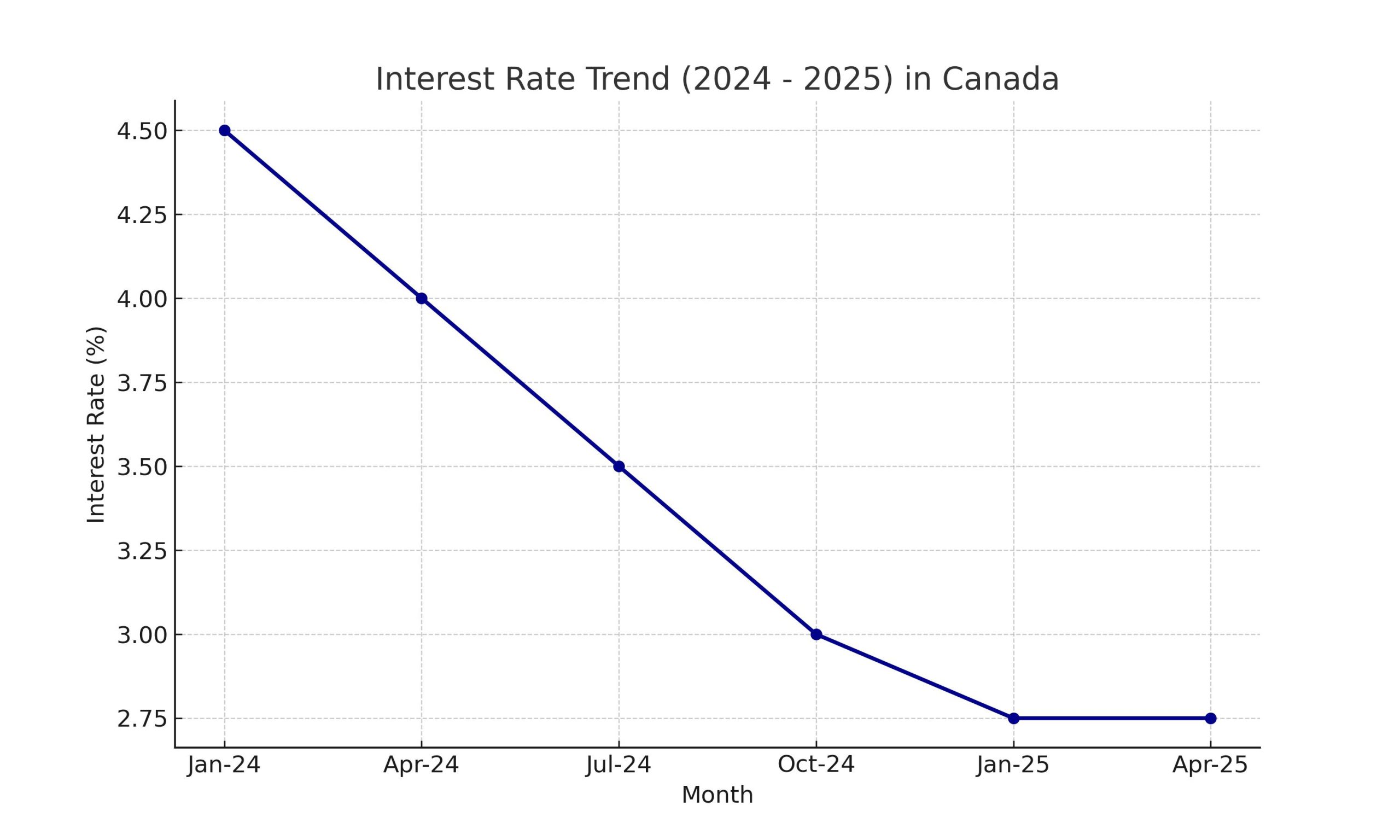
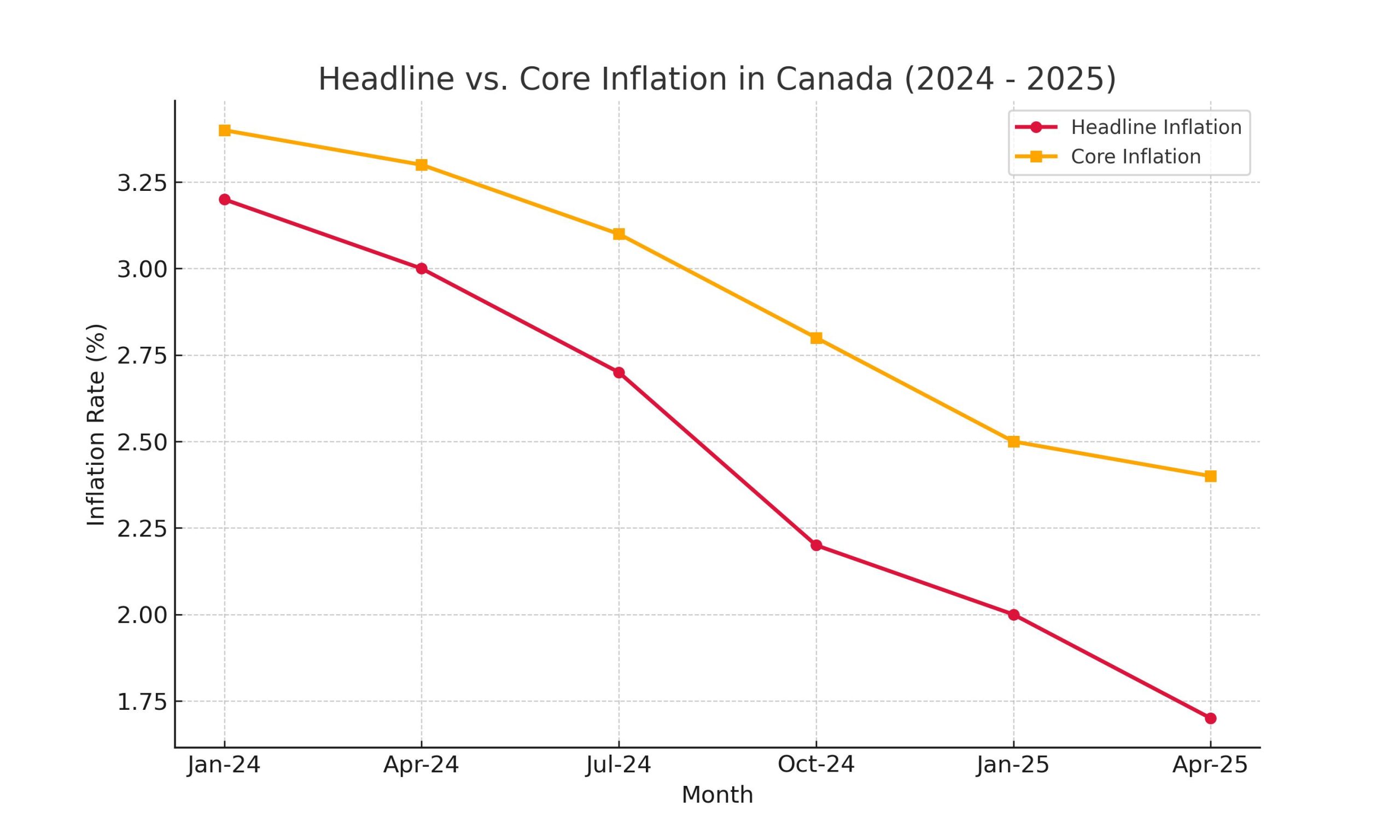
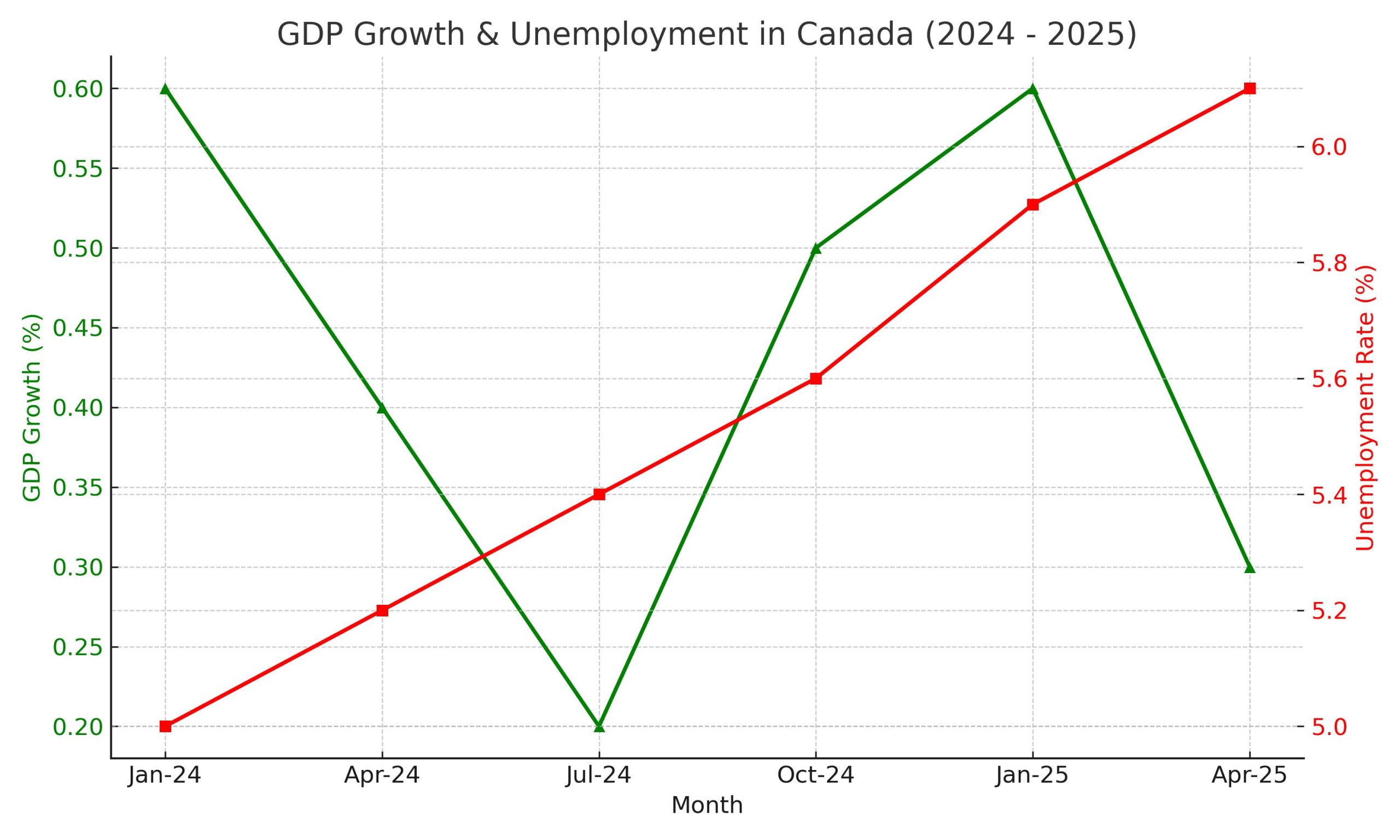


 Key Highlights for April 2025: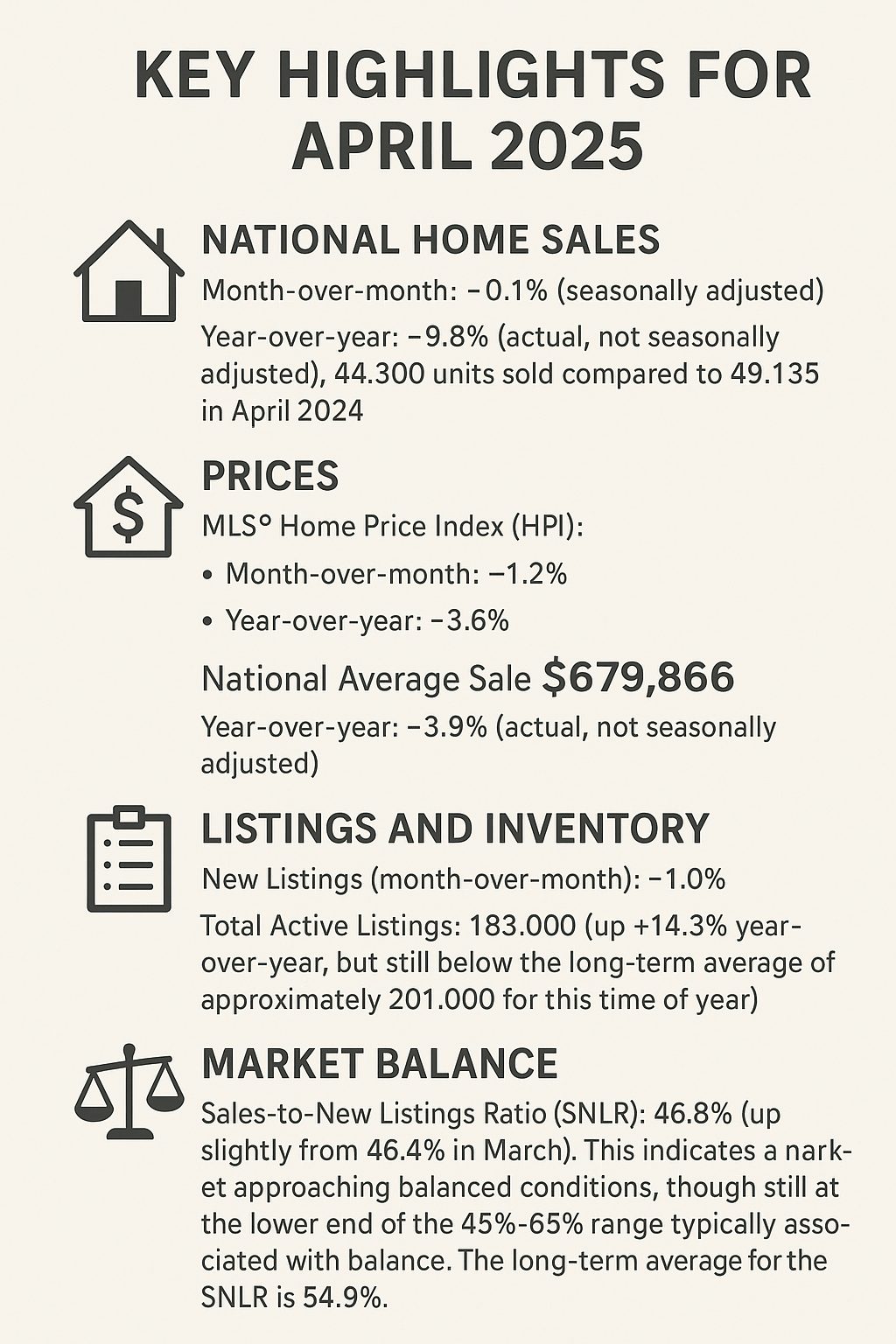

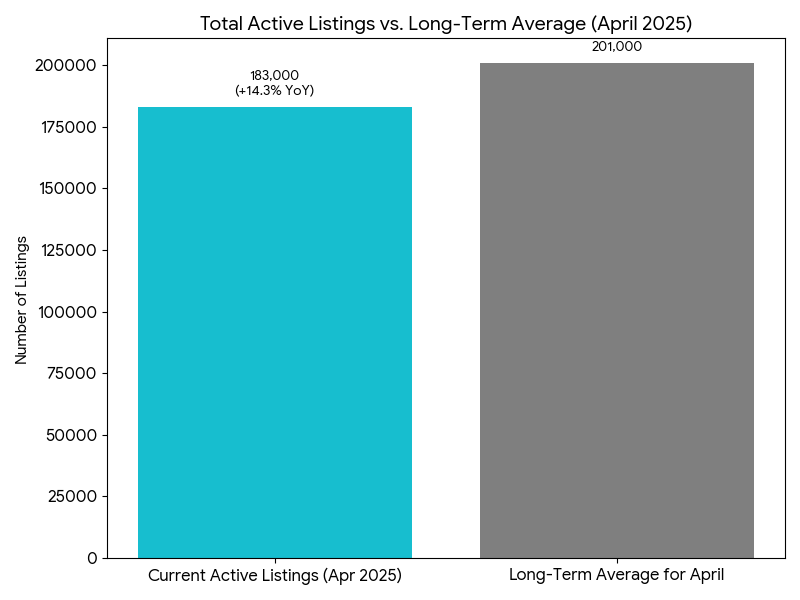 This chart compares the total number of homes available for sale at the end of April 2025 (183,000, up 14.3% year-over-year) against the typical long-term average for that time of year (approximately 201,000). It shows that while listings have increased from last year, they still haven’t reached the historical average for April. Sales-to-New Listings Ratio (SNLR) – April 2025 This chart shows the SNLR for April 2025, comparing it to the long-term average and the thresholds for different market conditions (buyer’s, balanced, seller’s).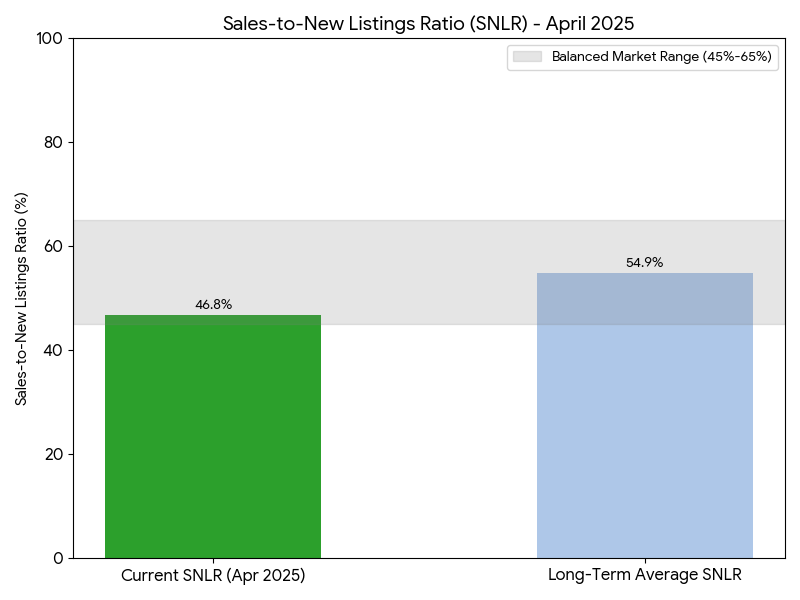
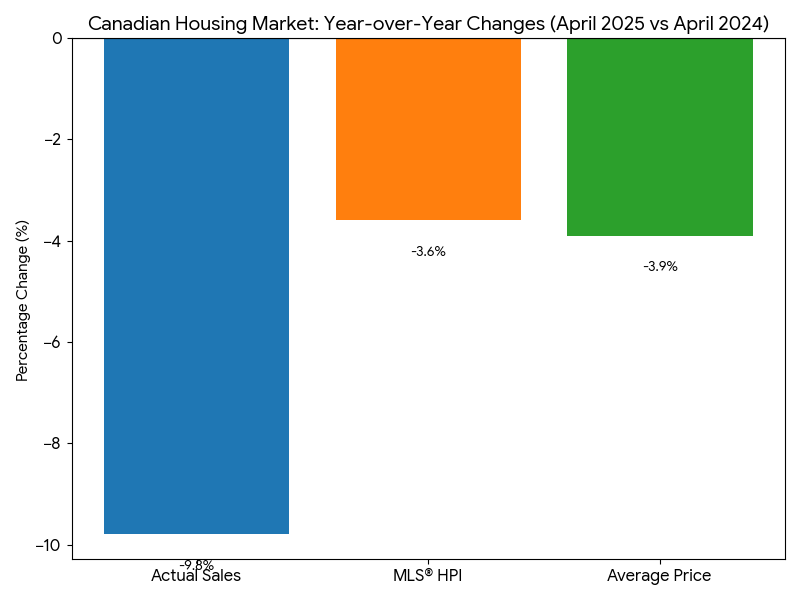 This chart illustrates the percentage change in actual home sales, the MLS® Home Price Index, and the national average sale price compared to April of the previous year. All key metrics show a decline, highlighting the cooling trend. Canadian Housing Market – Month-over-Month Changes (April 2025 vs March 2025)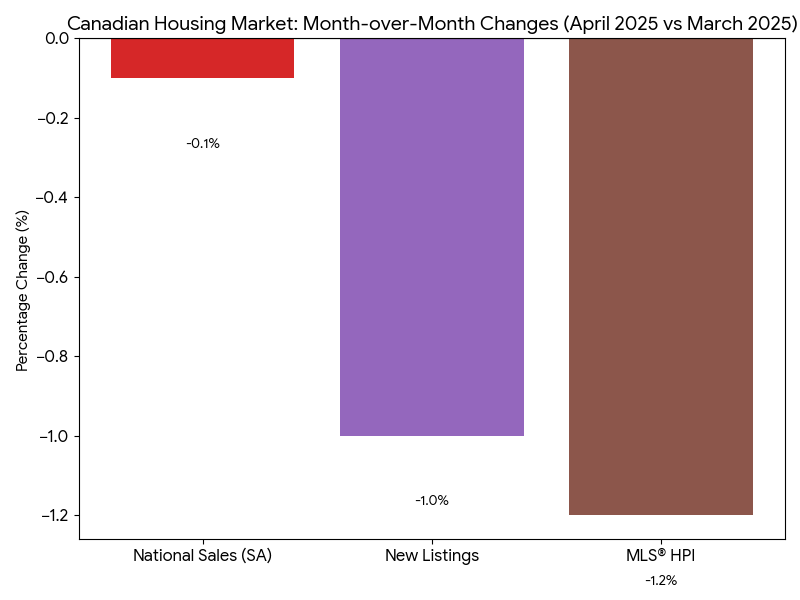




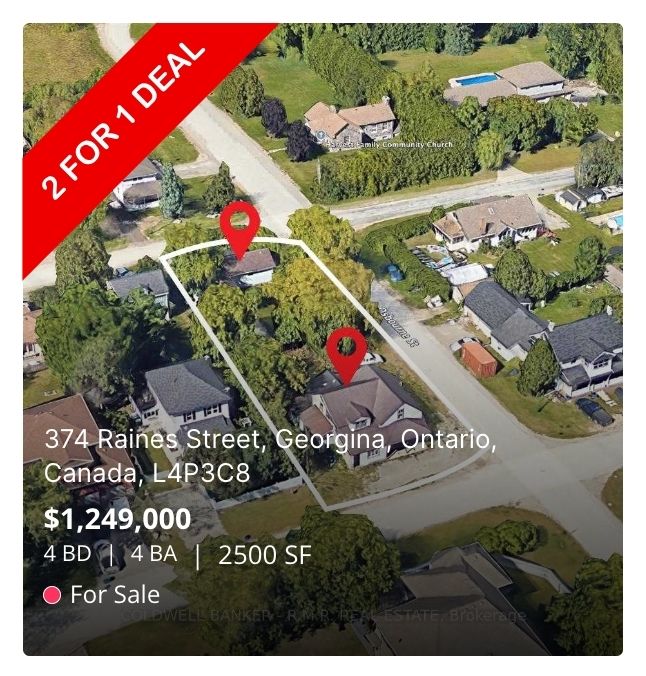
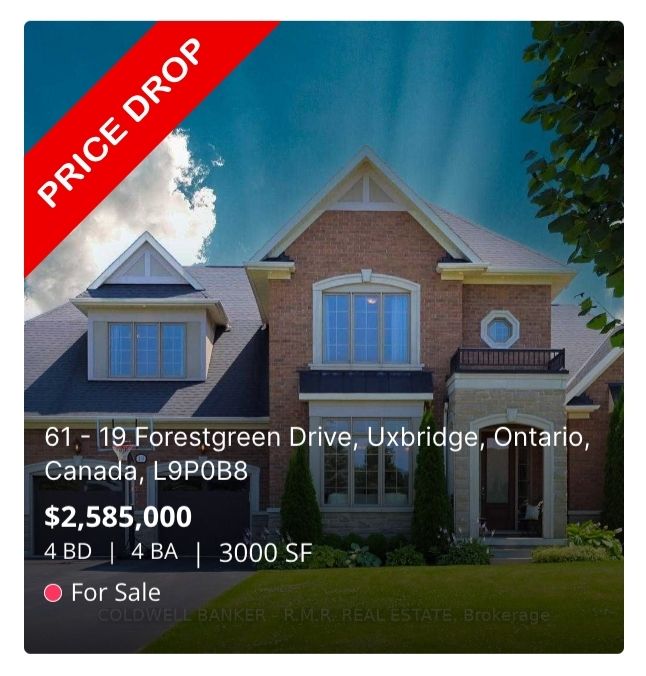
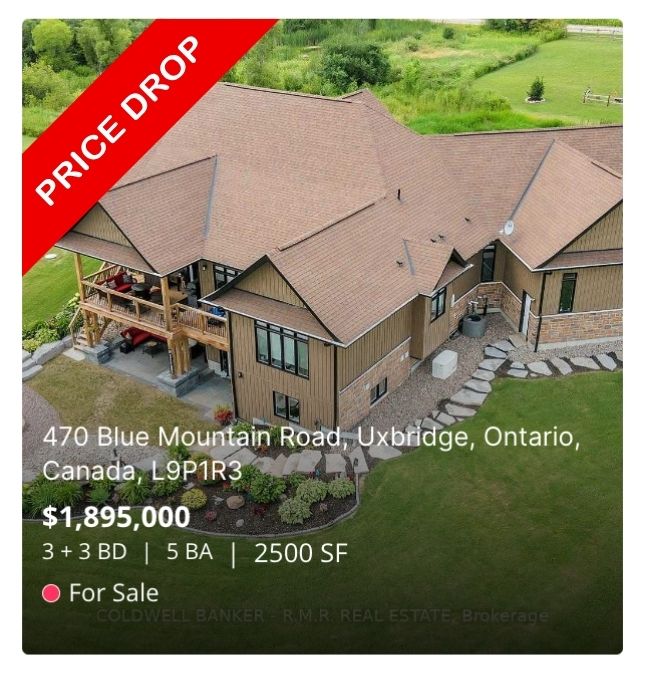
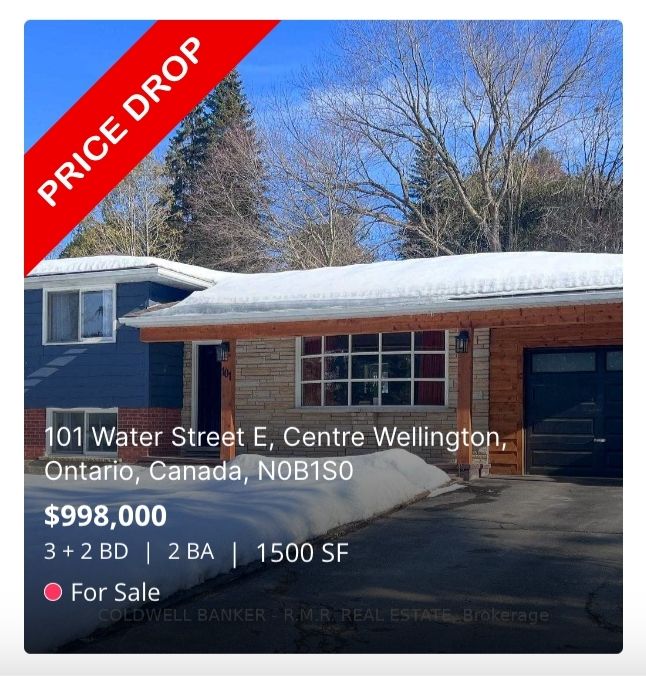
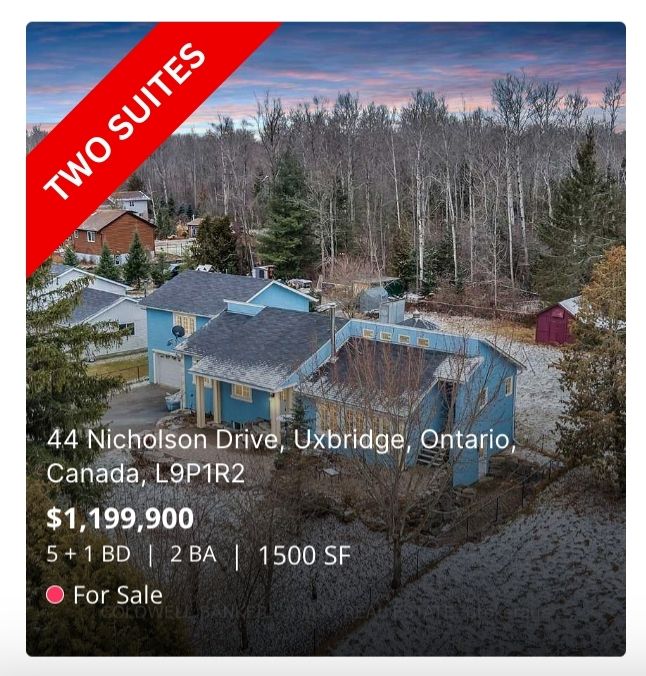
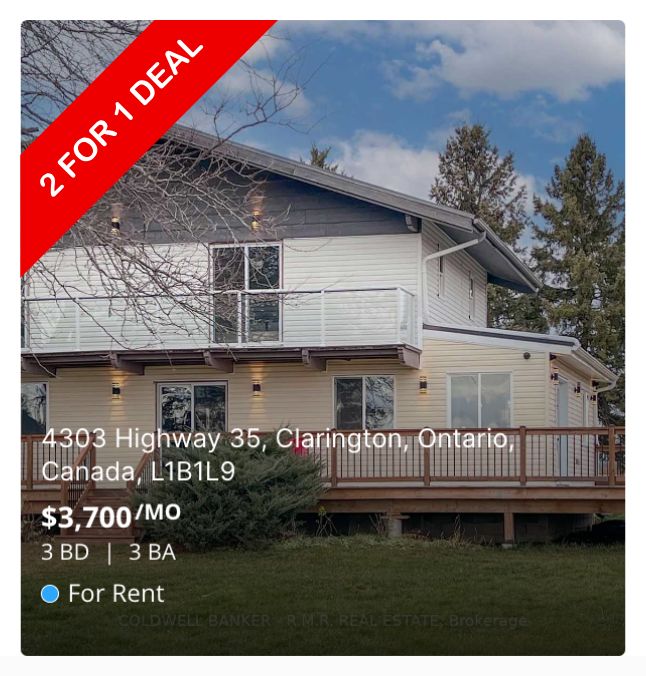

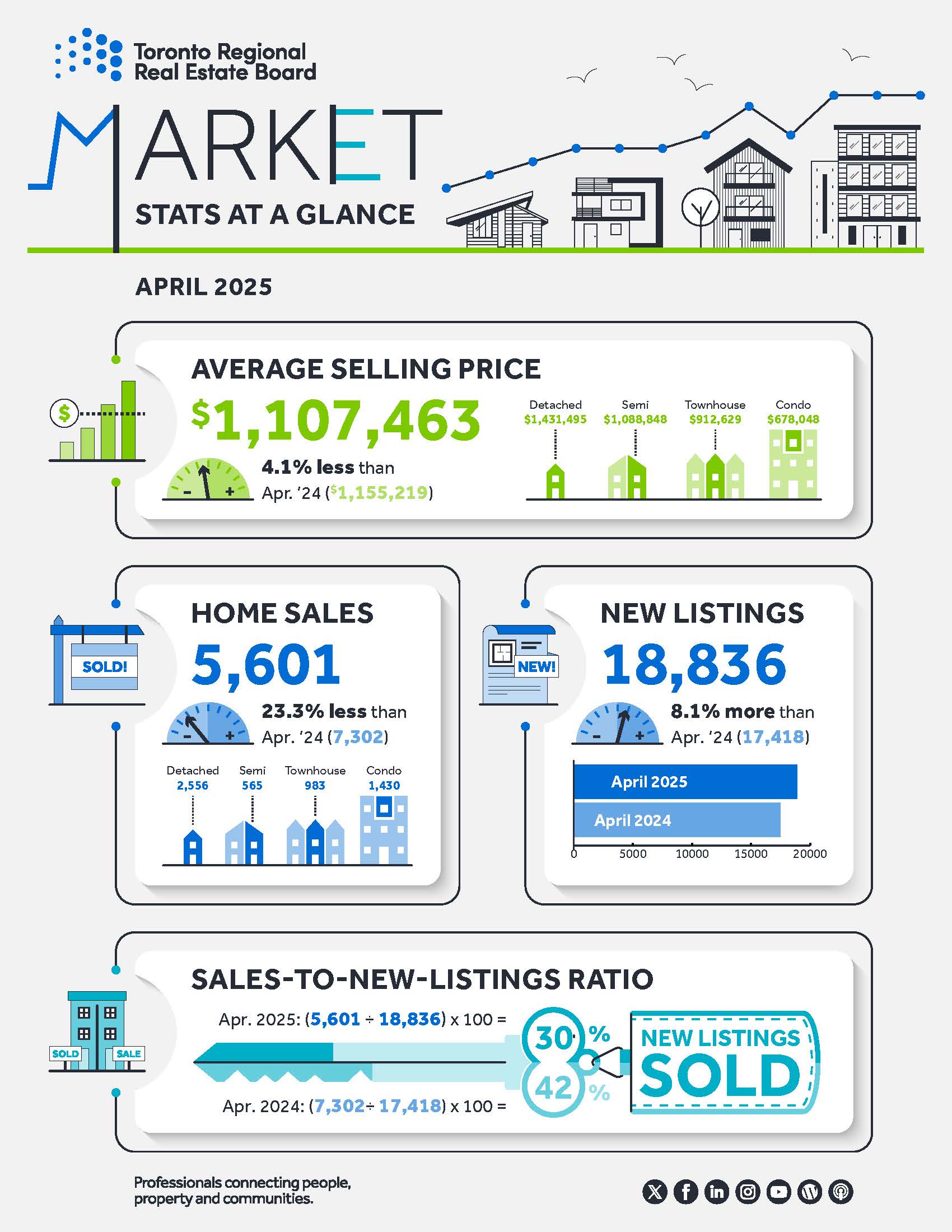
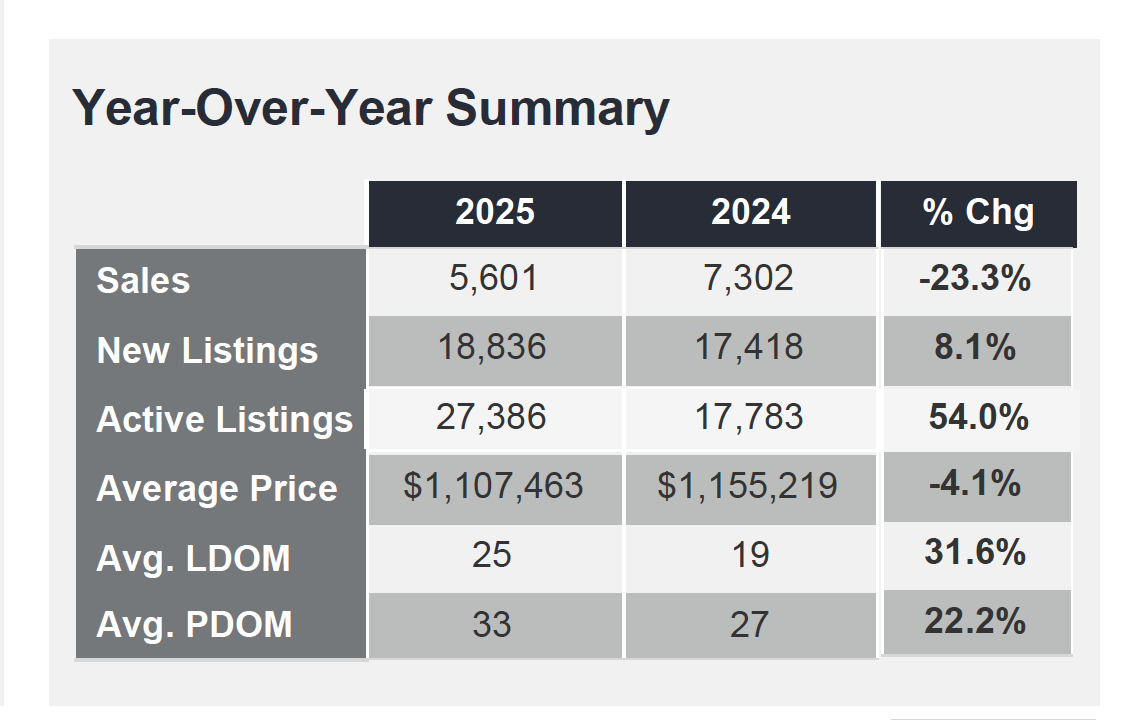
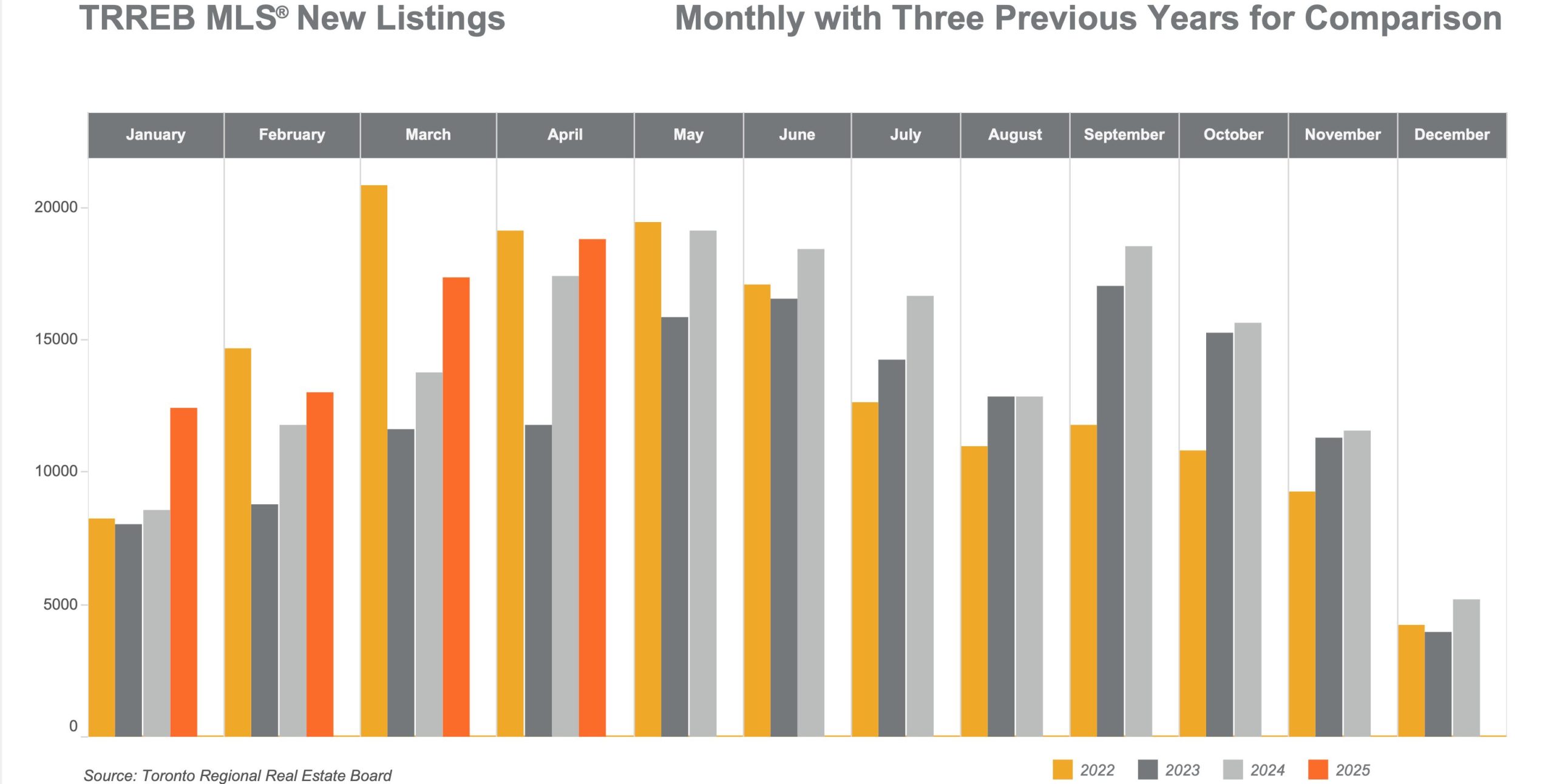
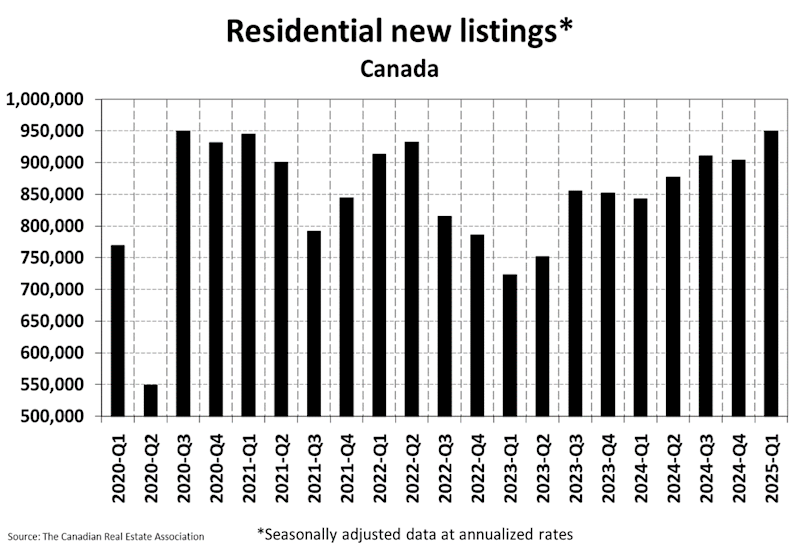
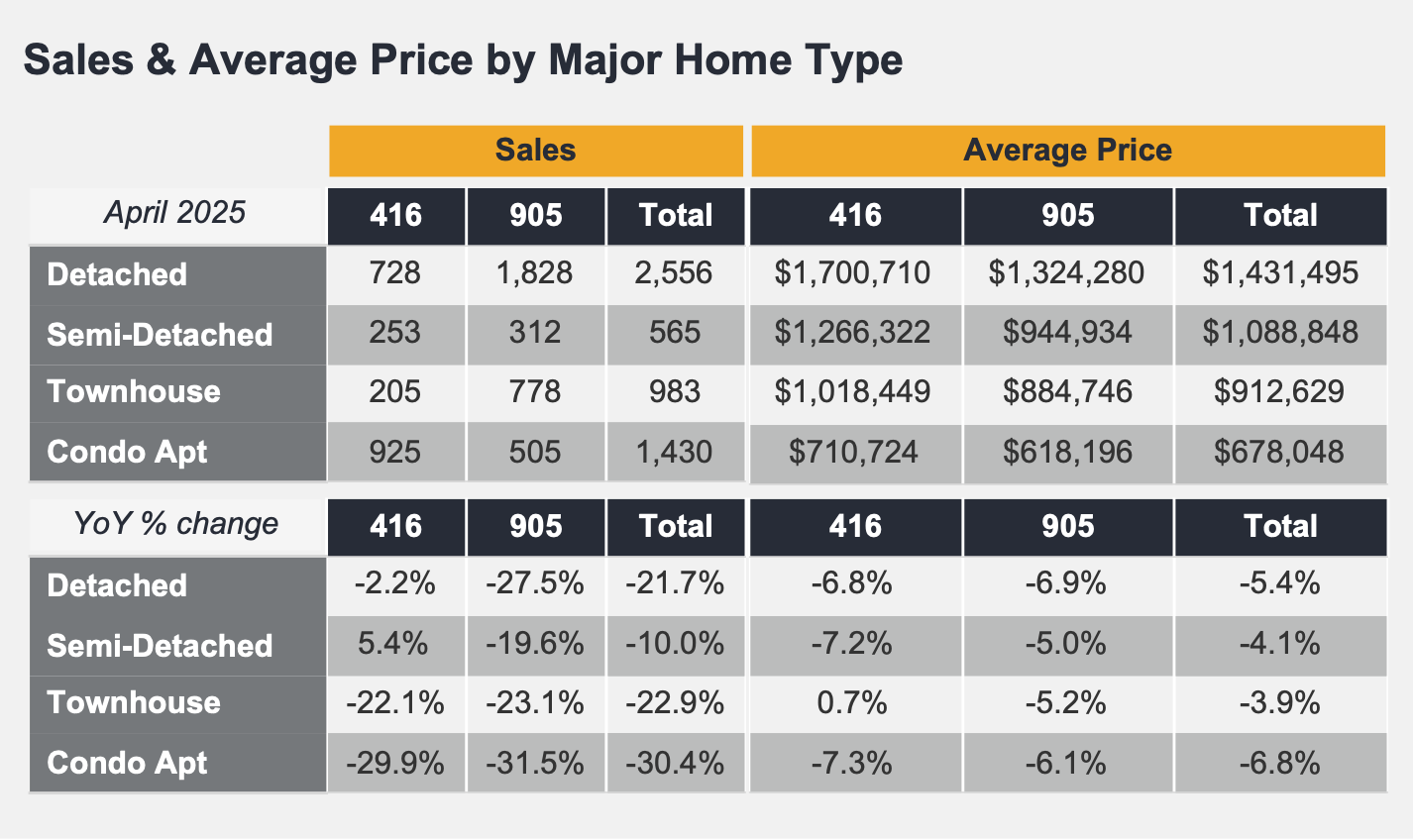
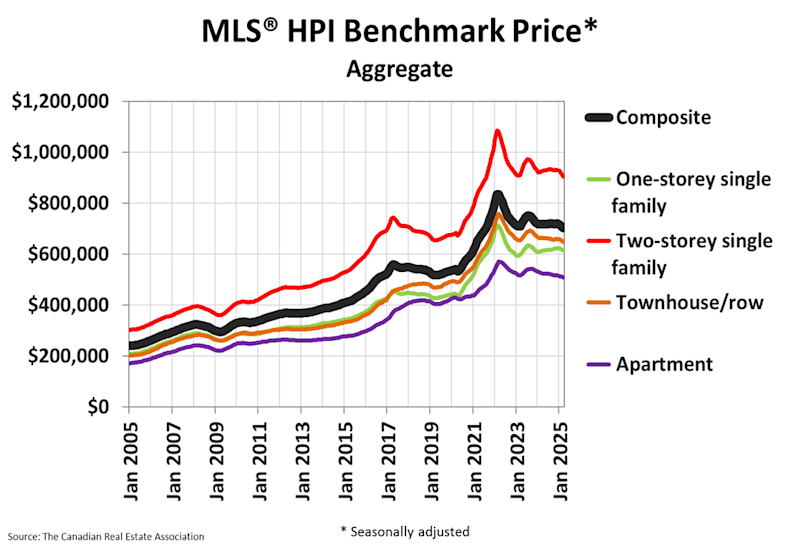
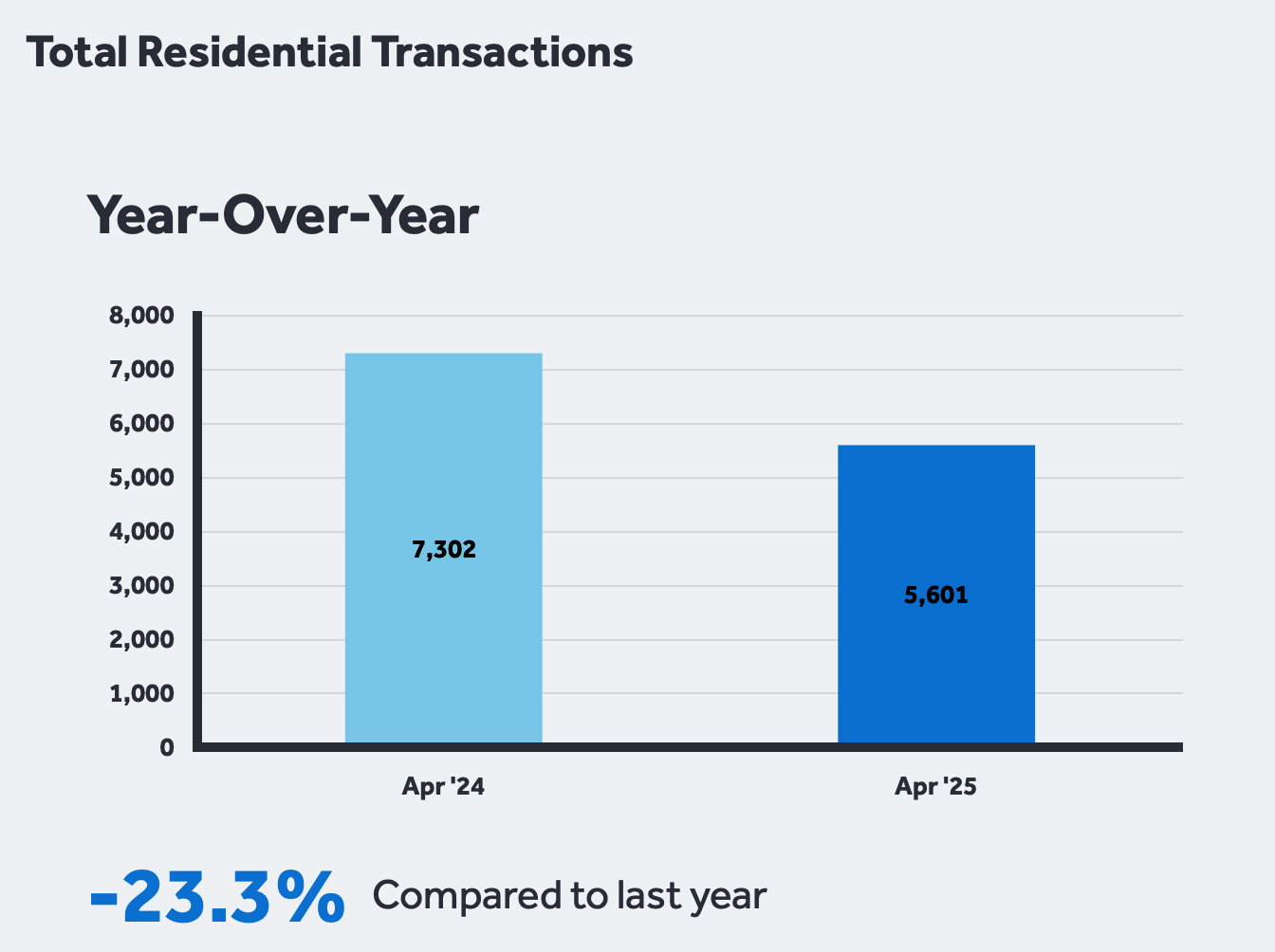
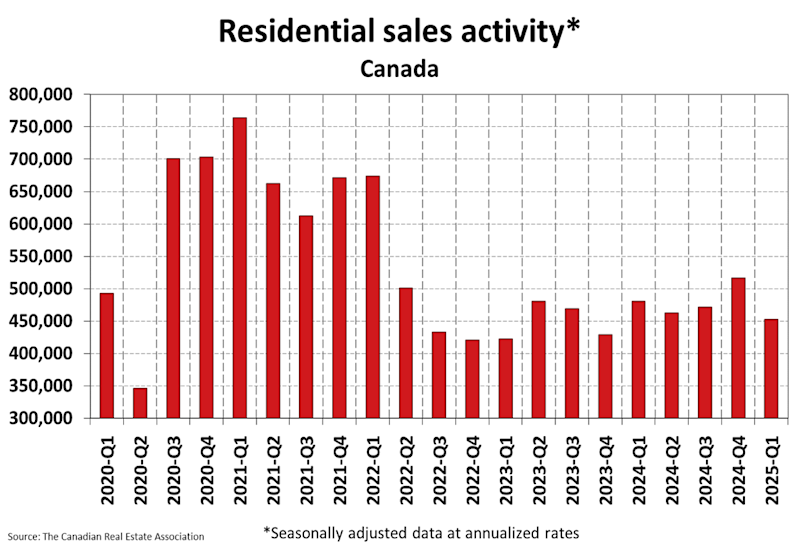
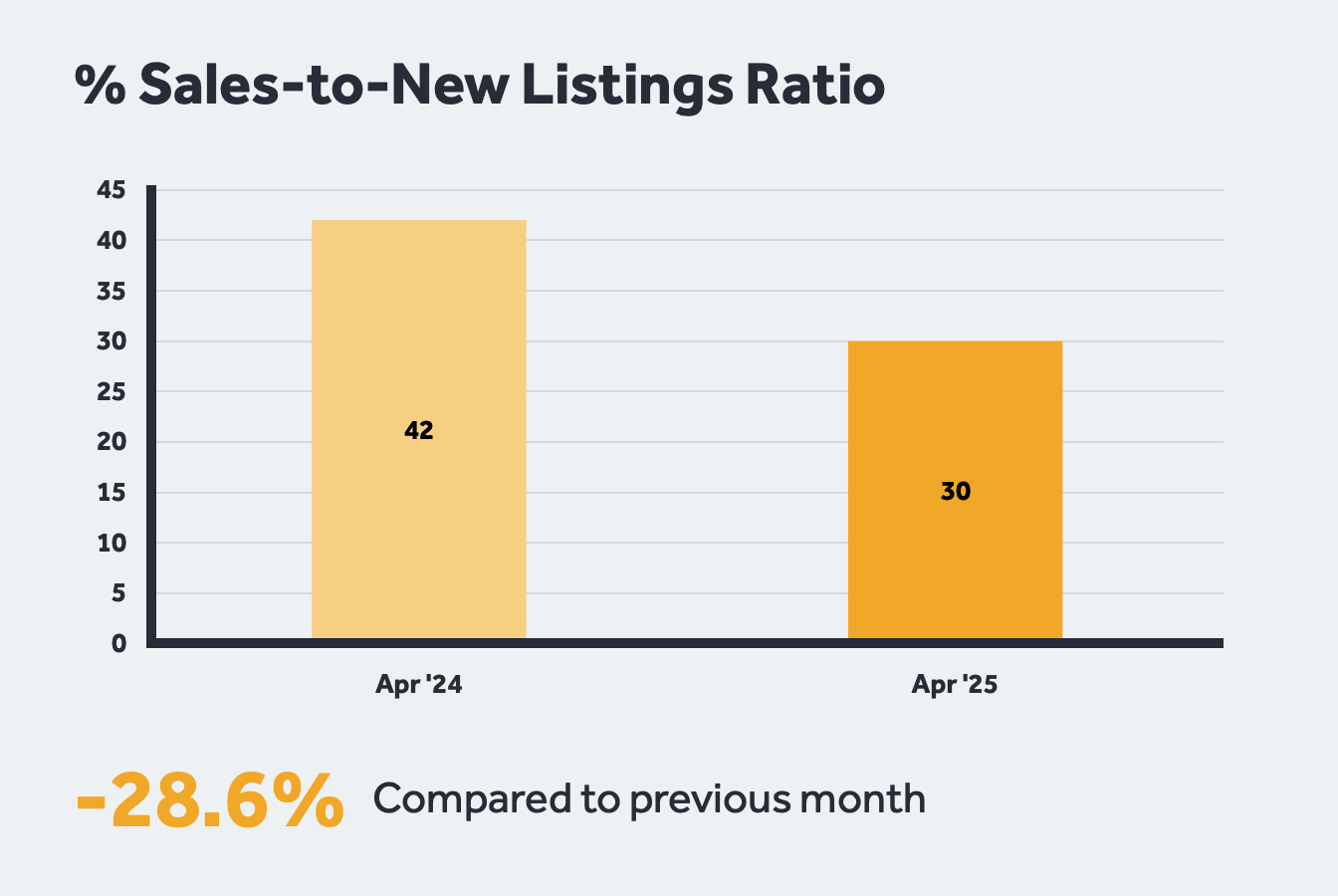
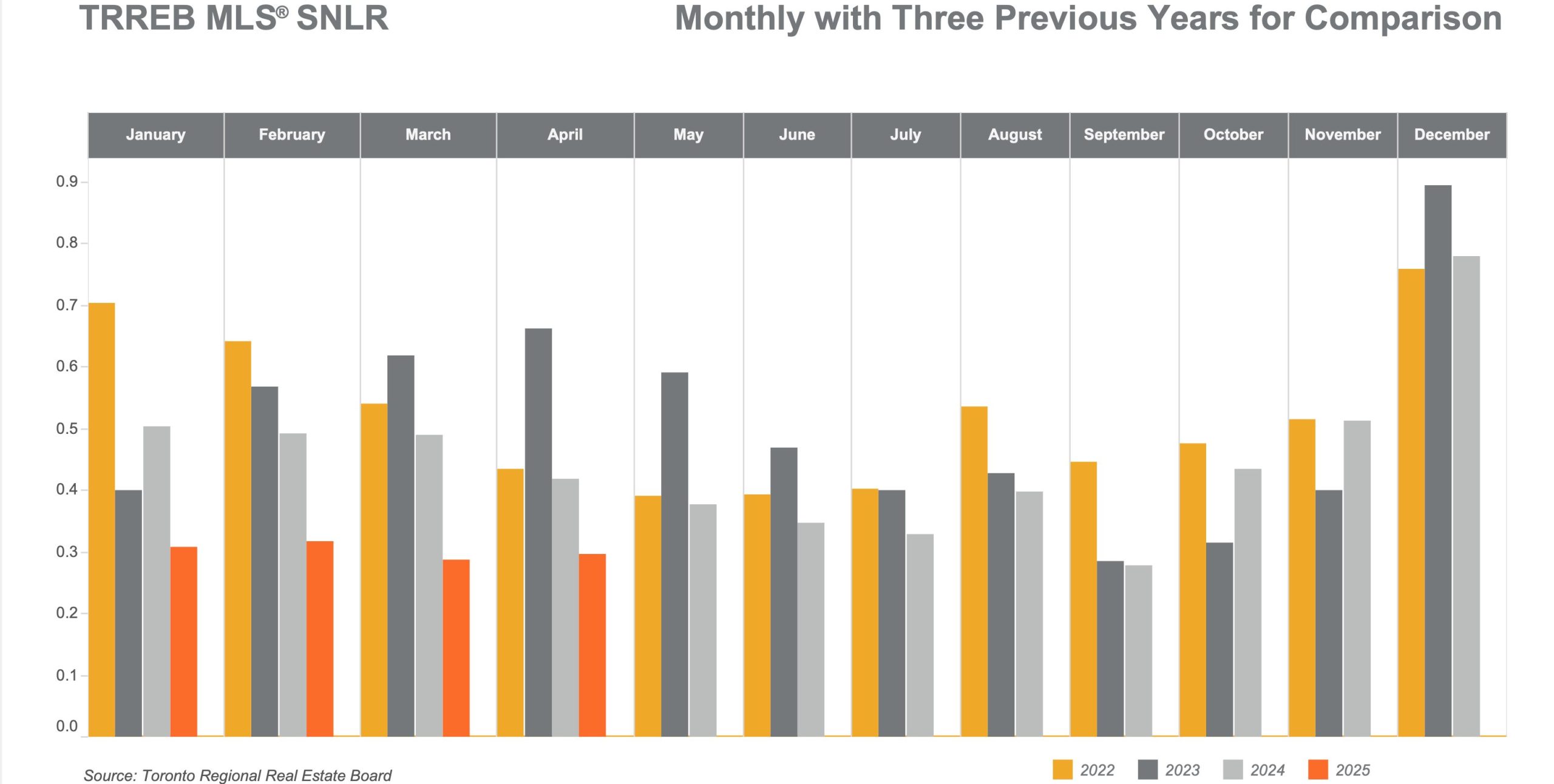
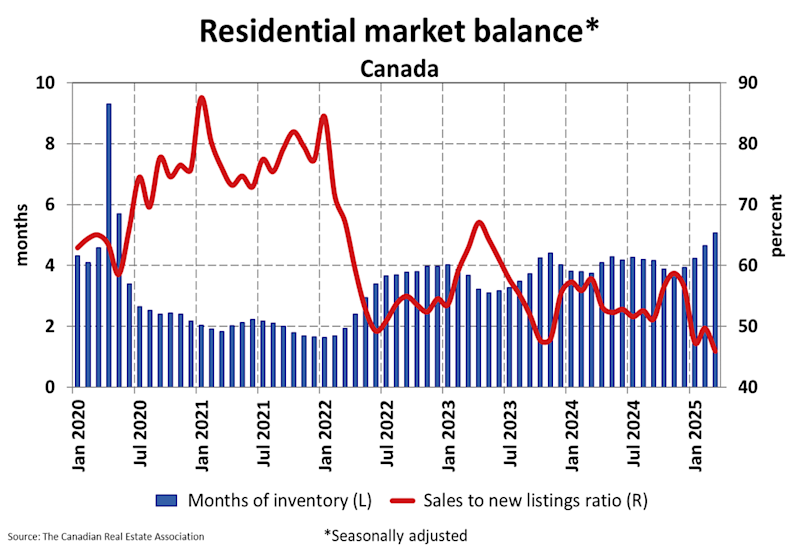

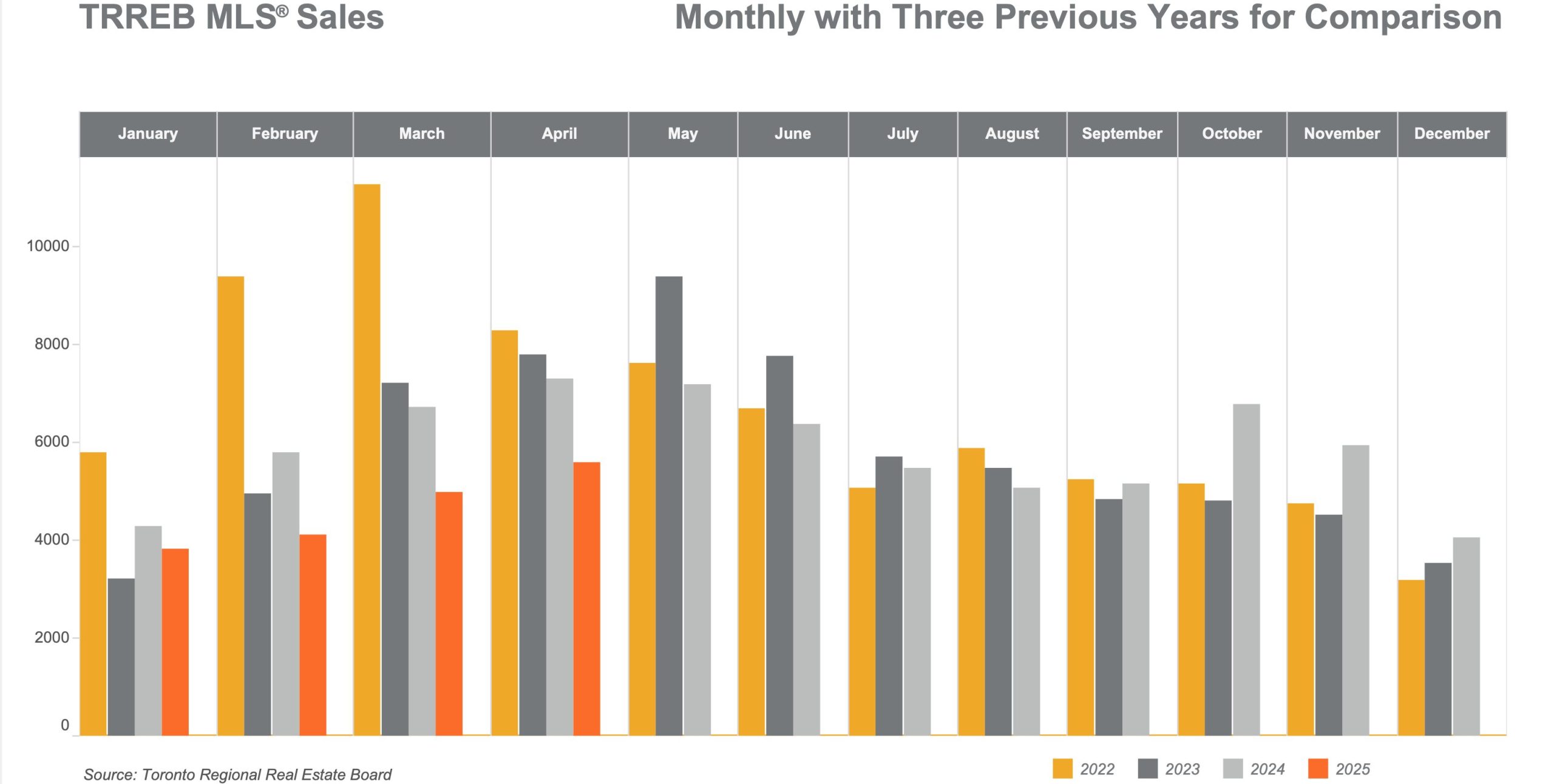

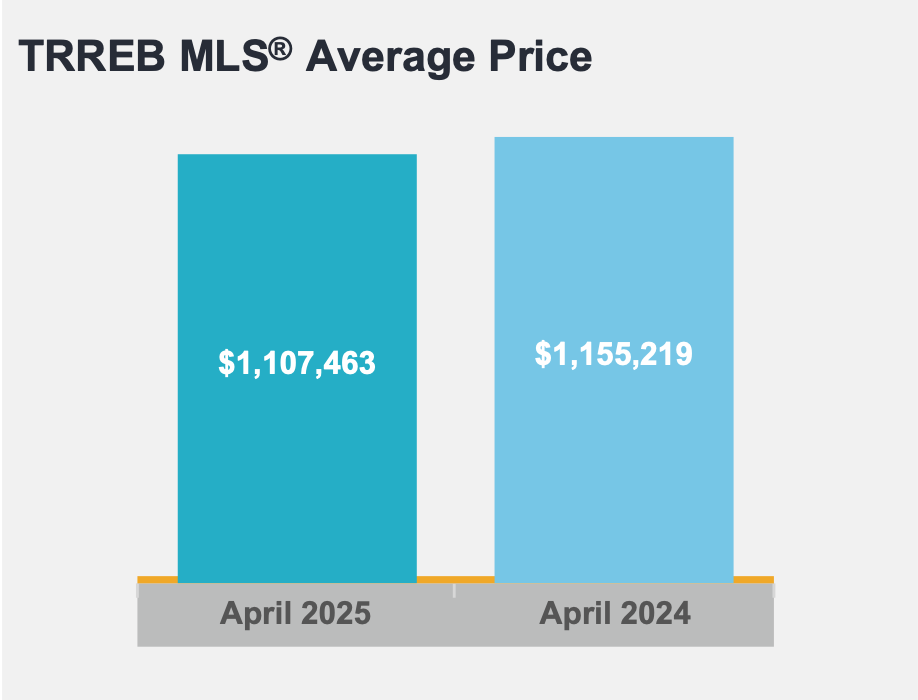
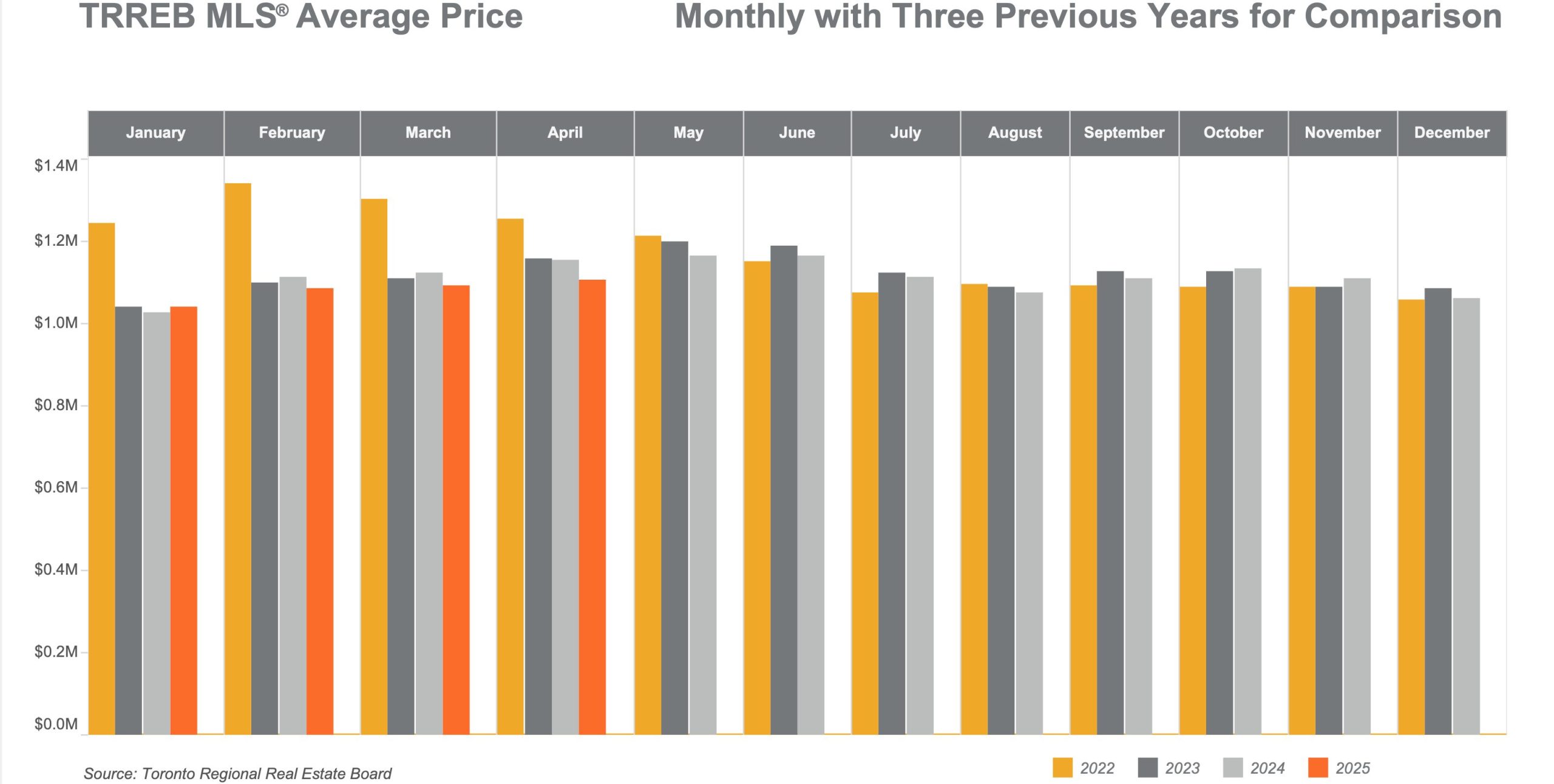
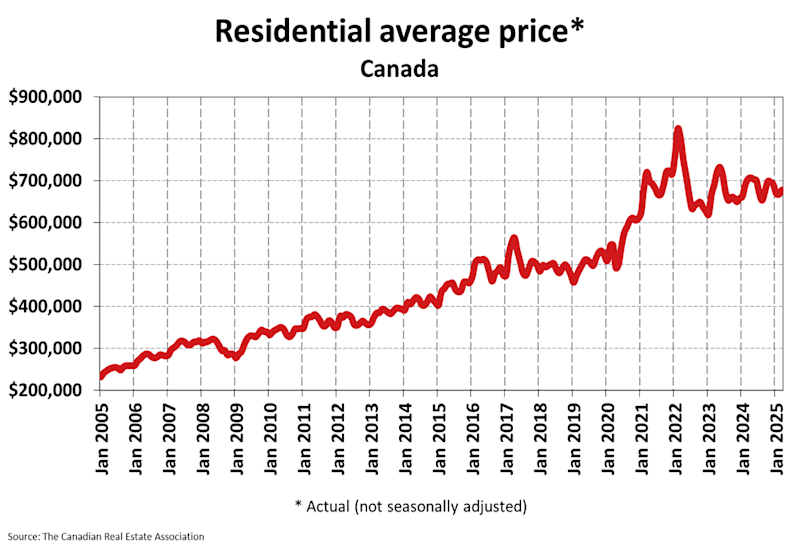
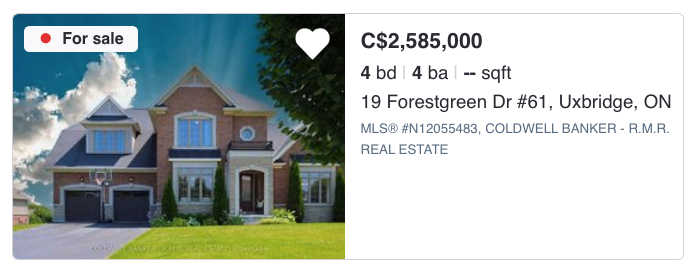
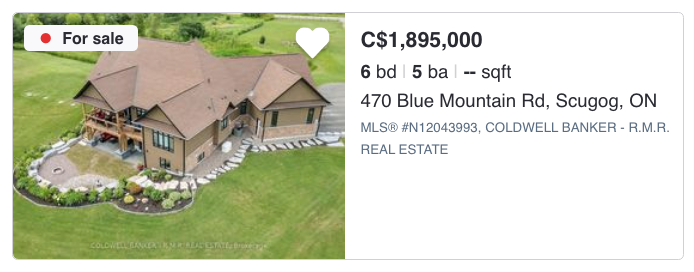
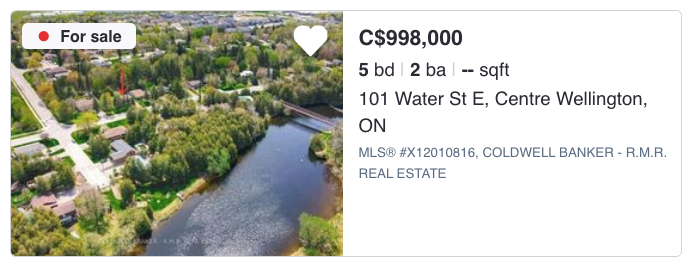
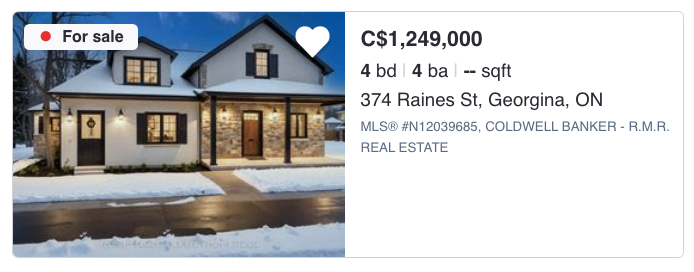





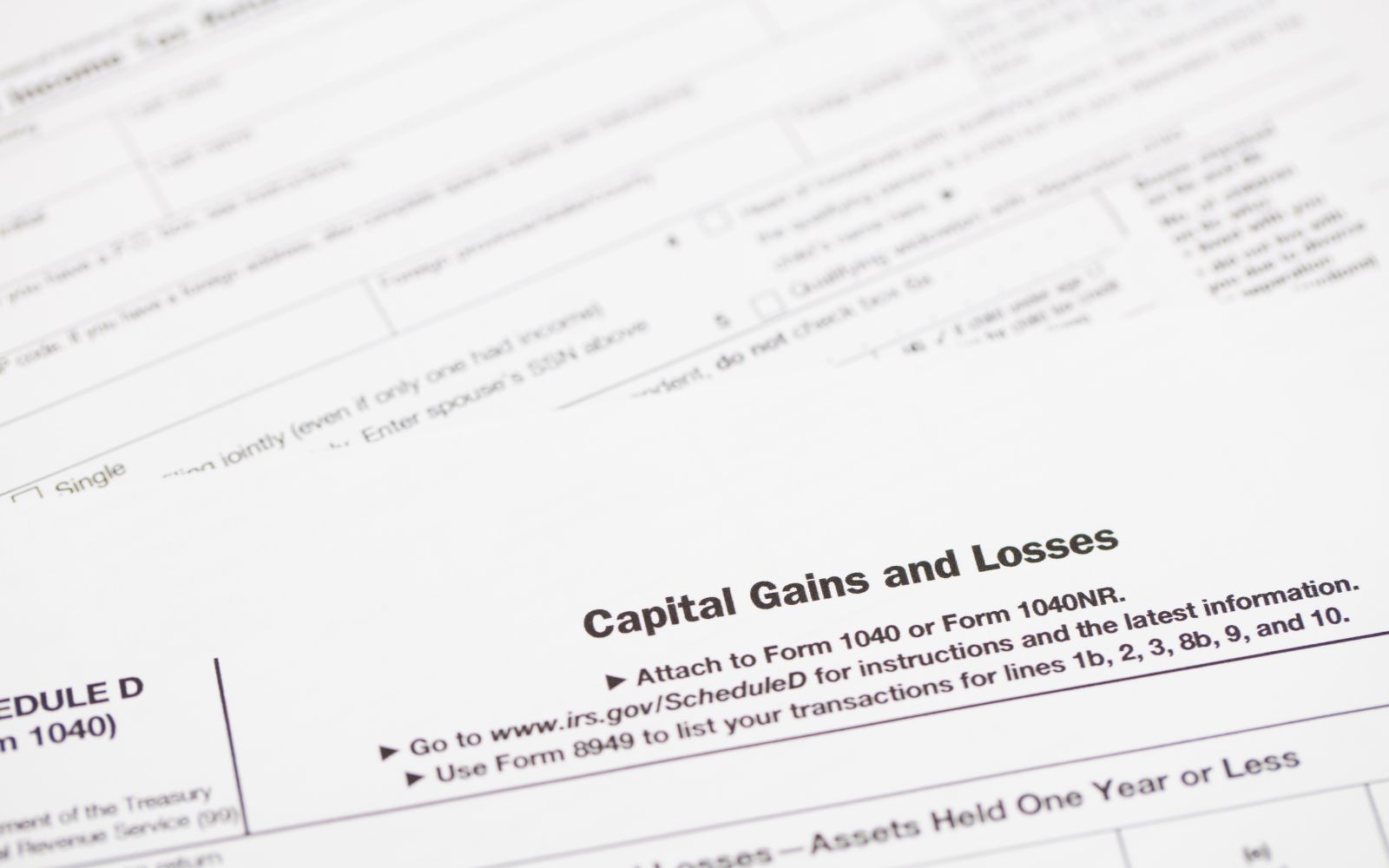






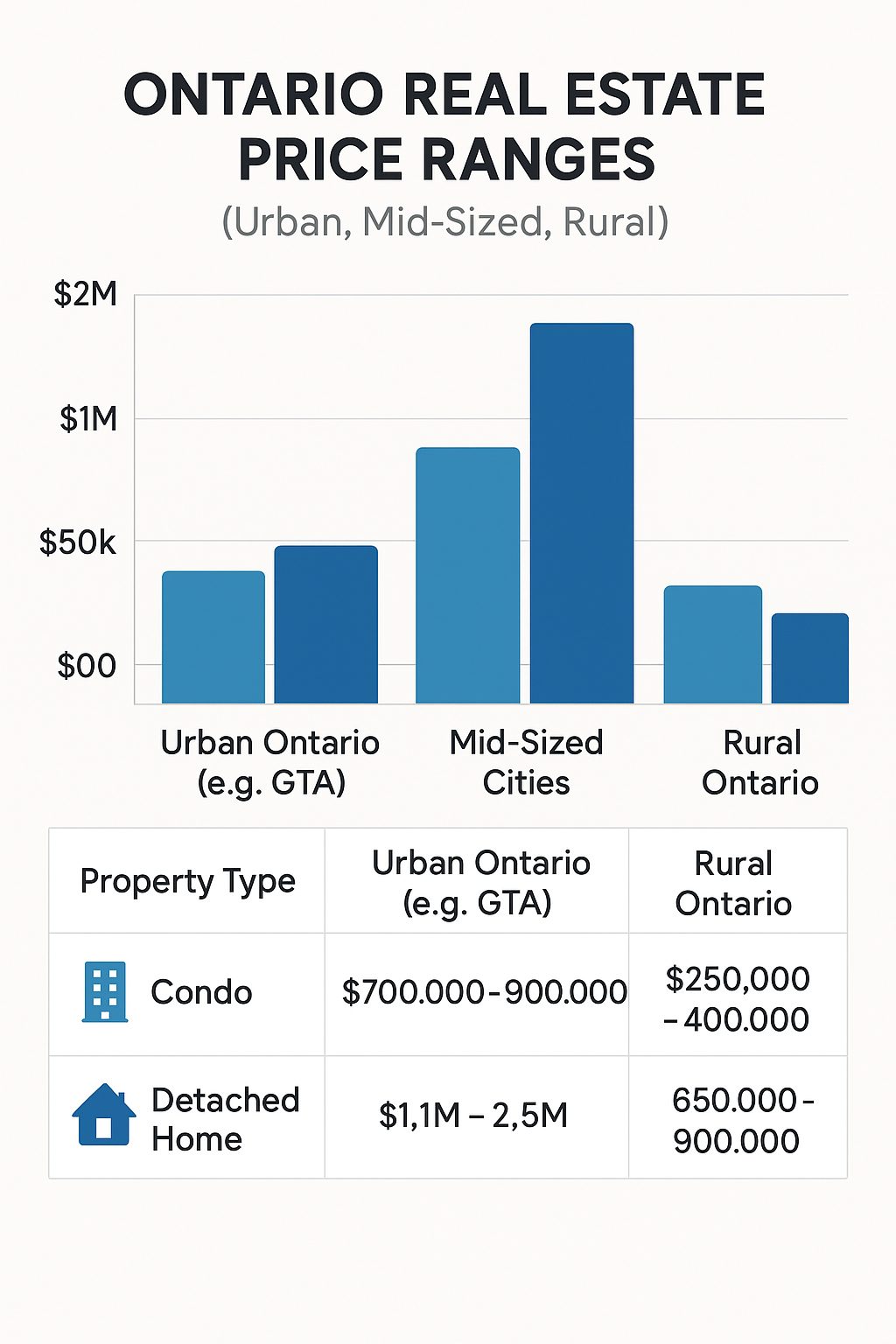






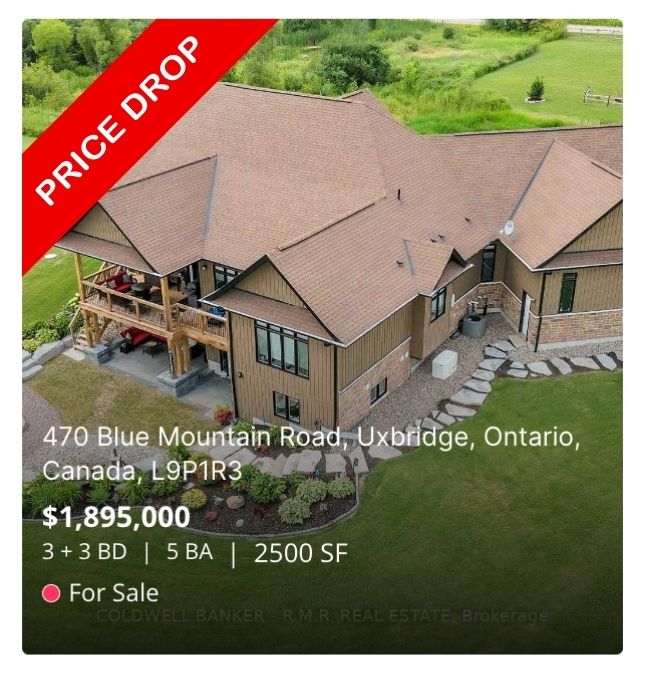
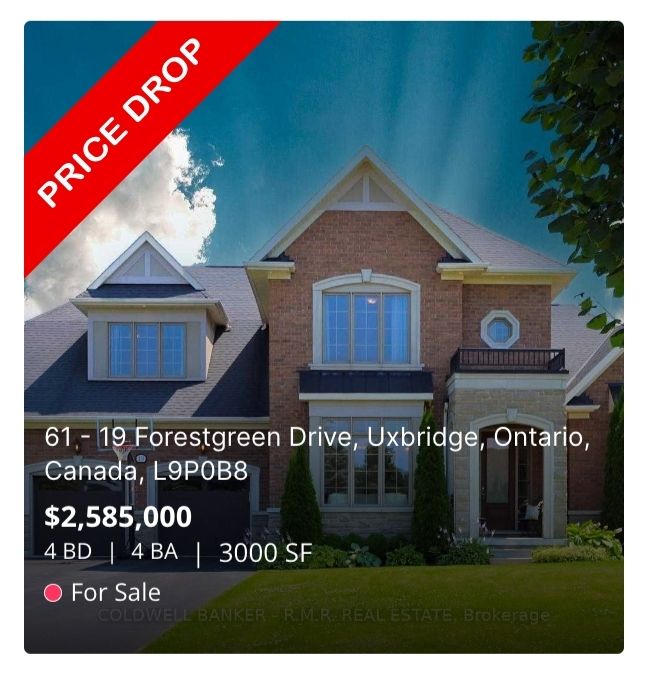
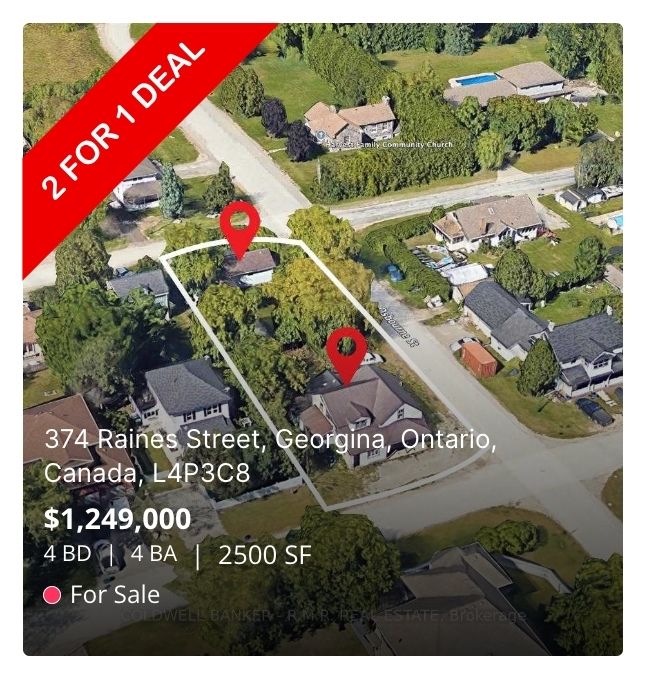
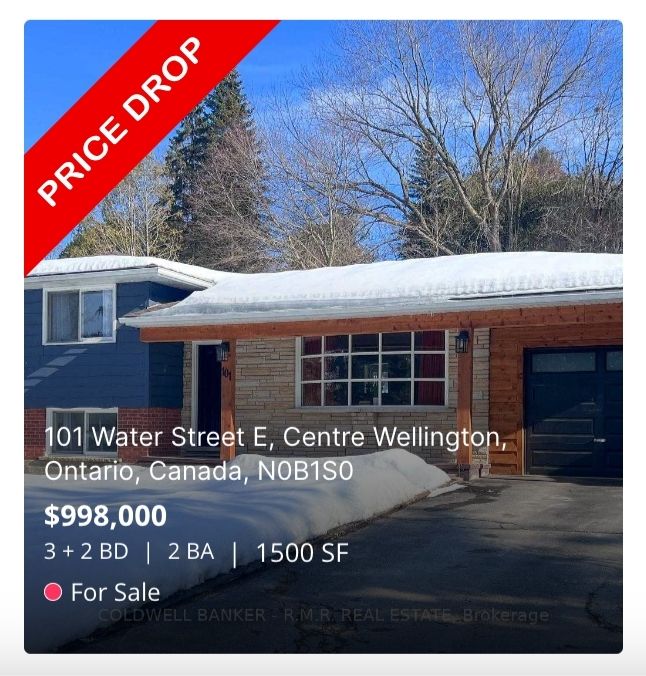
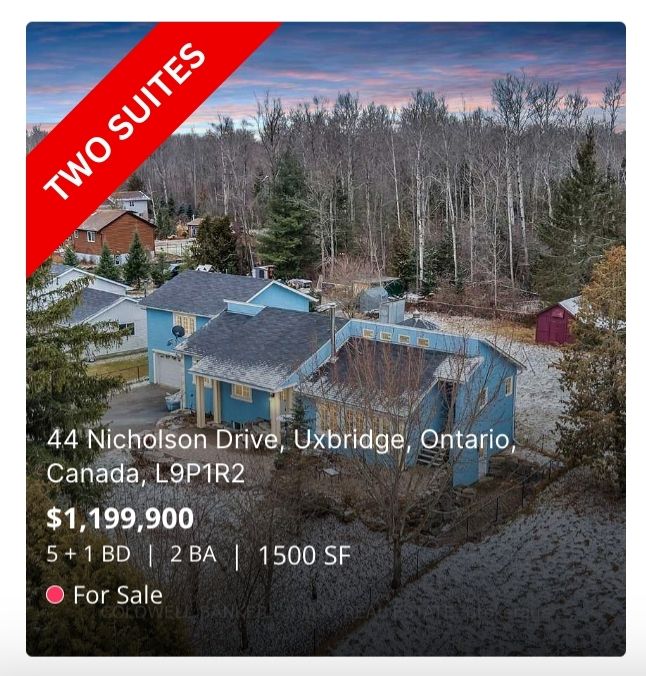
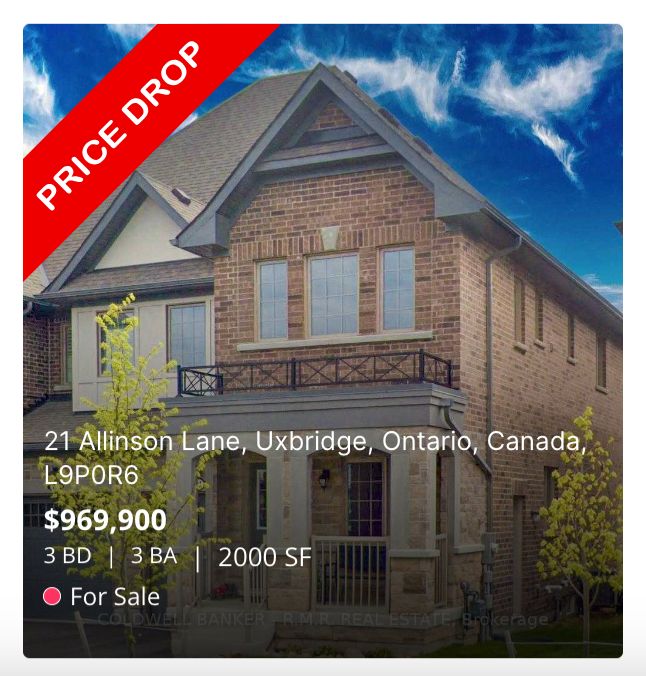

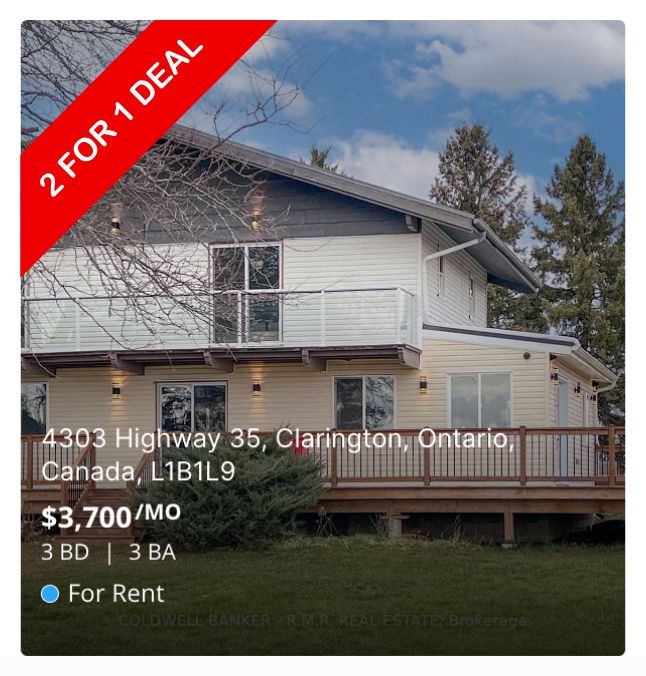







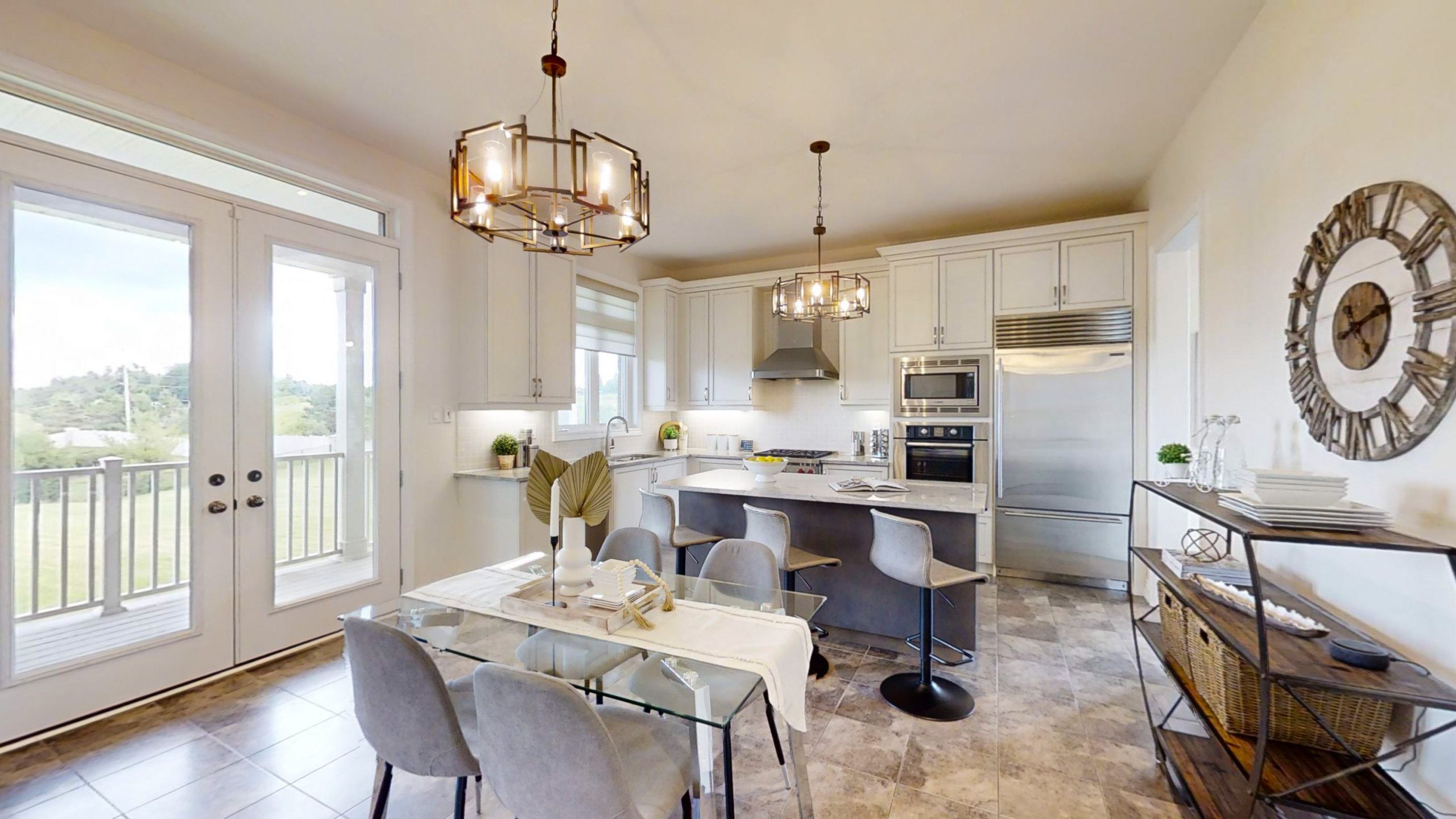




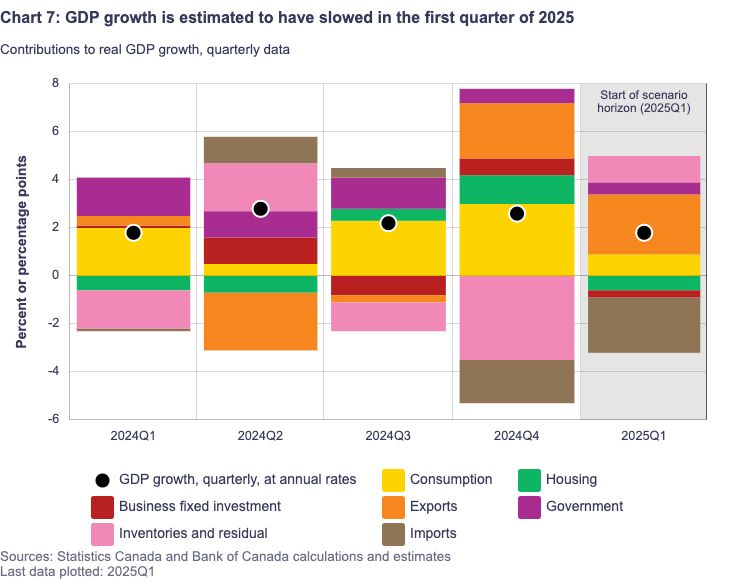
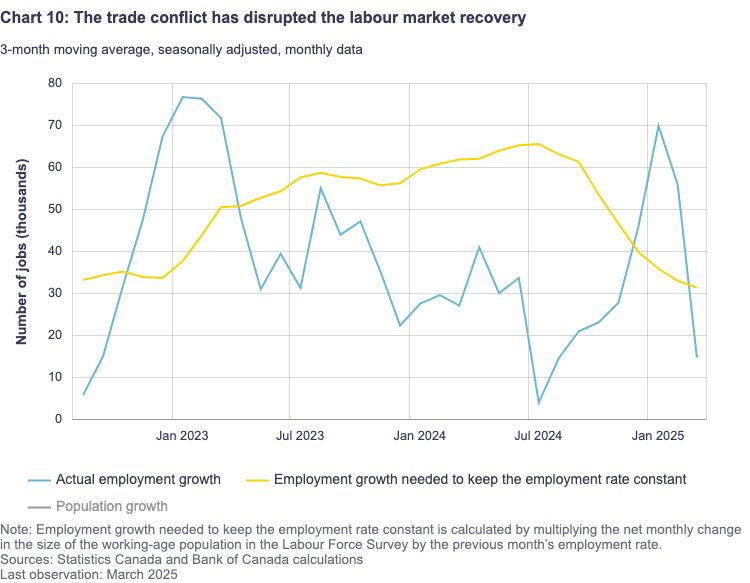
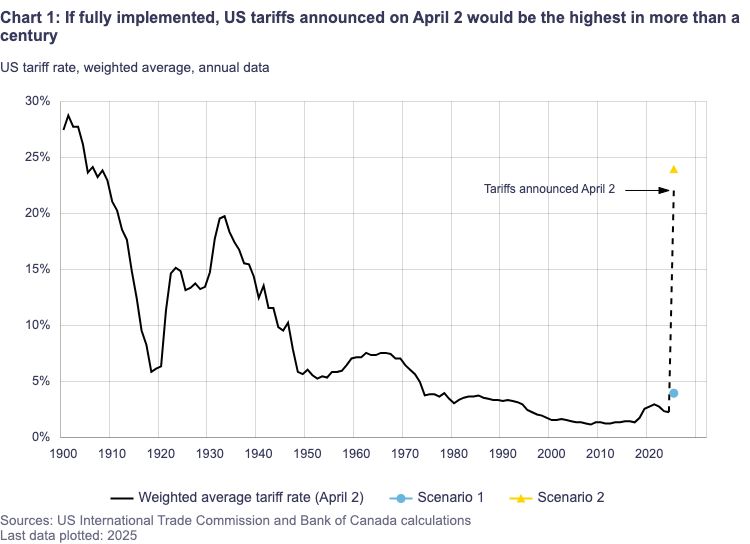
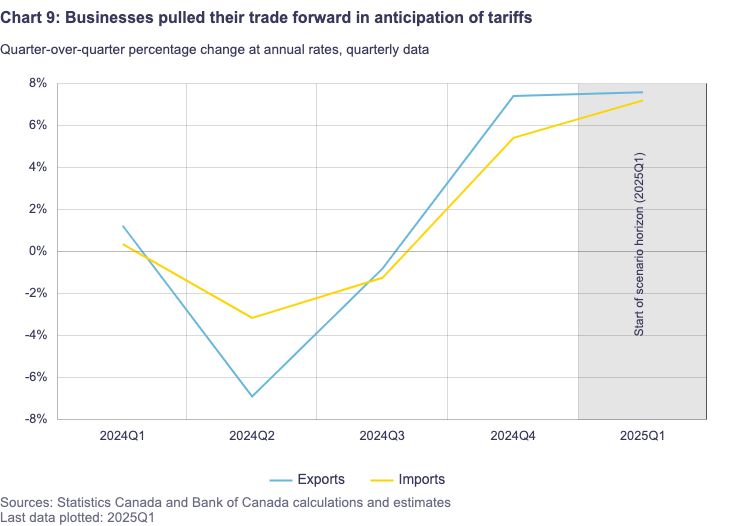
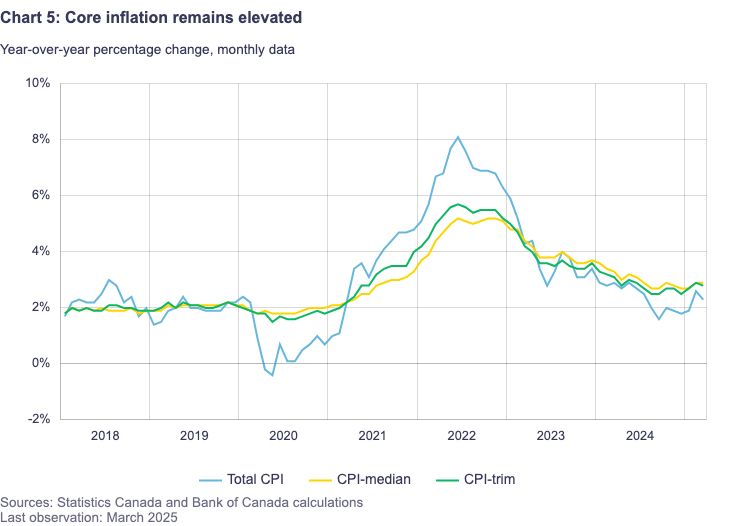
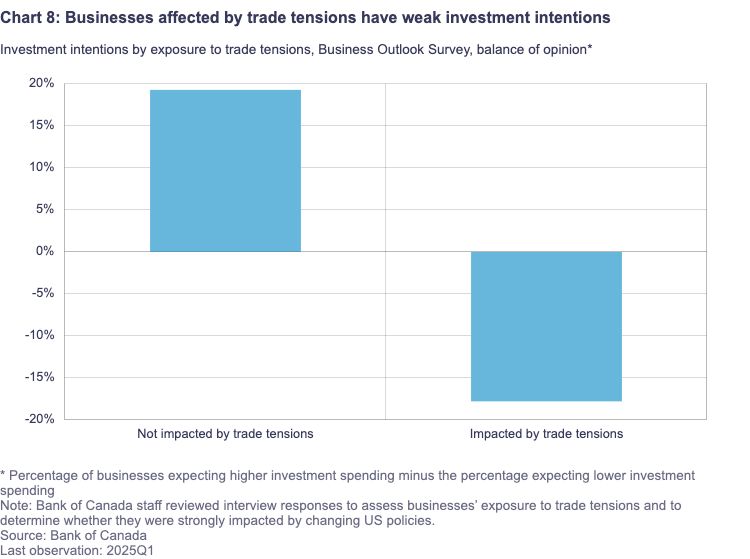
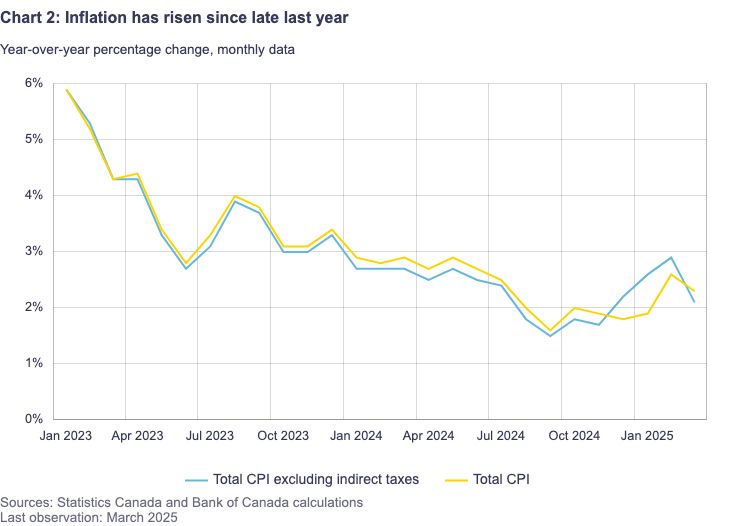
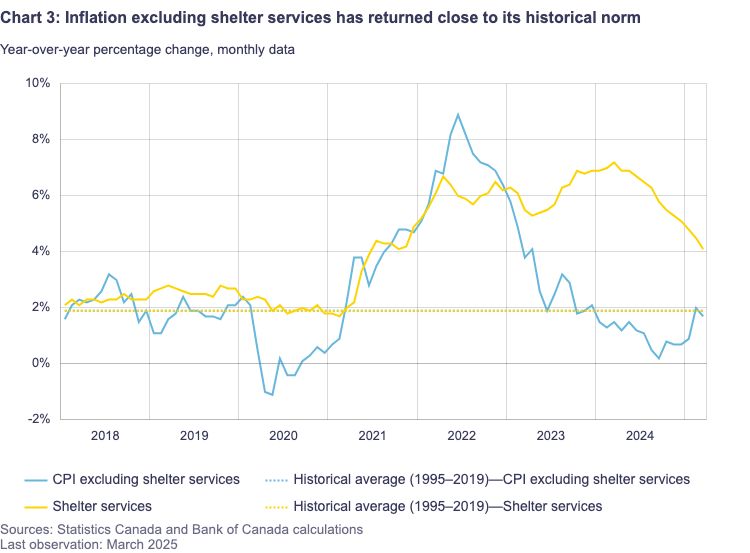


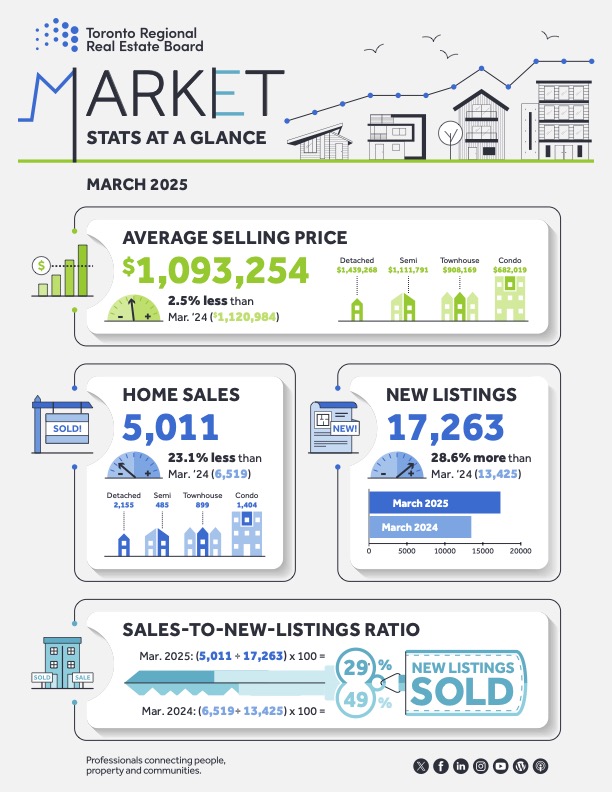
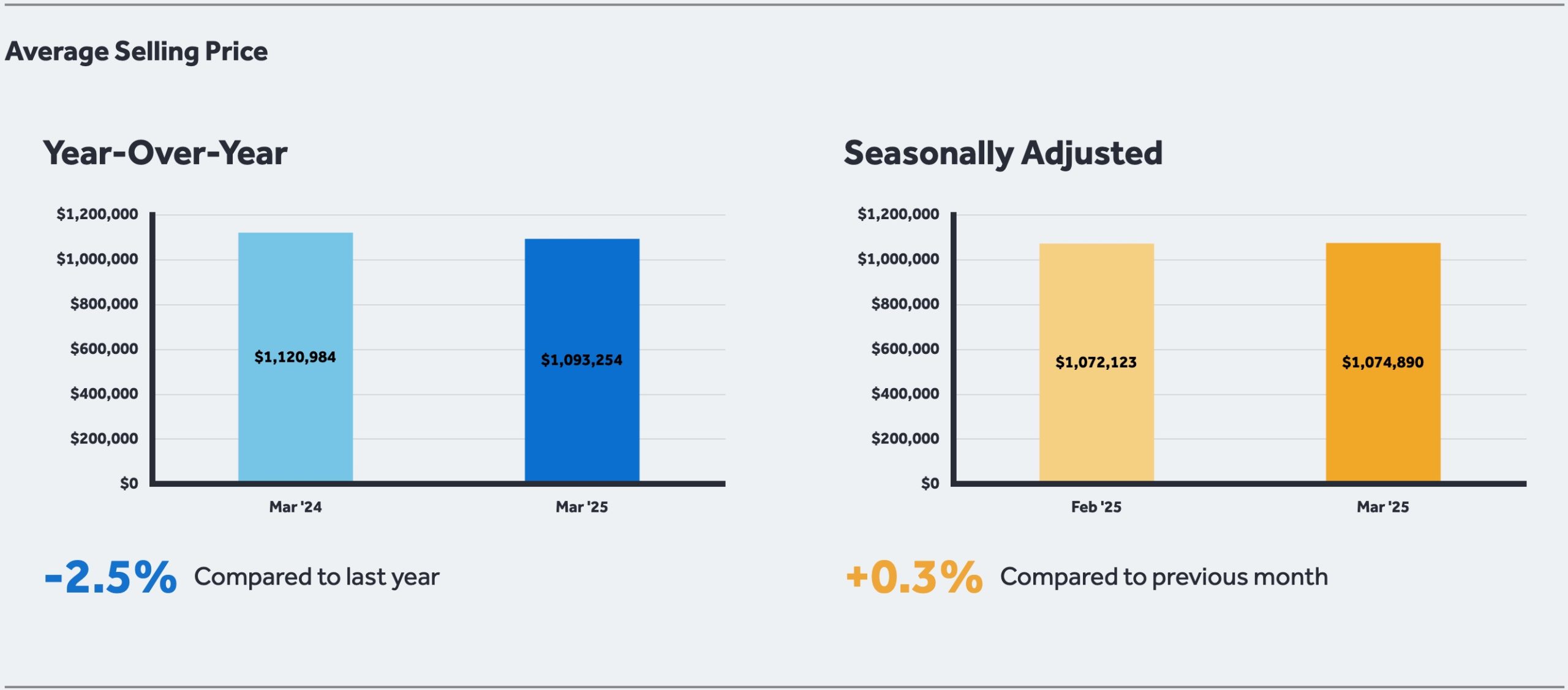
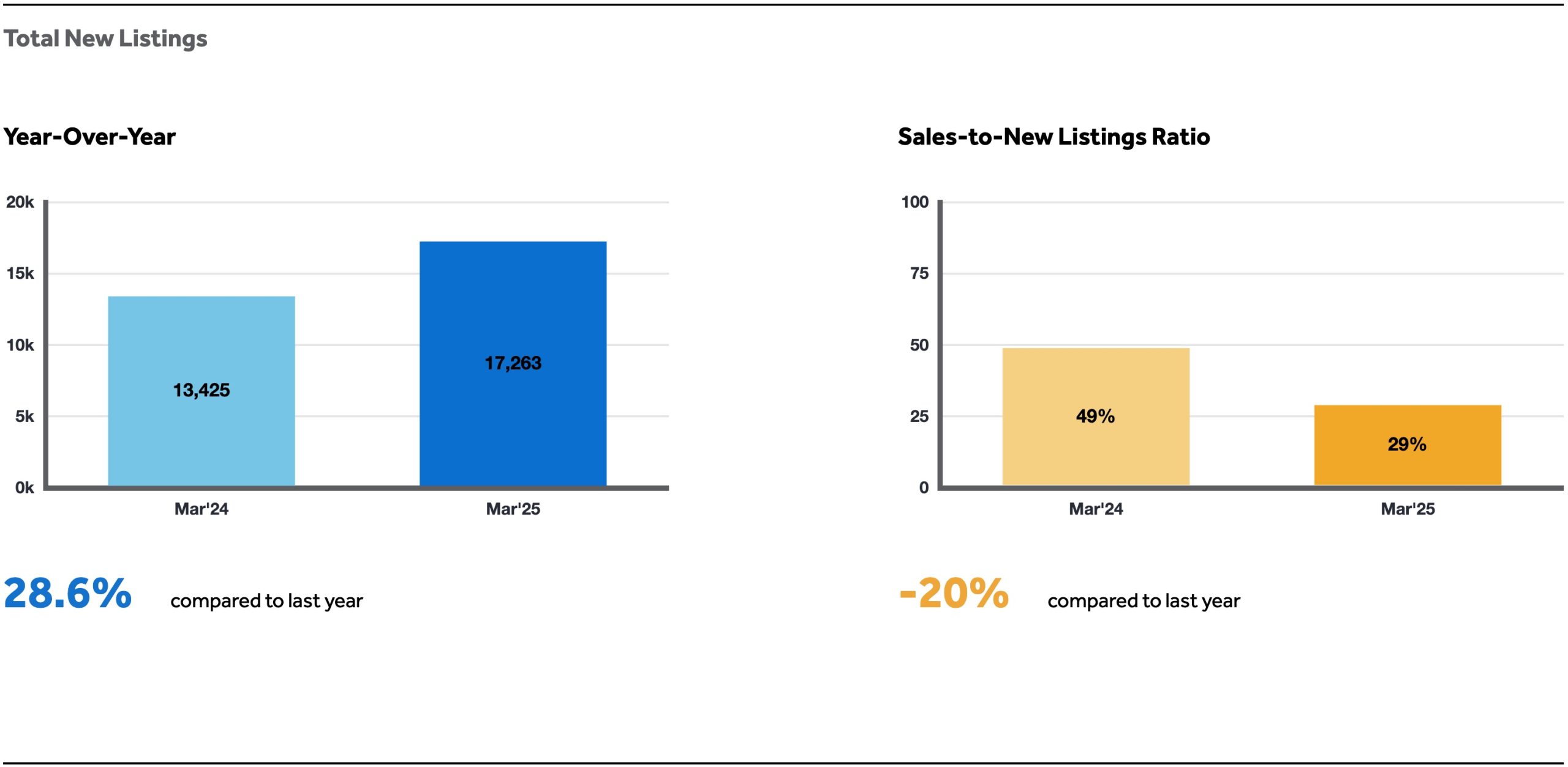
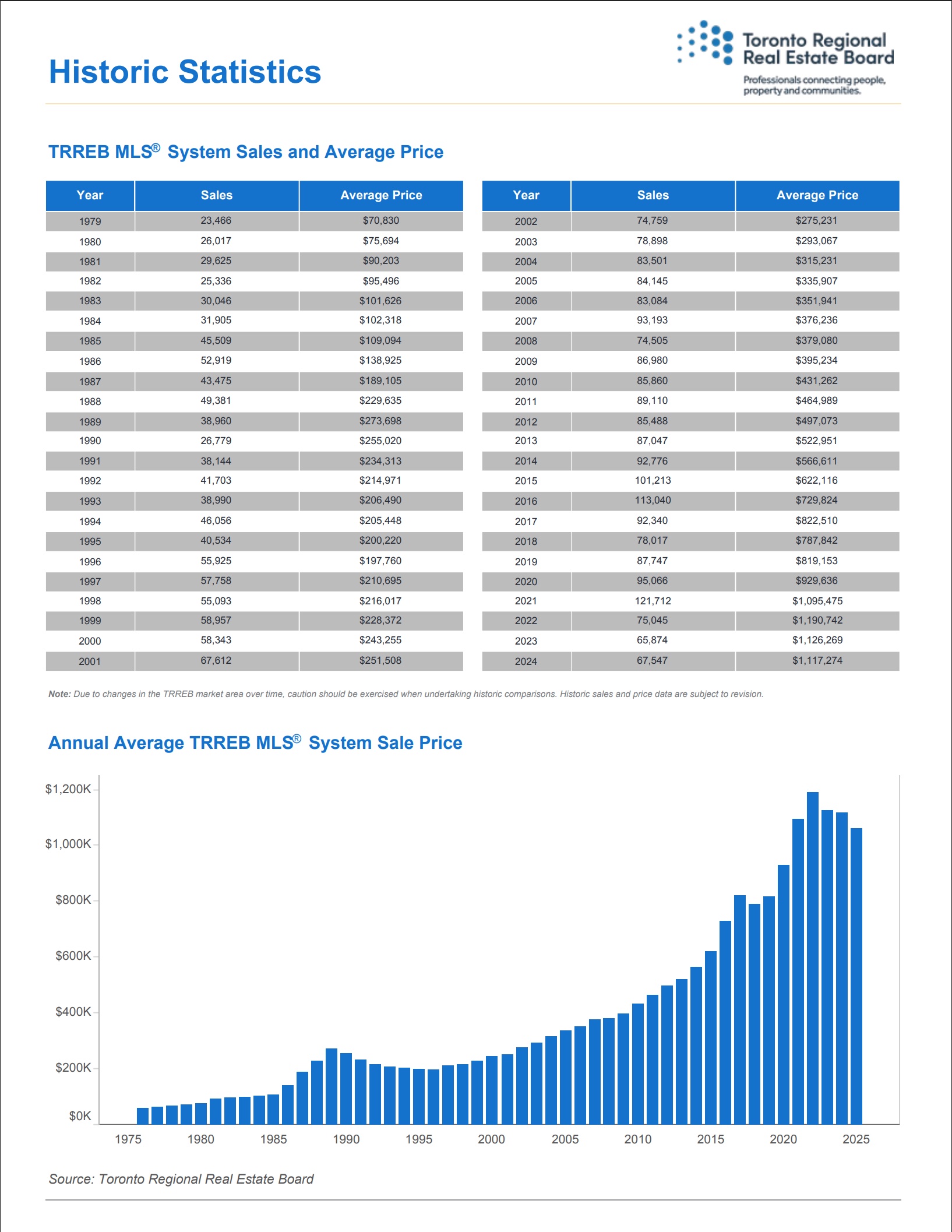










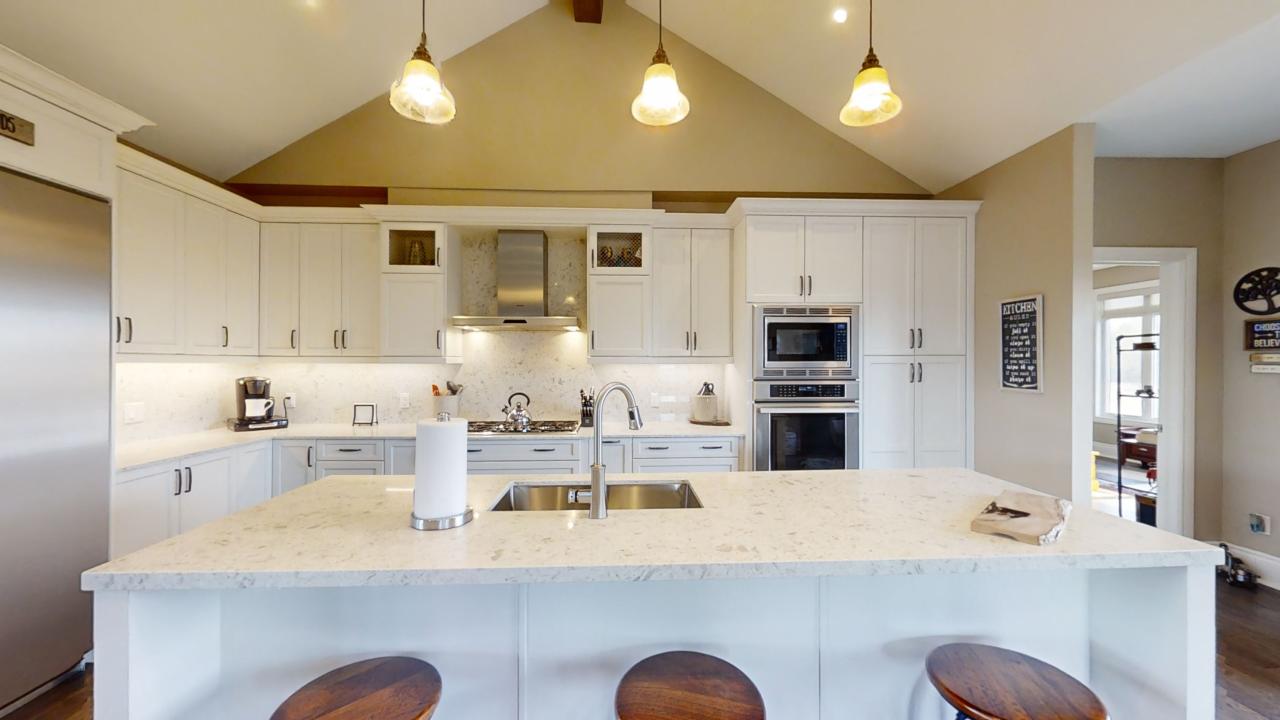
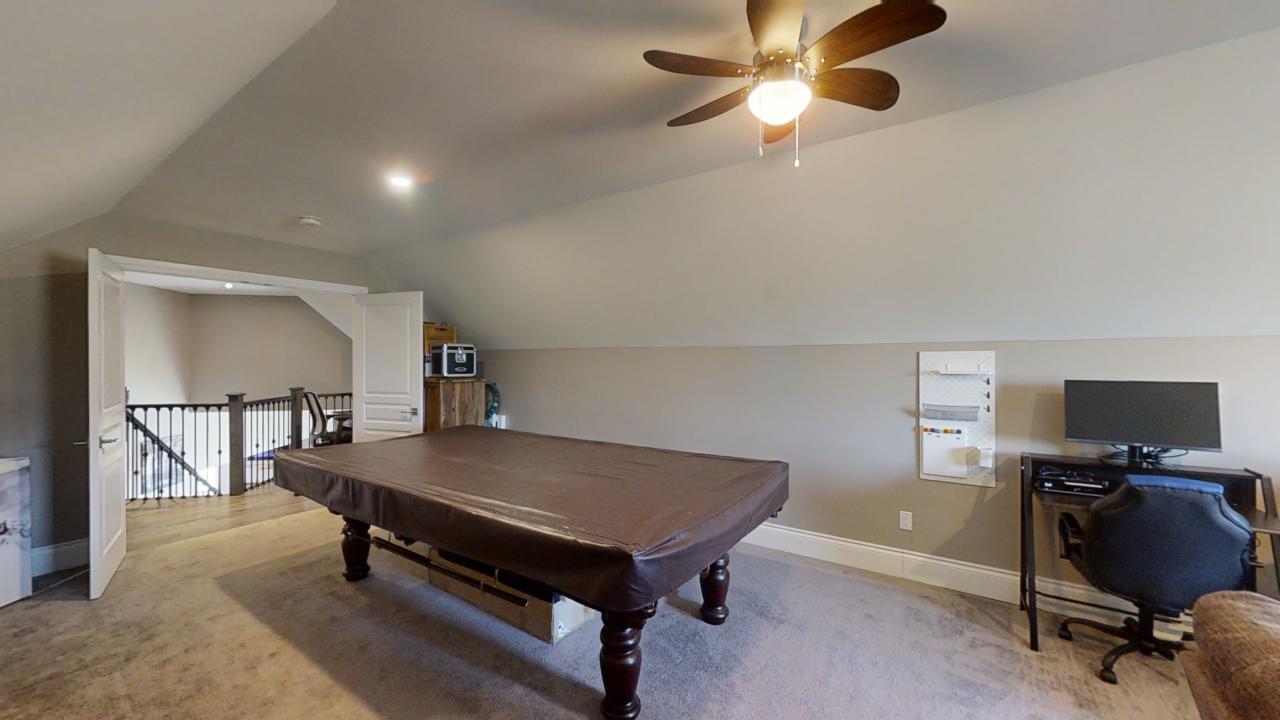

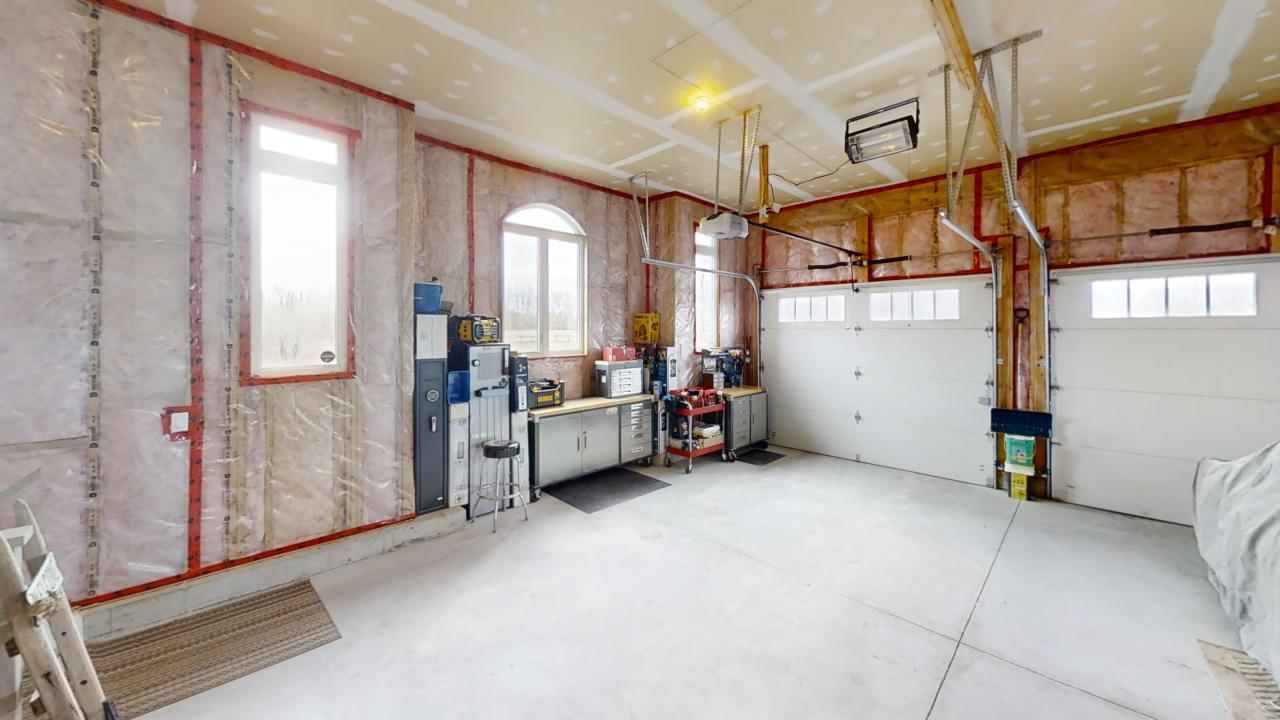


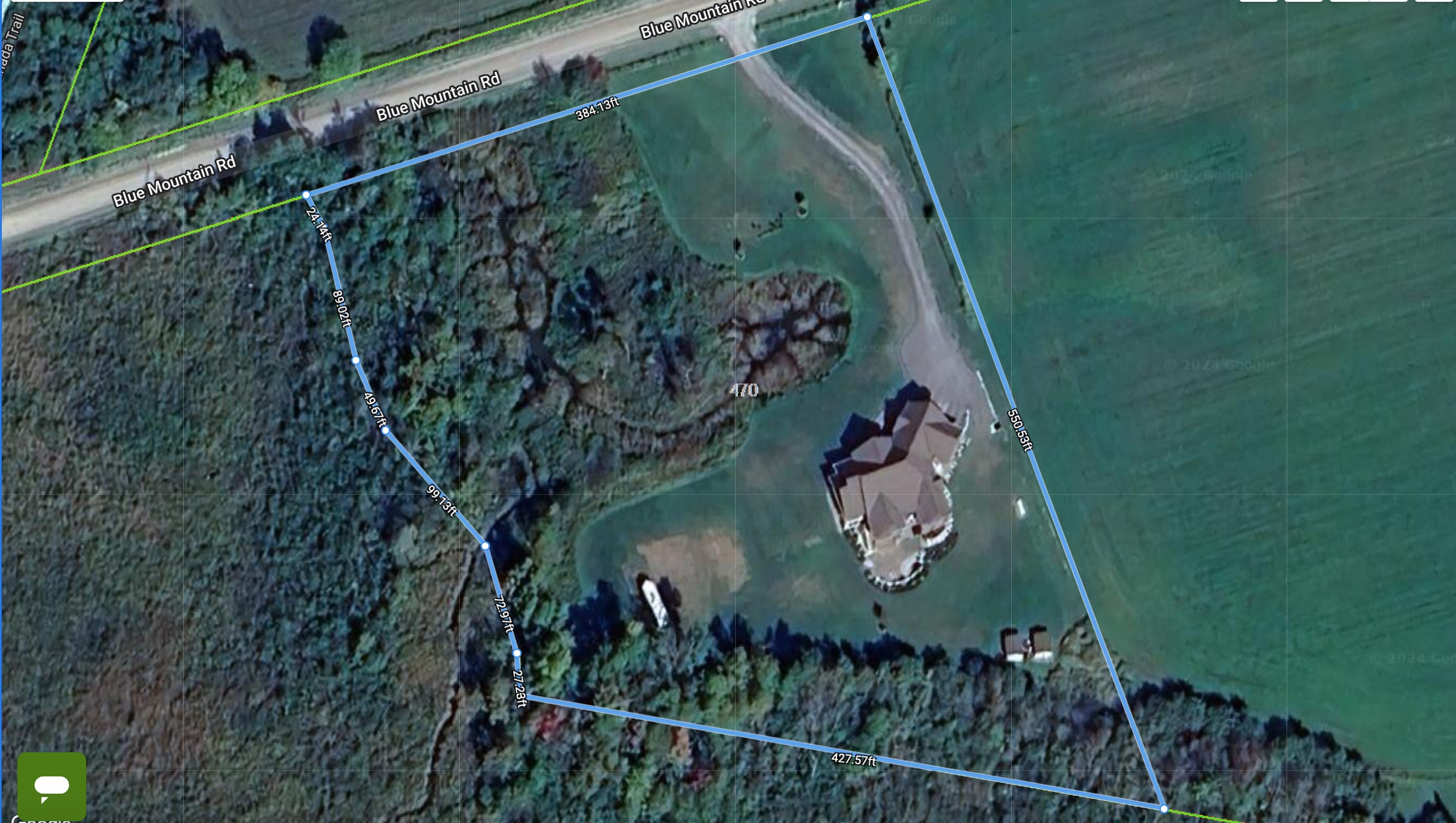
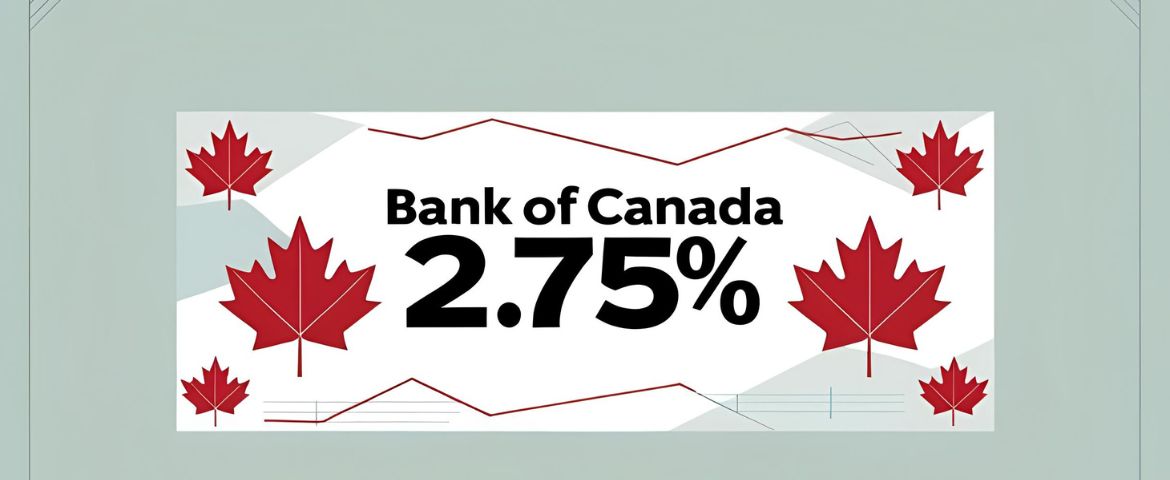





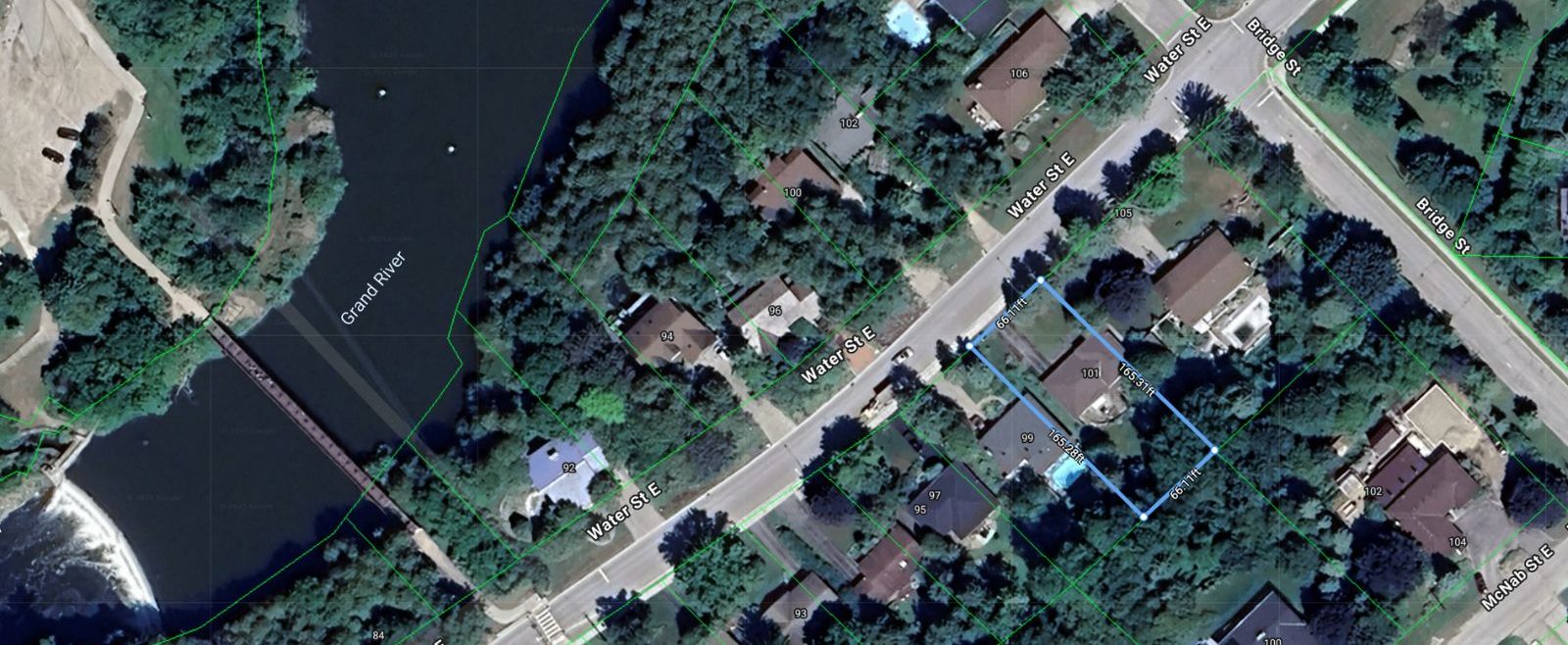
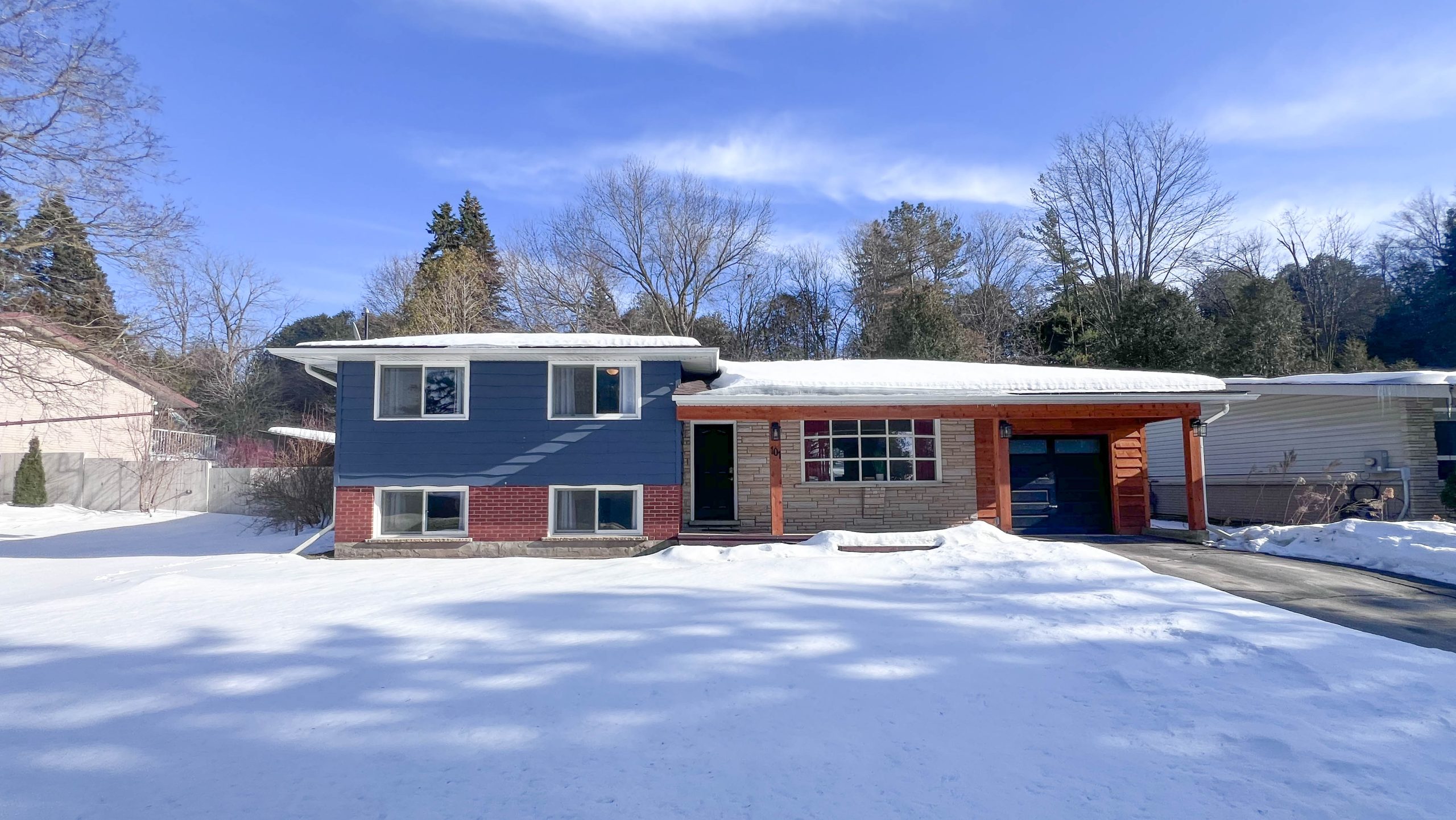

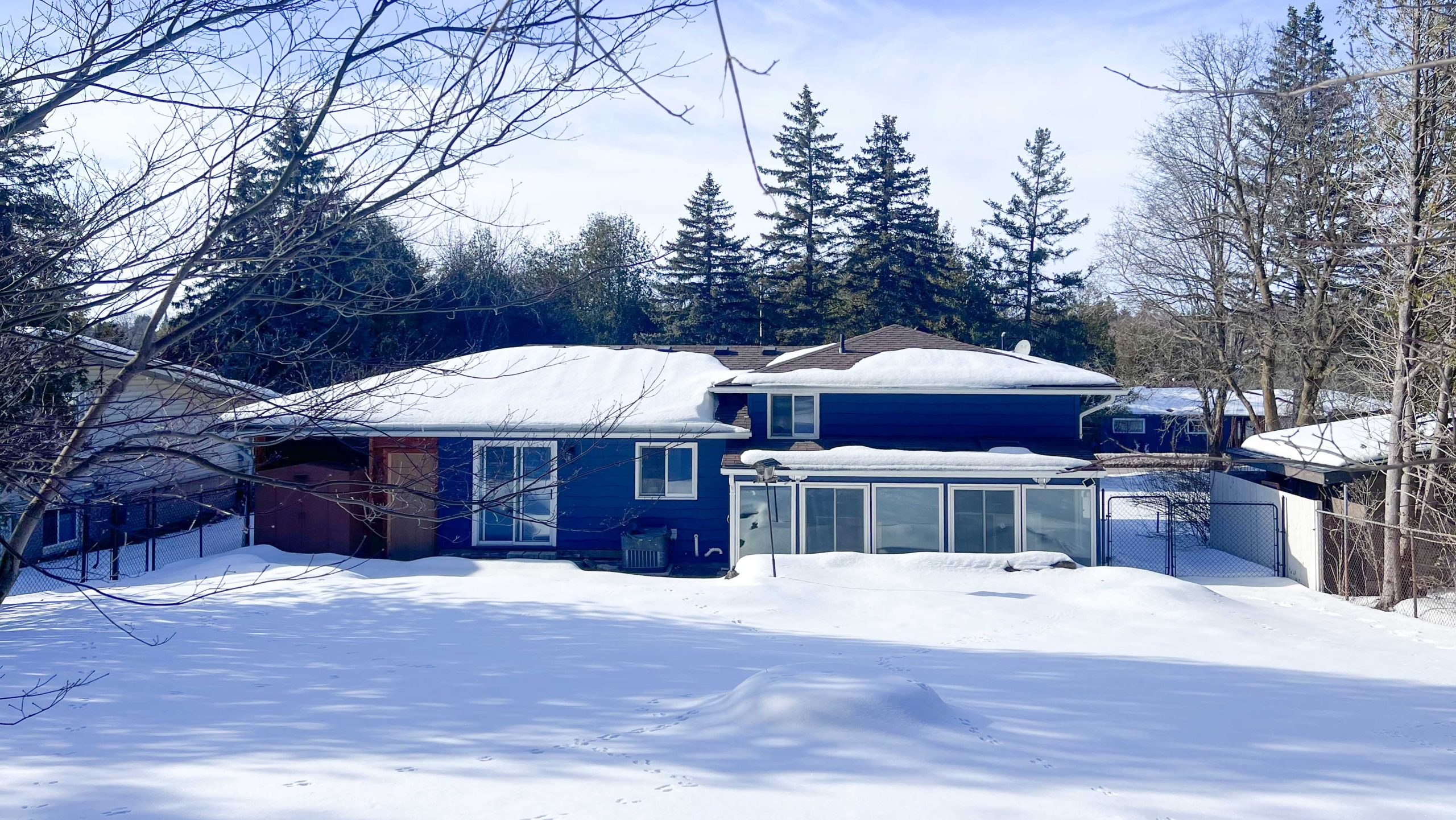

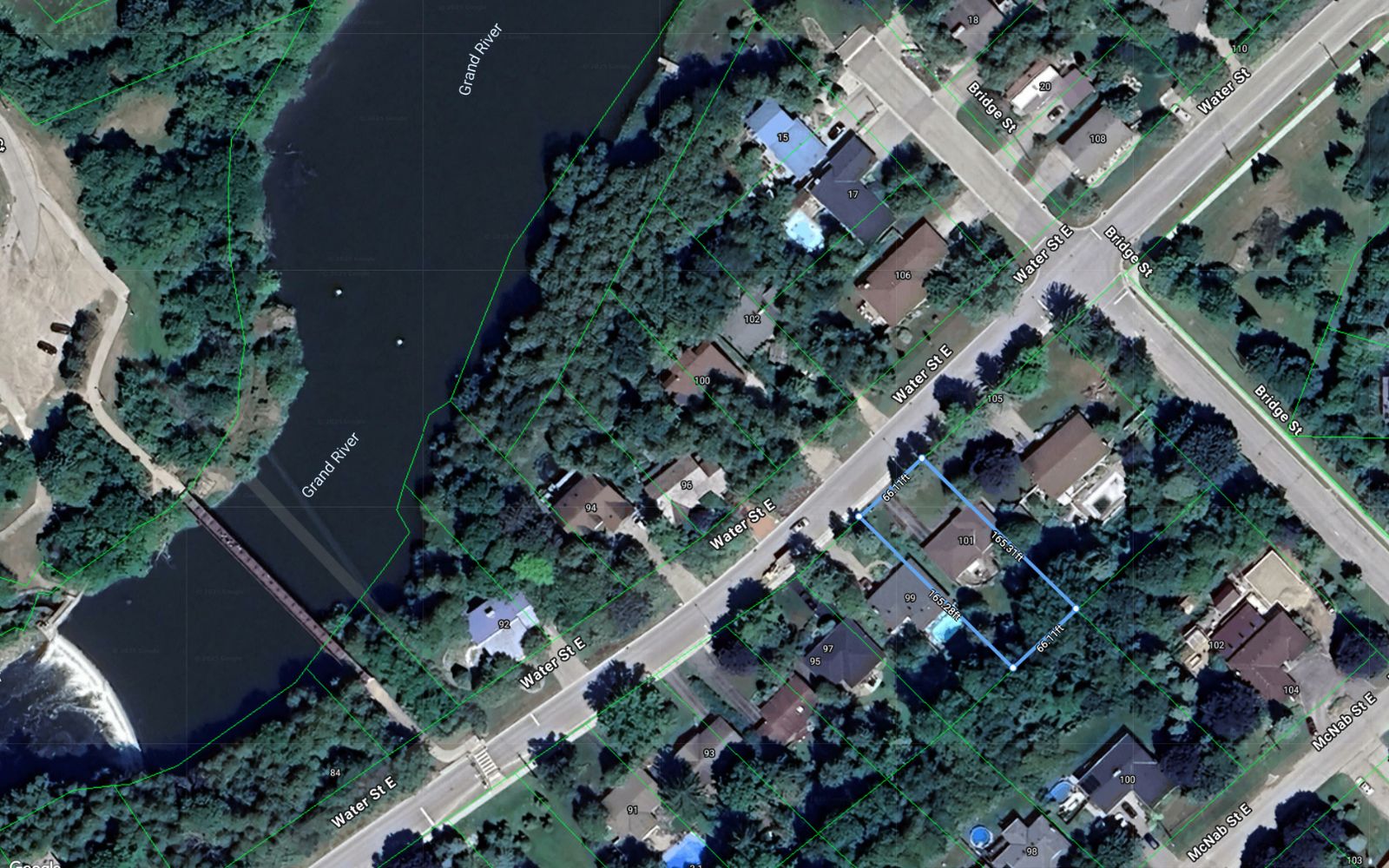


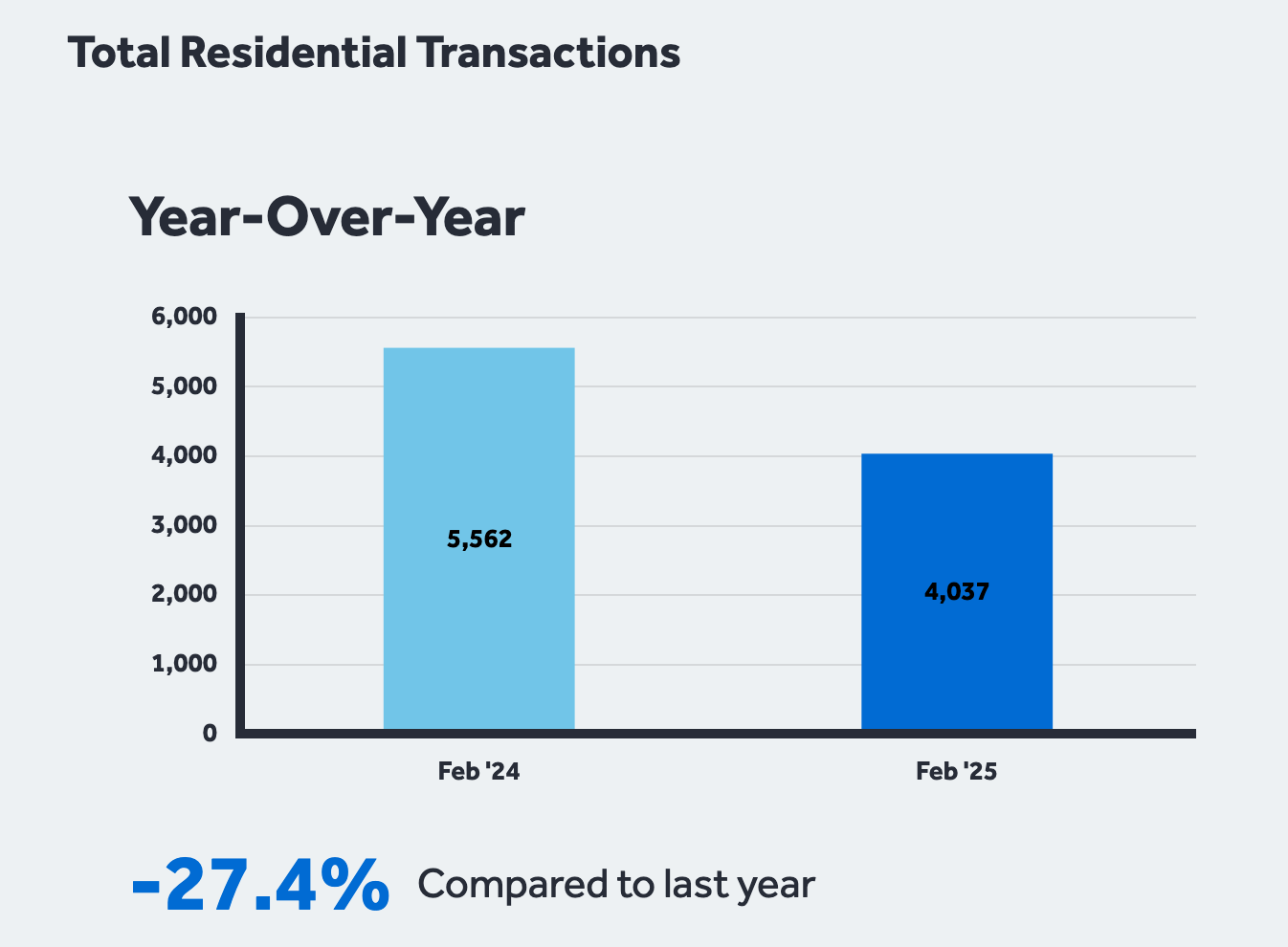
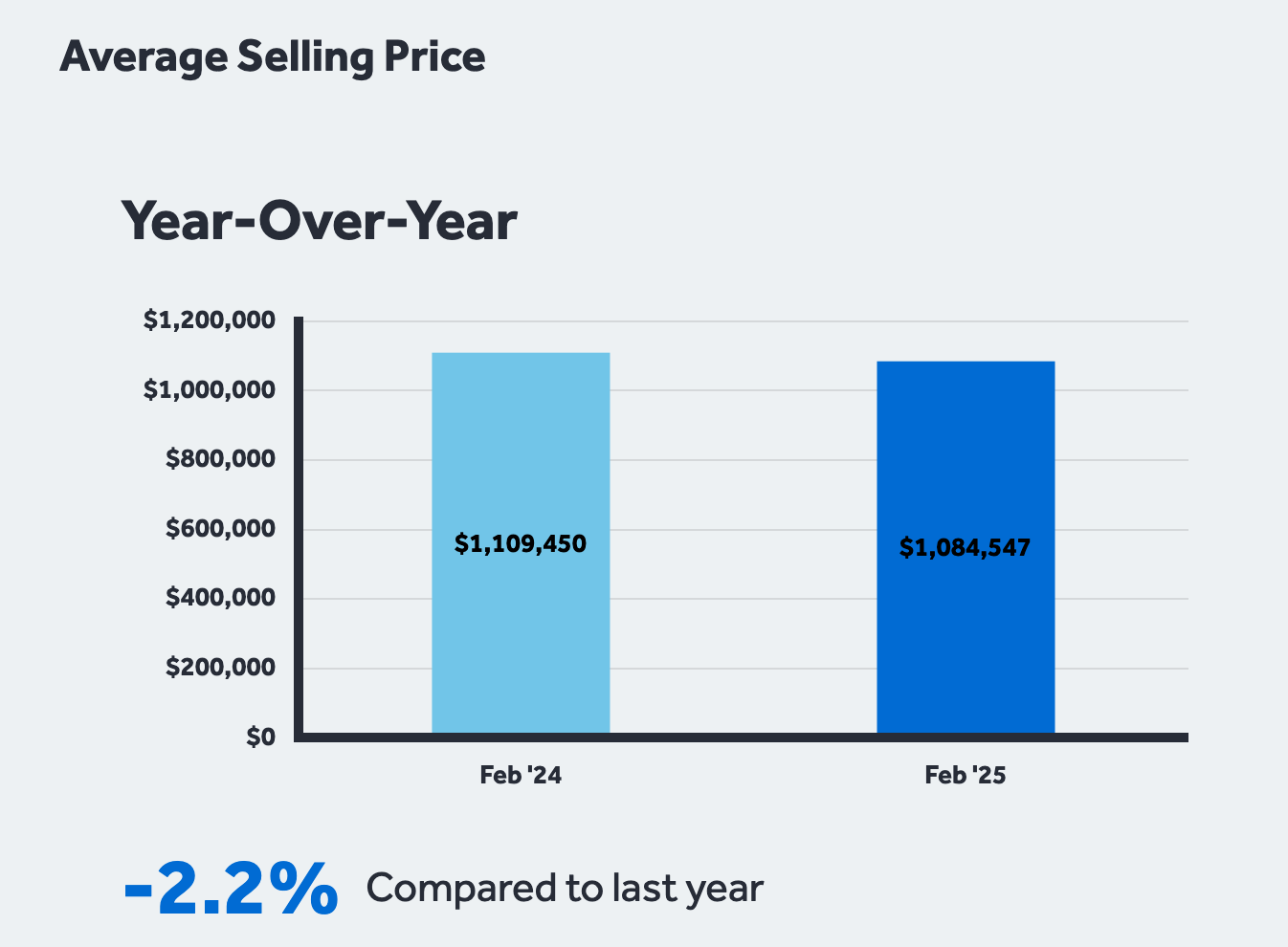

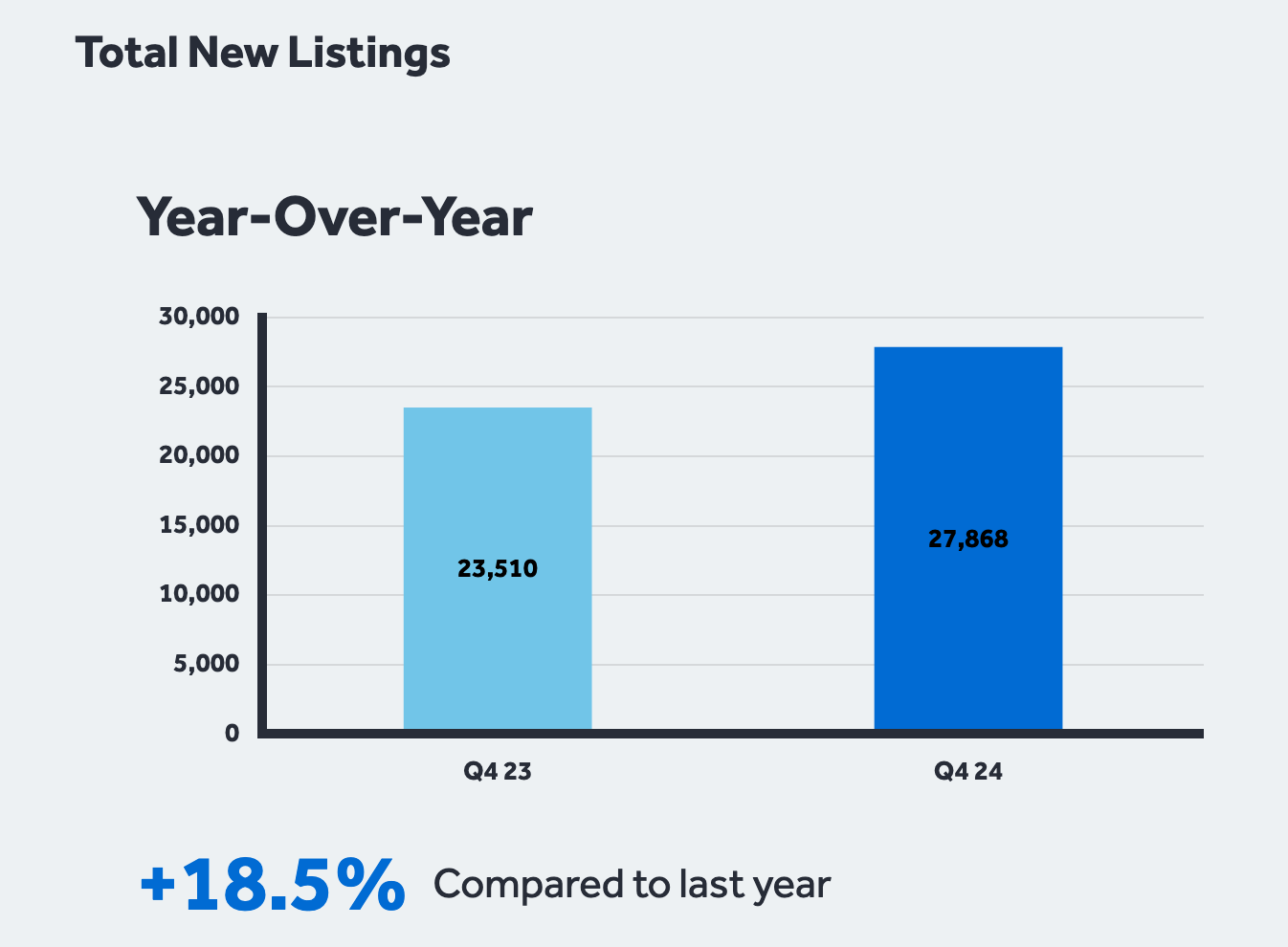
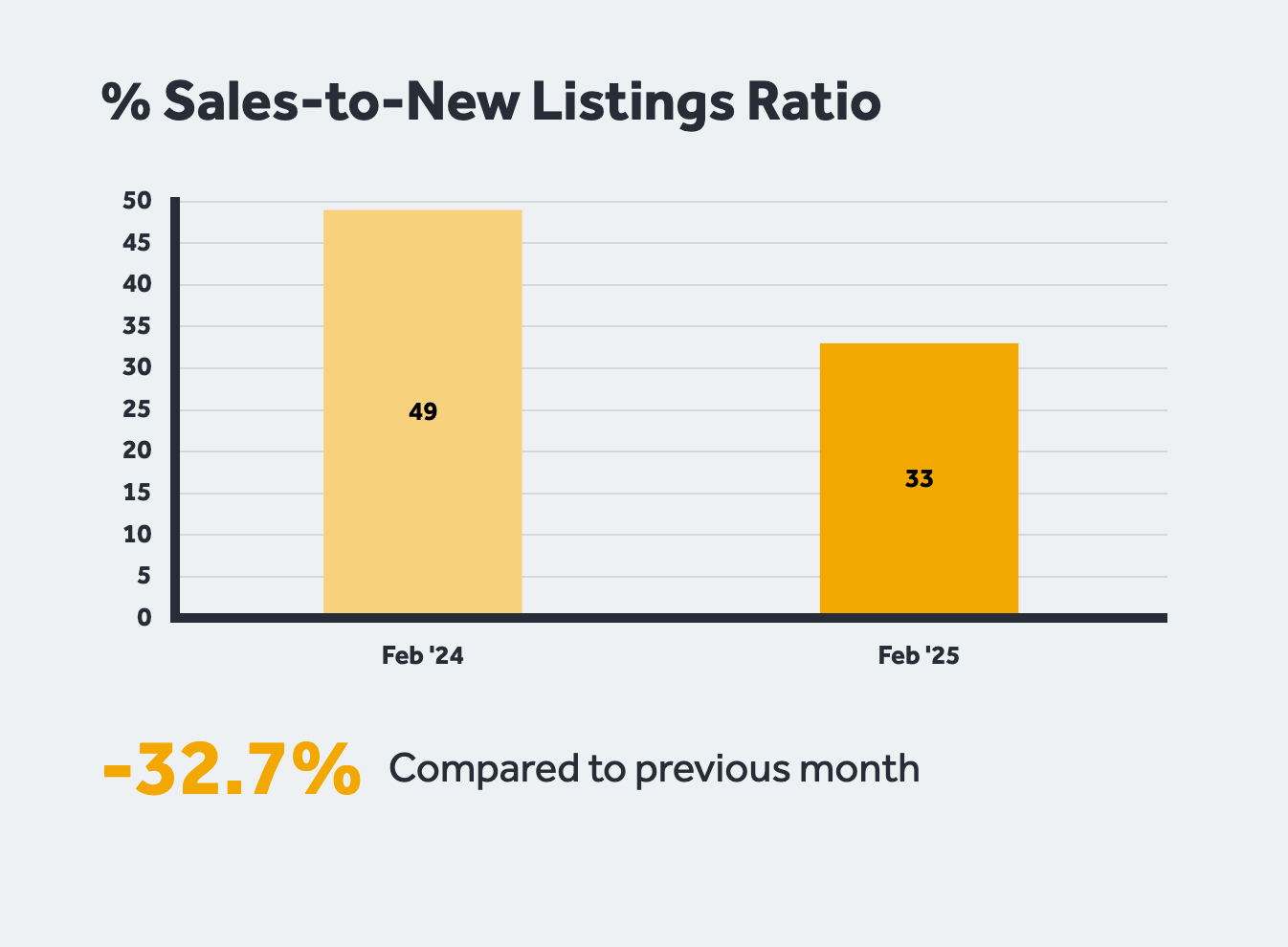


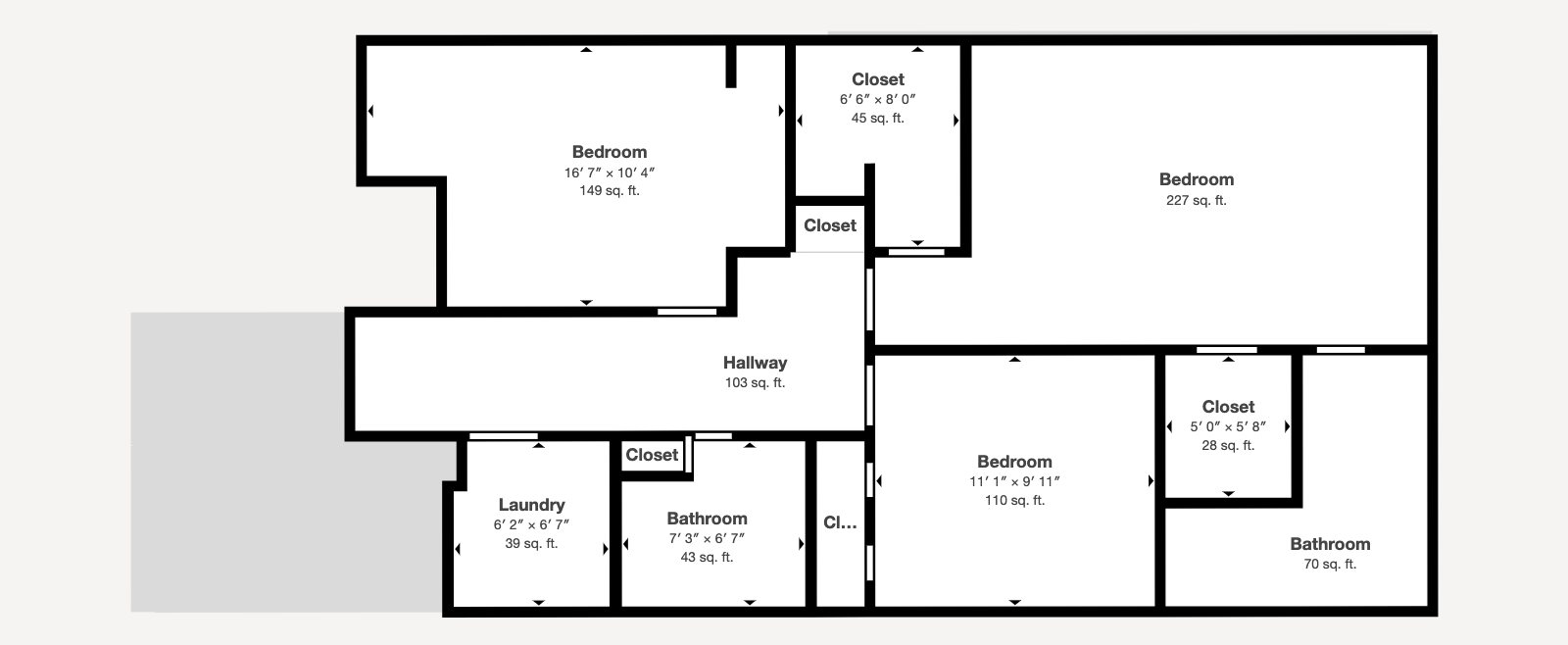
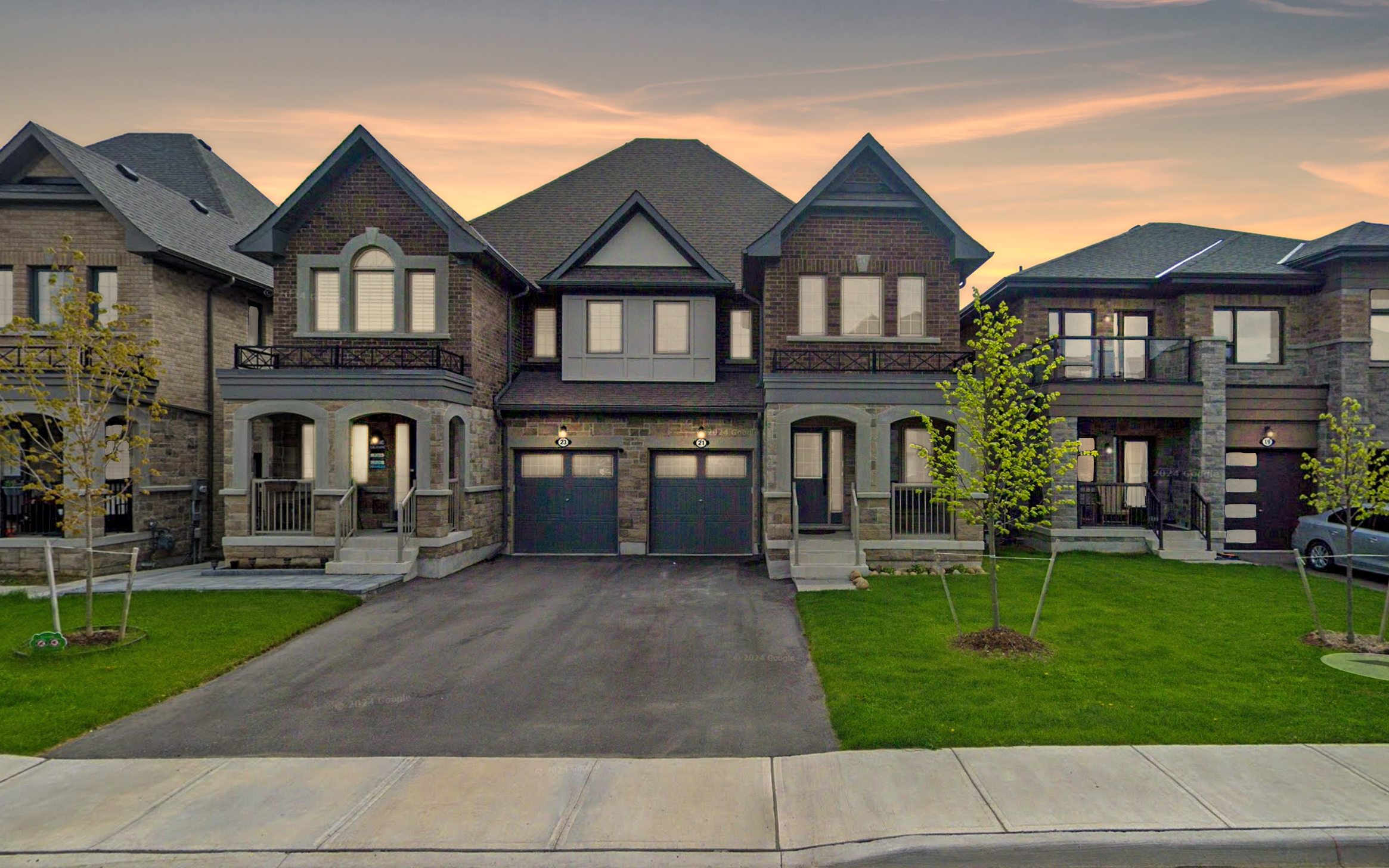
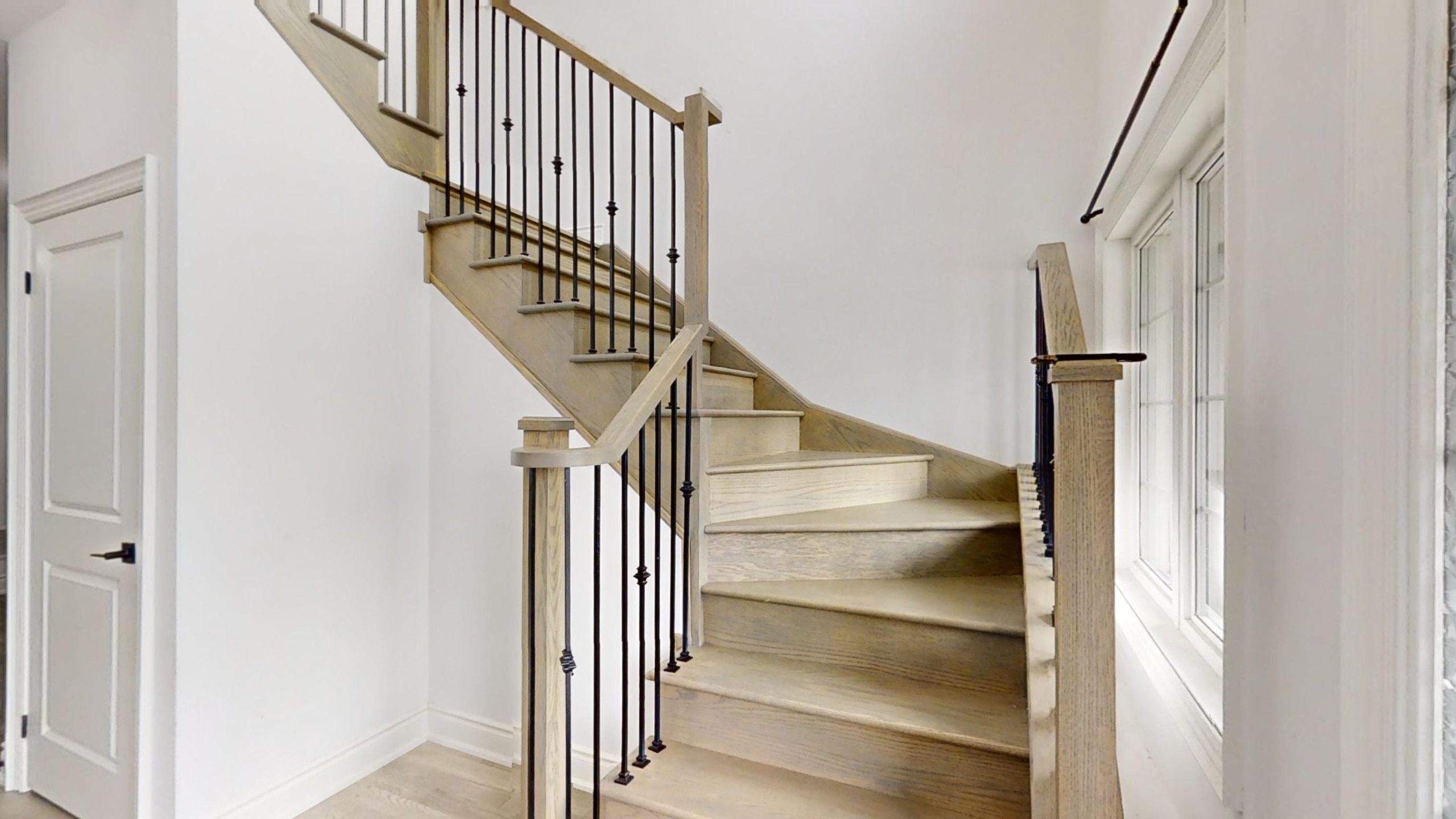


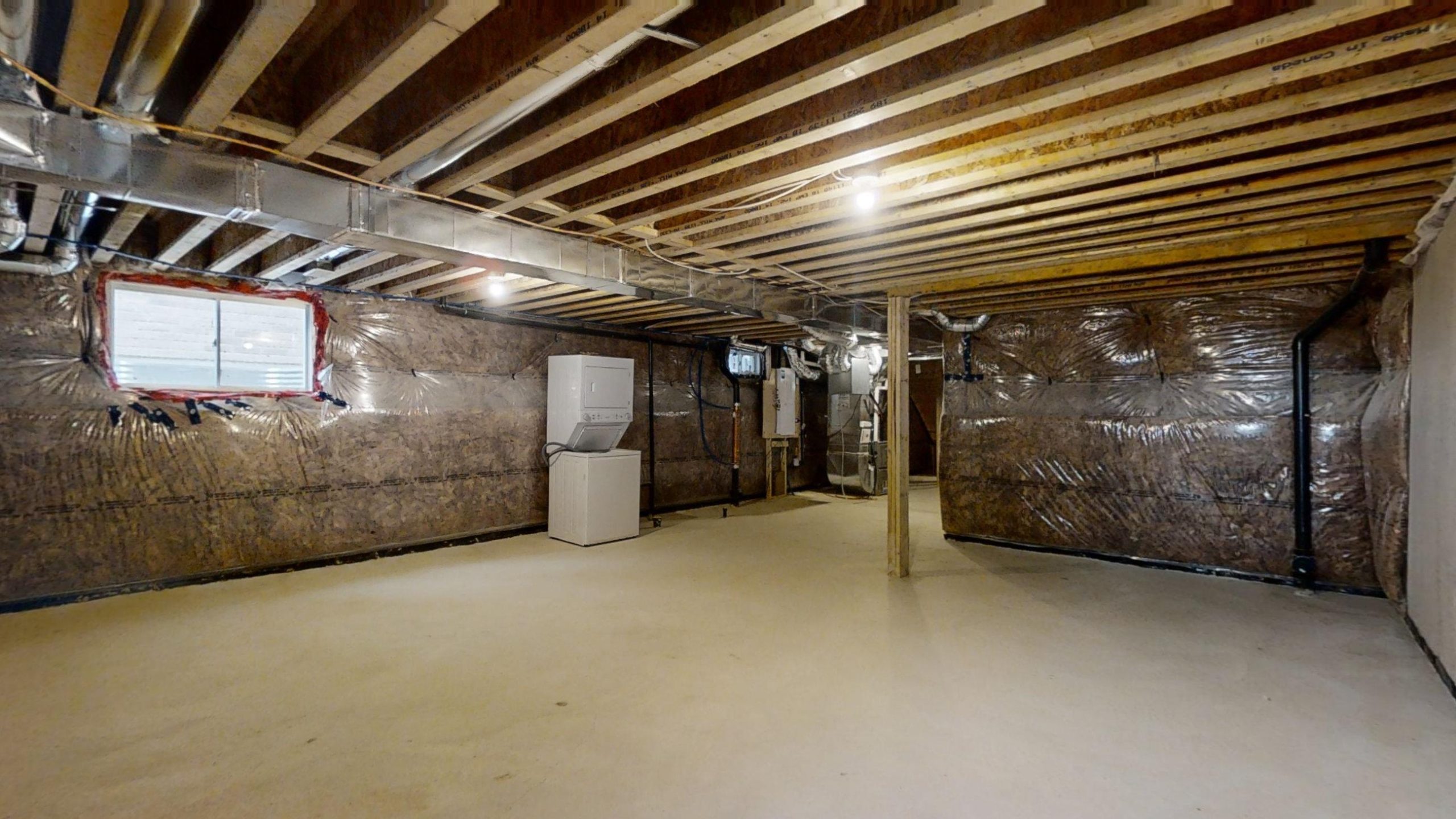



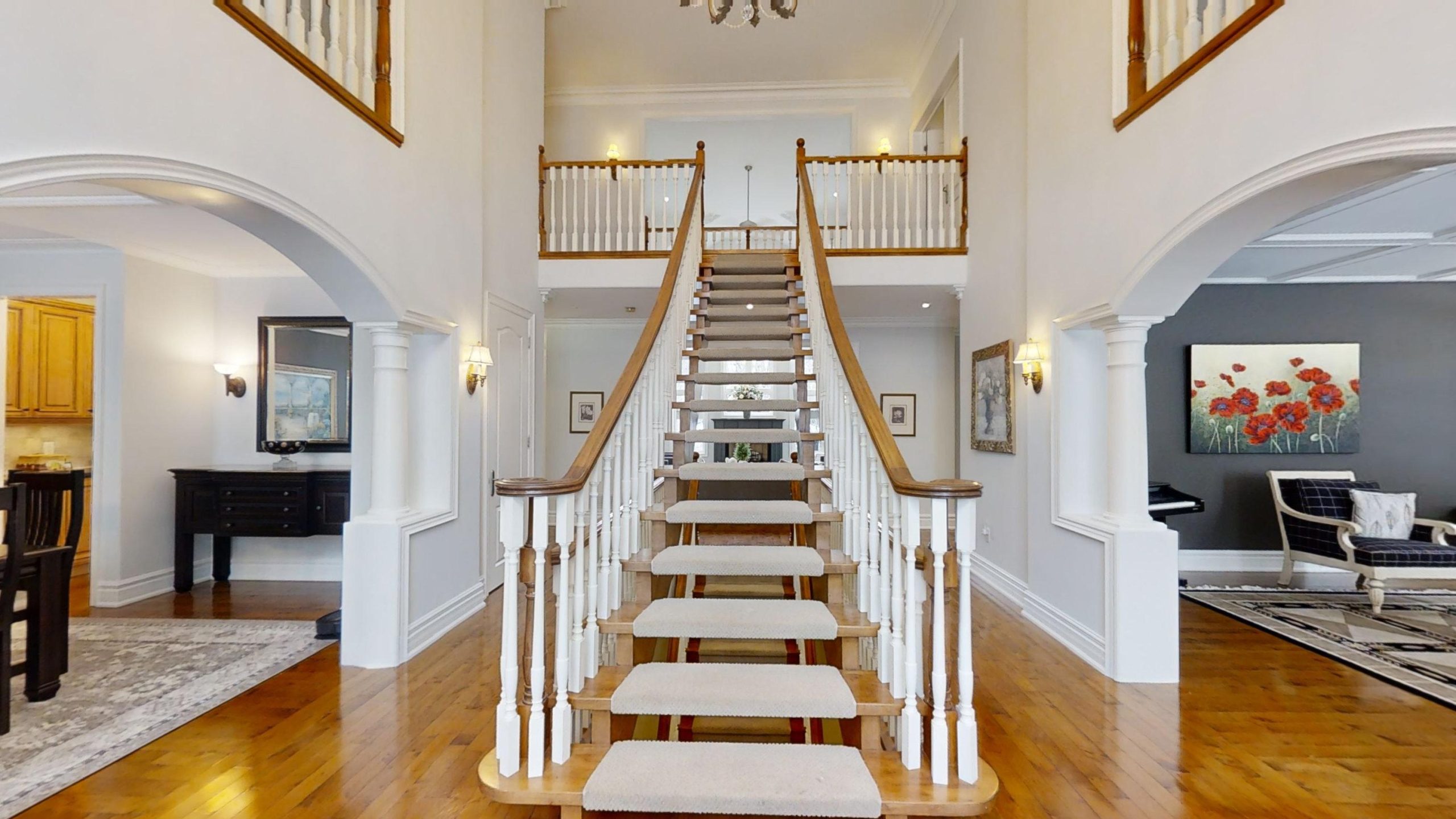 As you step into the grand foyer, the striking open-riser Scarlet O’Hara staircase takes center stage, immediately commanding attention. This architectural masterpiece gracefully ascends to the upper level, setting the tone for the home’s elegant design and offering a glimpse of the extraordinary living spaces that lie beyond.
 The spacious living room is a testament to the home’s thoughtful design, featuring expansive windows that flood the space with natural light and frame views of the picturesque surroundings. Adjacent to this inviting space, the formal dining room provides an ideal setting for hosting elegant dinner parties or intimate family gatherings.
 The impressive great room is the heart of the home, boasting soaring 19-foot ceilings, massive windows with enchanting wooded views, and a cozy fireplace. Solid hardwood floors flow seamlessly throughout the main areas, offering a timeless aesthetic, while the gourmet kitchen and baths feature durable tile flooring.
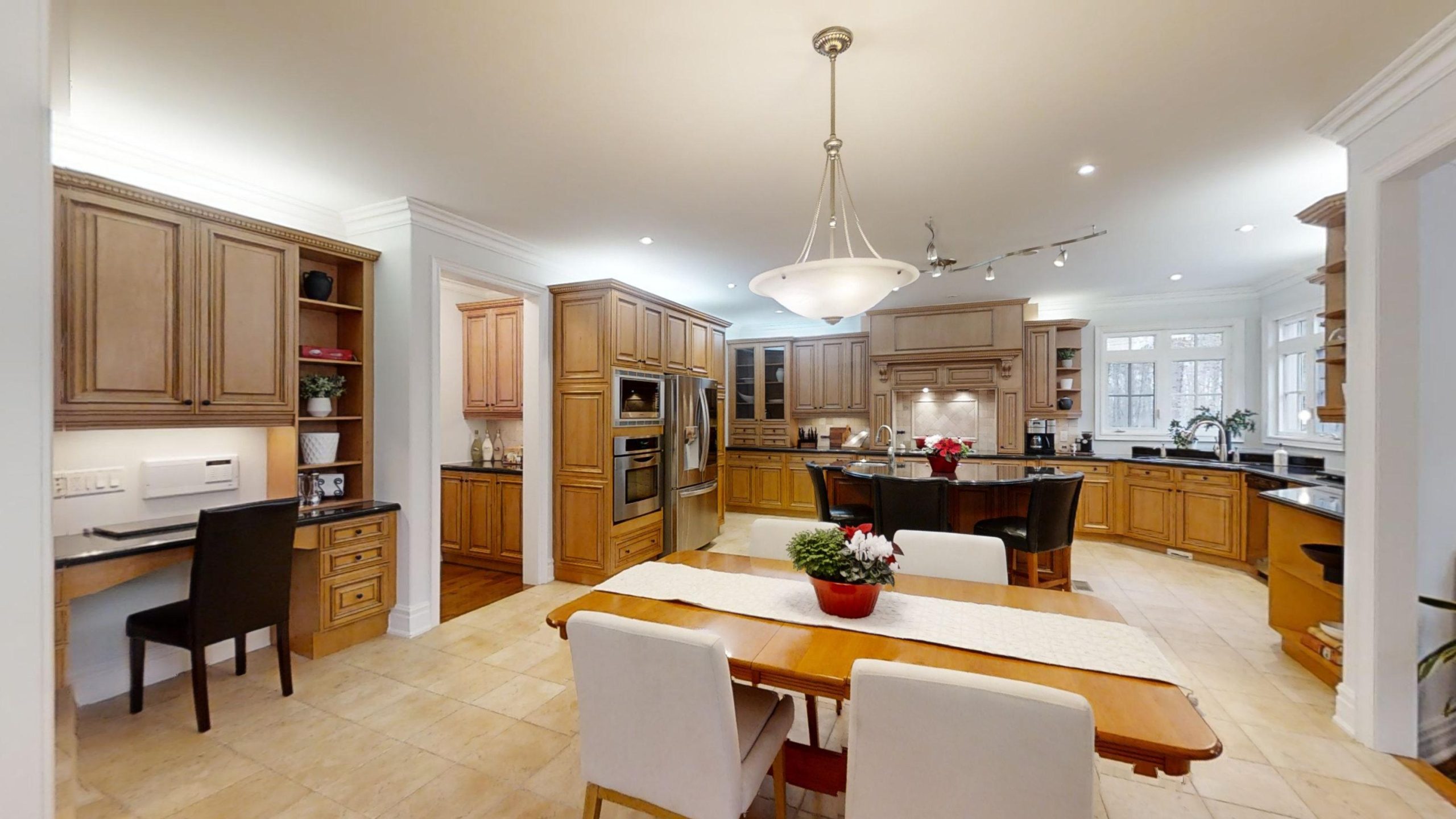 Designed with culinary enthusiasts in mind, the oversized kitchen is a true masterpiece. It boasts premium finishes, ample workspace, and state-of-the-art appliances, ensuring both functionality and style. The practical layout includes a nearby laundry room, a walk-in closet, and a secondary entrance leading to the three-bay garage with 9×8-foot doors, providing ample space for vehicles and storage.
 A sunroom situated off the main living areas offers an idyllic retreat. With slate flooring, a cozy fireplace, and walls of windows showcasing serene backyard views, this space is perfect for unwinding. Double doors lead to a private outdoor haven, seamlessly connecting indoor and outdoor living.
 The backyard retreat is a sanctuary of relaxation and beauty. An expansive patio, complete with a pergola, gazebo, and barbecue area, invites outdoor gatherings against the lush backdrop of perennial gardens. Mature trees, manicured shrubs, and vibrant planters enhance the natural charm, creating an environment that feels like a private escape.
 A spacious home office provides a quiet, functional workspace, while a well-appointed powder room completes the thoughtfully designed main floor.
 Upstairs, five generously sized bedrooms await, each offering its own ensuite or semi-ensuite, ensuring comfort and privacy for family and guests alike.
 The primary suite is a sanctuary of luxury, occupying its own wing for maximum privacy. The expansive bedroom is complemented by a walk-in closet and a spa-like five-piece ensuite. This exquisite bathroom features a custom double vanity, a supersized glass shower, a deep soaker tub, and a separate water closet, offering a tranquil space to relax and recharge.
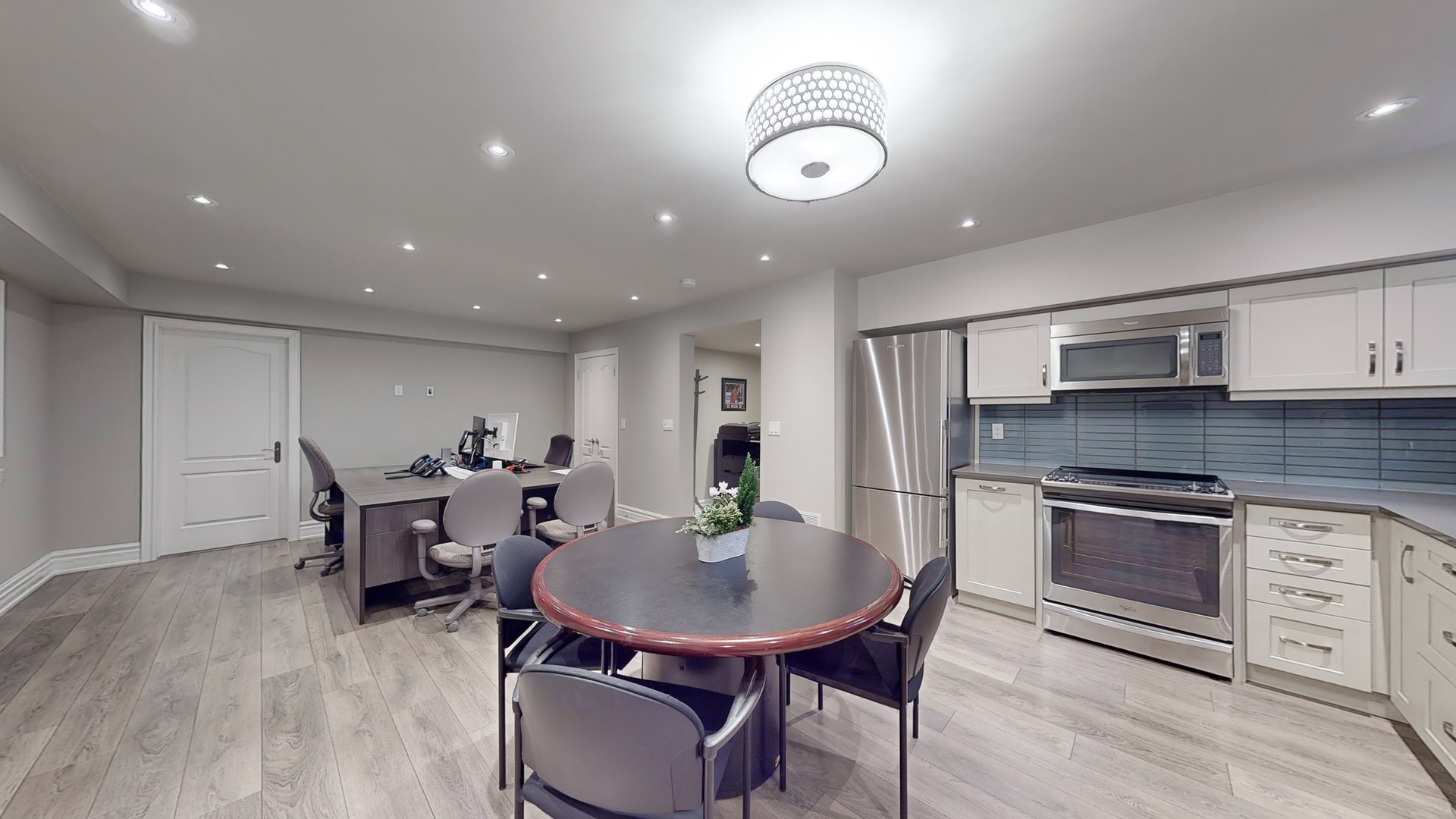 The carefully planned basement provides remarkable versatility, making it ideal for multigenerational living. With private access from the garage, the in-law suite includes a bedroom, bathroom, living area, and kitchen, ensuring independence and comfort for extended family members.
 Additionally, the basement features a full gym, ample storage solutions, a cold cellar, and a utility room. Large windows throughout the lower level bring in natural light, creating a bright and welcoming environment.
 This estate stands as a testament to refined living. With its exceptional craftsmanship, thoughtful layout, and premium finishes, it offers a lifestyle that is both luxurious and functional. Surrounded by the natural beauty of FoxFire Estates, this property is more than a home-it is a statement of elegance and sophistication.
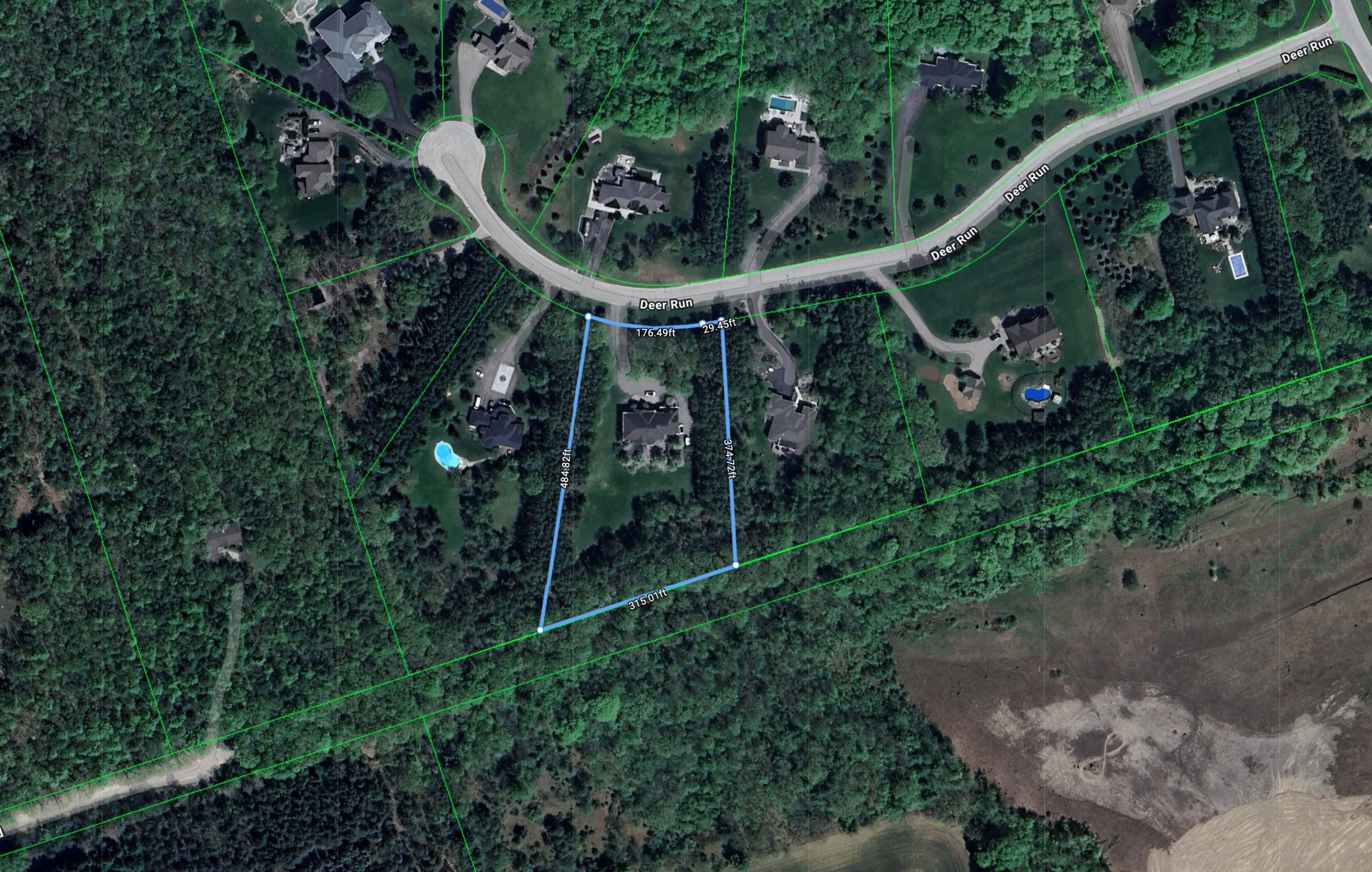 For those seeking the ultimate in luxury and privacy, this builder’s private residence is a rare gem that must be experienced firsthand.